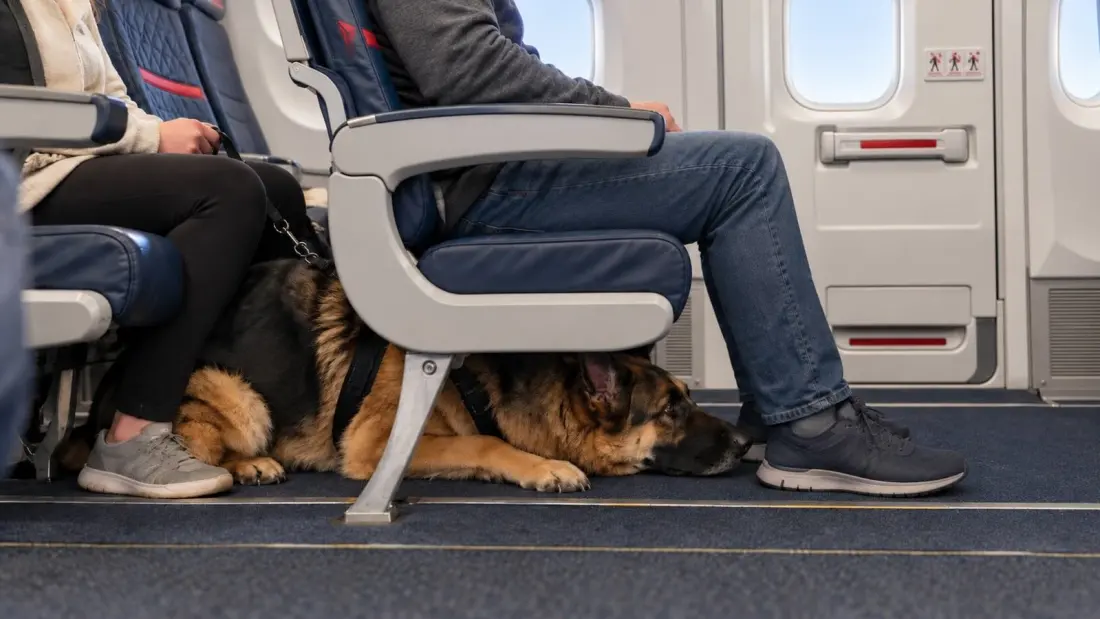
A passenger on a three-hour Delta flight spent the entire trip with his feet pulled in, after a full-size German Shepherd seated behind him was pushed under its handler's seat and ended up occupying part of his exit-row foot space.
The story surfaced on Reddit, where the traveller explained he was in the plane's final exit row when the dog boarded with its handler — a fellow passenger seated directly behind him, sharing the row with an elderly couple. The dog was apparently too big for the space available, and once wedged beneath the seat in front of it, its head and shoulders pushed forward into the legroom the exit-row passenger had paid for. He stayed that way for the whole flight.
There are a few layers of mess here. The elderly couple behind reportedly spoke limited English and couldn't follow what the crew was offering them. The passenger himself stayed quiet onboard, worried he'd be labelled hostile toward the handler or would clash with flight attendants. And the setting matters: exit rows have strict rules because everything on the floor must be fully stowed in an evacuation. A dog protruding into that space isn't just an etiquette problem — it's a potential safety violation, even if it didn't completely block access to the exit.
The rules are actually clear on this. Under US Department of Transportation regulations, a service dog may travel in its handler's foot space only if it doesn't encroach on another passenger's area. If a large animal can't fit, the airline is required to offer the handler another seat in the same cabin where both can be accommodated. According to the passenger, an open bulkhead row would have done exactly that — and when he contacted Delta after landing, the airline reportedly told him the crew should have considered moving the handler and dog there.
The takeaway for anyone flying is straightforward. If an animal — service or otherwise — is in your purchased space, raise it calmly and early, ideally before the cabin door closes. A simple request like "the dog is in my foot space, can we find another arrangement?" flags a space and safety issue without accusing anyone of faking a service animal, and it gives the crew a chance to fix the seating before takeoff. Once you're airborne for three hours, your leverage drops to zero.
It's also a reminder that seat choice is part of what you pay for. Exit rows and bulkheads are sold specifically for their room, and airlines have an obligation to protect that space — for you, for the handler, and honestly for the dog, which reportedly spent hours in a cramped and uncomfortable position. Everyone on that plane deserved a better solution than the one they got.
Live and Let's Fly