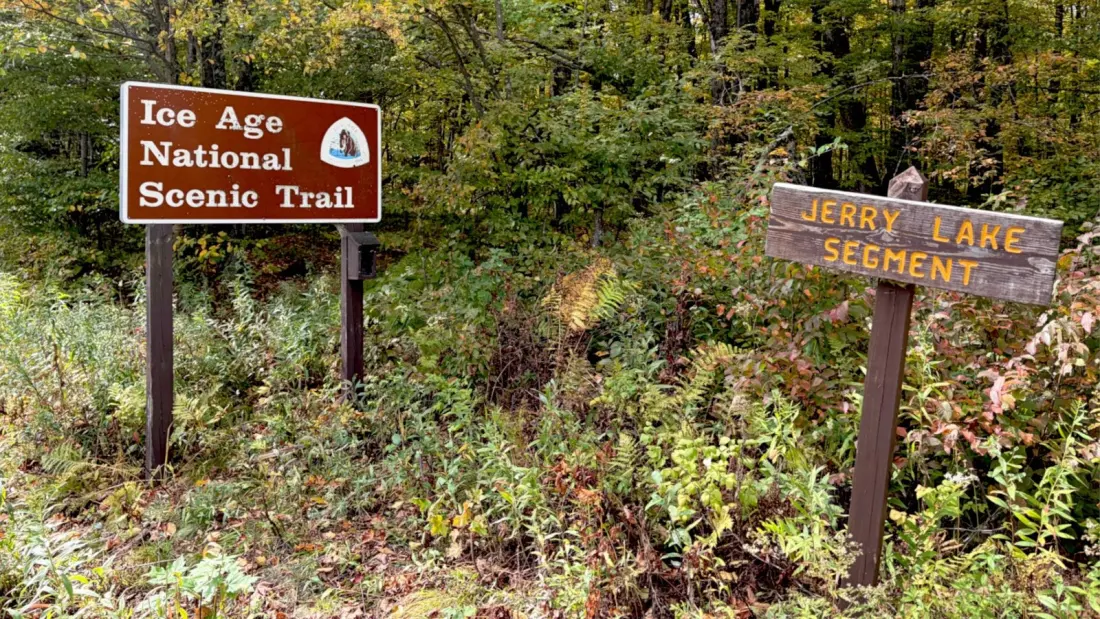
Wisconsin isn't famous for hiking — people come for cheese, beer and the Packers — but the state quietly hosts one of America's longest walking routes. The Ice Age Trail, a National Scenic Trail, traces nearly 1,200 miles across the Badger State, following the edge of where glaciers scraped the land more than 12,000 years ago.
Backpacker's editors sampled a stretch of it in September, backpacking roughly 25 miles between Jerry Lake and Mondeaux Flowage at about 10 miles a day. Their verdict: the IAT won't wreck your legs with brutal climbs, but that's the point. It's a trail for cruising, putting in steady miles, and settling into the rhythm of forest walking. They caught peak conditions — gold and vermillion maples and oaks, cool temperatures, almost no bugs, and barely another hiker in sight.
The trail's hook is geology. Hikers cross eskers (long ridges left by glacial meltwater), moraines, ancient glacial lakes and dells — narrow gorges with steep rock walls. The route starts at Potawatomi State Park in Sturgeon Bay on the east side, loops down through southern Wisconsin, skirts Madison, and finishes at the Minnesota border. Since Wisconsin is only about 260 miles wide, the trail's length means it squiggles — a lot.
A few things to know before committing. Only about 700 miles are officially blazed in the trail's signature yellow; the remaining 500 connecting miles are unmarked and often follow roads. Download offline maps or carry paper ones, because it's easy to take a wrong turn. Volunteers blaze 10 to 15 miles of new trail each year, so the situation improves annually — check the IAT Alliance's trail reports for closures and reroutes.
For thru-hikers, the full route takes seven to 12 weeks. Nearly 30 official "IAT communities" — recognised trail towns — line the route, making resupplies and motel nights easy to arrange, and offering a taste of Wisconsin culture between trail segments. That same accessibility makes the IAT one of the best long trails for beginner backpackers: rolling, mostly level singletrack, frequent road crossings and easy logistics. Experienced hikers and record-chasers can also use it to rack up big daily mileage, as long as hundreds of miles of road walking don't put them off.
Short on time? Popular segments include the Baraboo Segment, which runs through a charming small town; the Mondeaux Esker Segment, where the editors hiked; the Eagle Segment, with prairies and limestone outcrops; and the St. Croix Falls Segment at the western terminus, with river views. The IAT Alliance's Segment by Segment Tour page breaks each one down.
The trail is open year-round and doubles as a cross-country ski and snowshoe route in winter, but May to October is prime hiking season — and September and October are the sweet spot. Fall delivers the colour, bug-free air and mild temperatures; summer brings 80s and 90s with punishing humidity, while winters are too cold for casual overnight trips.
If you live in the Midwest and want to see the region on foot, or you're a newer backpacker looking for a forgiving first long trail, this might be the most overlooked route in America. — Backpacker