You don't need to head to the Serengeti for a great migration. South Africa has its own seasonal animal movements — some involving millions of fish, others a city sky full of butterflies — and several are genuinely easy to build a trip around.
The headline act is the sardine run, a winter spectacle along the Eastern Cape and KwaZulu-Natal coast. Between roughly May and July, vast shoals of sardines push northwards, and everything with an appetite follows: dolphins herd the fish into dense bait balls, sharks hunt below, and Cape gannets dive-bomb from above. It's unpredictable — some years are spectacular, others a damp squib — so watch reports from local tourism bodies and marine operators before booking a boat trip, dive or snorkel excursion. Sometimes you can even catch the action from the shore.
In summer, a much smaller traveller takes over. Brown-veined white butterflies drift eastwards across southern Africa each year, heading from the dry interior towards Mozambique, and pass straight through Johannesburg. When numbers peak, pale wings fill the air over roads and gardens for a few short days around January. Researchers digging through records back to 1914 found the migration now arrives noticeably earlier — a quiet signal of shifting seasons. There's no viewing point; you just keep your eyes open around midsummer.
The coast also hosts two whale species on the move. Southern right whales arrive in Western Cape bays to breed and calve between June and November, often staying so close to shore that a clifftop walk is enough — Hermanus is the famous base, with the Cape Peninsula, Mossel Bay, Knysna and Plettenberg Bay also productive. Humpbacks pass by on longer journeys over a broader window, roughly May to December.
Up north, loggerhead and leatherback turtles come ashore to nest along northern KwaZulu-Natal's beaches, including in the iSimangaliso Wetland Park, from October to March. Nesting and hatching happen at night, so book authorised guided operators and keep lights and noise down — the turtles need space more than an audience.
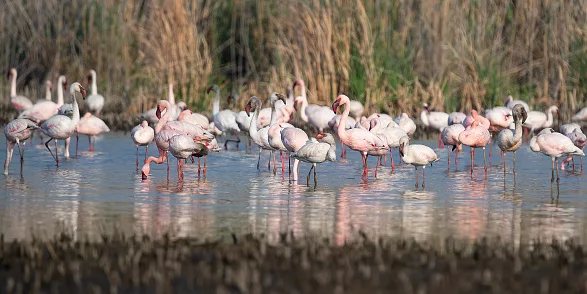
Birders get two bonus movements. Flamingos shift between wetlands and pans across the region as water levels and food change, so numbers at any one site swing wildly with the rains. And the country sits on a major flyway: waders and other migrants arrive from Europe and Asia for the southern summer, reshaping estuaries and reserves from spring onwards. Local bird clubs and recent sighting reports are your best planning tools for both.
The common thread? Flexibility. Unlike a fixed festival, these events move with currents, rainfall and food supply, and nothing is guaranteed on any given day. That uncertainty is part of the charm — a coastal walk or a city park can suddenly put you in the path of a much bigger journey.