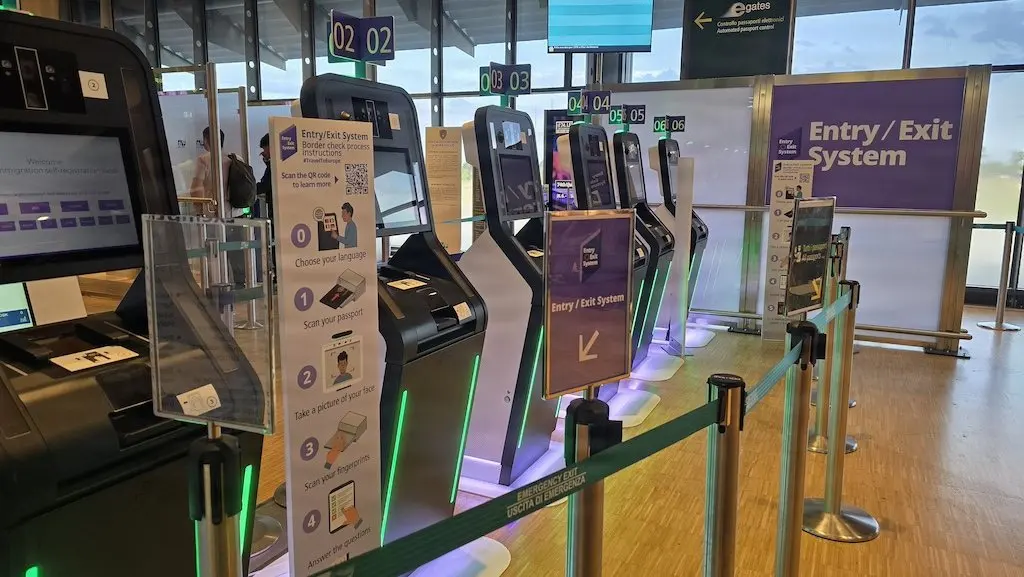
The UK's largest travel trade association has joined a widening group of airlines, airports and governments pushing the EU to keep flexibility built into its new biometric border system. ABTA says the Entry/Exit System (EES) — which records non-EU travellers' entries and exits electronically — needs more work to become stable before it is fully enforced, and it wants contingency measures extended if necessary.
ABTA's public affairs director Luke Petherbridge urged Brussels to continue the pragmatic approach taken so far, telling The Independent that improvements should include better triaging of travellers already registered and upgrades to the EES app so some checks can be done before people reach the border. His comments follow a survey of 2,000 UK travellers that found relatively little impact so far: most respondents hadn't noticed significant delays, and only six percent said EES had made them much less likely to visit the EU. But ABTA points out that fewer than half of those surveyed had actually been through the system yet — and the association is worried the early chaos could put people off travelling altogether.
That chaos has been real in places. Hubs including Lisbon, Milan and Brussels have suffered severe congestion and adapted their protocols, while Greece went a step further by unilaterally suspending EES for UK arrivals. According to The Times, France, the Netherlands, Germany, Malta, Portugal and Switzerland have all interrupted parts of the process beyond the intended final rollout date in the name of keeping passengers moving. No confirmed list of suspension airports has been published.
The travel industry has been lining up behind similar demands. Airports group ACI Europe and airline association Airlines for Europe issued a joint statement recently with a six-point plan to ease the hardship on passengers, and Ryanair — Europe's biggest airline by passenger numbers — wants the power to suspend EES temporarily extended into 2027.
Brussels, however, is holding firm. EU Migration Commissioner Magnus Brunner told Politico the system has already logged 230 million entries and exits and flagged 80,000 refused arrivals, around 2,000 of them on security grounds. He indicated there is no more room for flexibility, arguing member states have had ample time to prepare.
For holidaymakers, the takeaway is that border crossing into the Schengen area remains a work in progress. Expect fingerprinting and facial scans on first registration, possible queues at busy airports, and uneven enforcement from country to country while contingency measures stay in place. Anyone travelling to Europe in the coming months should allow extra time at the border, check their airline's guidance before flying, and keep an eye on whether pre-arrival app checks become available — ABTA is pushing for exactly that.
Story reported by Travel Tomorrow.