A flight reviewer recently gave up a first class seat to fly business instead — and came away convinced it was the right call. The flight in question was Air India AI2933, a short 705-mile run from Delhi to Mumbai, operated on the airline's new Airbus A350-900.
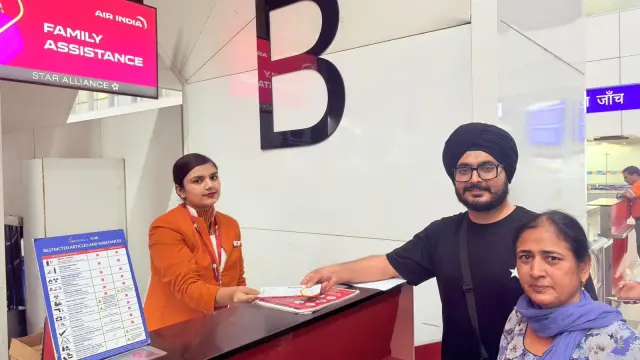
The writer had originally booked a 777-300ER first class seat for 25,000 Air Canada Aeroplan points, partly to sample Air India's new Delhi first class lounge. But that lounge sits on the international side of the airport, out of reach for a domestic ticket. So he swapped to an earlier A350 departure in business for just 12,500 points, paying a C$100 change fee and arriving in Mumbai two hours sooner.
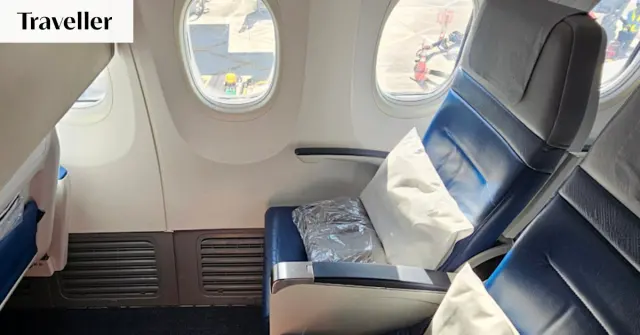
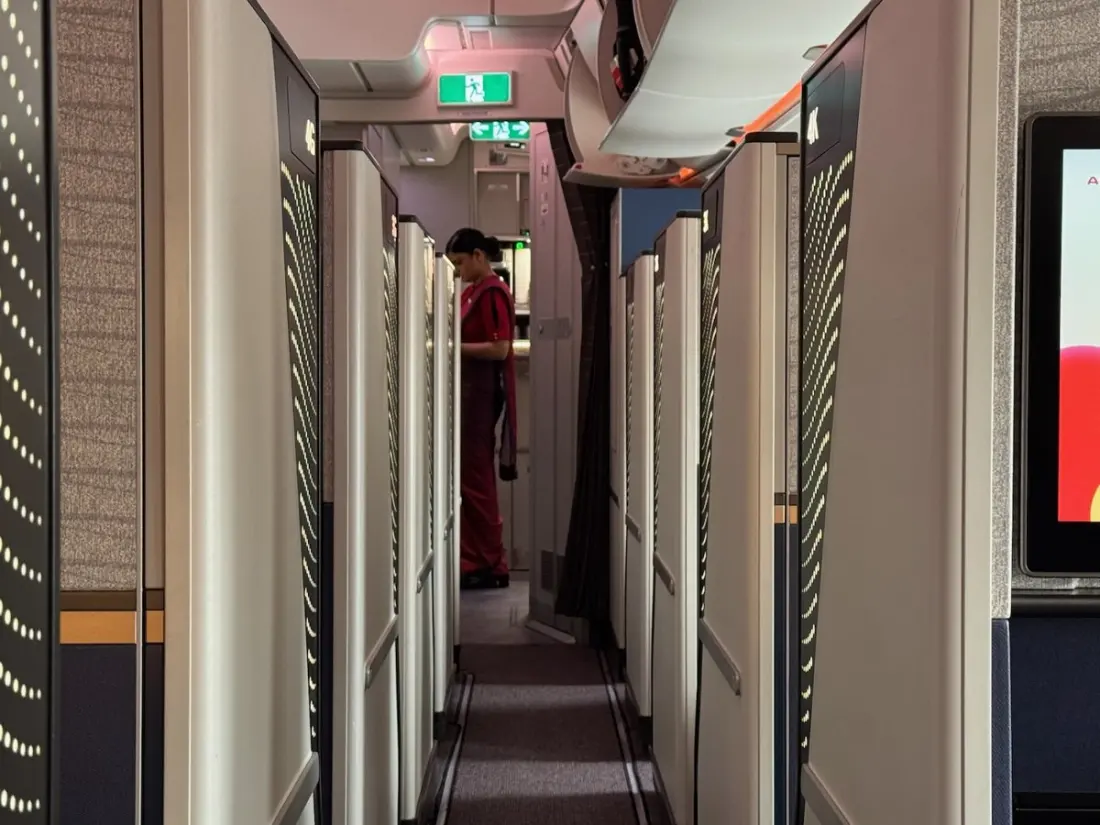
The cabin itself is the real story. Air India's A350s — airframes originally built for Aeroflot before sanctions derailed that deal — carry 28 business suites in a 1-2-1 layout, each with a sliding privacy door, direct aisle access, a small wardrobe, vanity and storage. The seat is Collins Aerospace's Horizon design, also used by Turkish Airlines, and converts into a fully flat 6ft 6in bed. Clever touches include individual air vents, an open-feeling cabin without center overhead bins, and a lamp and window shades that lean first-class. The reviewer also flagged the tray table, which doesn't dig into your knees — a rare bit of ergonomics he genuinely appreciated.
Service matched the hardware. Pre-departure drinks, two rounds of hot towels, a printed menu with four meal choices, and a spotless cabin throughout. The pick of the menu, Amritsari Choley Tikki, was served with proper presentation. There's no alcohol on Air India domestic flights, so it was sparkling water and mint tea instead. Complimentary Wi-Fi (via provider Nelco) worked well, the full entertainment library included the beloved A350 tailcam, and purser Sonal led a crew the reviewer called outstanding.
Even the lavatory got a mention: mouthwash, air freshener, and still clean after meal service.
Why should a traveller care? Because Air India's A350s are increasingly flying international routes too — New York to Mumbai among them — and this review suggests the hard product is genuinely competitive for longhaul. Booking through Aeroplan partner awards keeps the price accessible, and the airline clearly isn't phoning in the soft product on short sectors. If the domestic hop feels this polished, the long-haul version is worth serious consideration for anyone flying to India this year.
One seasonal footnote: Mumbai in July means monsoon. The reviewer landed after five straight days of rain, with more forecast. Flying is fine — but pack accordingly.