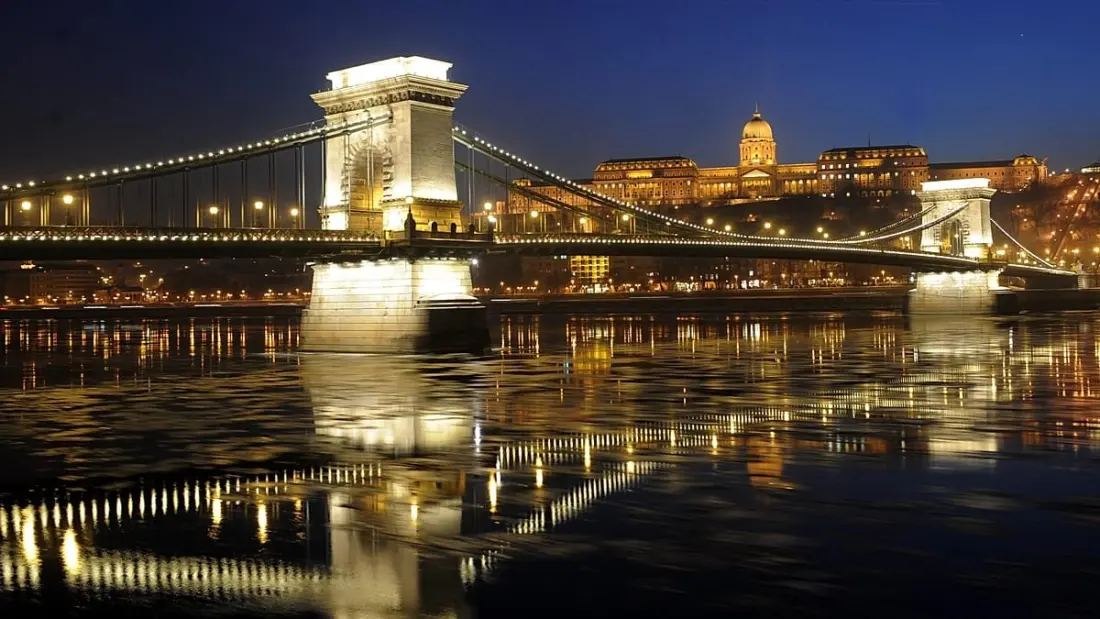
An artificial intelligence project called StreetPulse has scored city centres around the world for attractiveness, and Budapest's historic downtown has landed in 10th place globally. The study, run by researchers at Corvinus University of Budapest and the Toulouse School of Economics, analysed more than three million street images across 150 cities in 70 countries, judging each on seven criteria: beauty, perceived safety, vibrant urban life, pedestrian-friendly design, historical character, comfort and perceived affluence.
Paris tops the two-kilometre-radius ranking with 6.29 points out of 10, followed by Amsterdam, Saint Petersburg, Barcelona and Vienna. Budapest scores 5.83, sitting just inside the top ten ahead of plenty of bigger-name cities. In its core, the Hungarian capital rates especially well on perceived affluence (6.40), historical character (6.38) and pedestrian-friendly design (6.31), plus a solid 6.30 for perceived safety.
The catch is that the scores fall away quickly from the centre. Vibrancy dips to 4.55 and comfort to 4.82 even downtown, and the wider picture is weaker: Budapest drops to 15th when the radius extends to five kilometres, and 42nd across the whole urban area, where Geneva, Amsterdam and Vienna lead. For visitors, though, the tourist-facing centre is what matters most — and that part ranks as world class.
A second, global ranking uses open-source images from Mapillary and Panoramax across more than 160 cities. There, Venice, Paris and Amsterdam take the top three inner-city spots, with Budapest 26th. The open database is cheaper and easier to repeat, though image quality and freshness are patchier than Google's Street View.
The whole thing is interactive. At cities.ccl.center you can explore scores neighbourhood by neighbourhood, build your own rankings and even vote on pairs of street images, helping researchers check how well AI judgements match human impressions. Lead researcher César Hidalgo says the team wants to expand the criteria and work with municipalities to improve public spaces.
Why should travellers care? Partly because it's a fun way to compare destinations before booking — the maps show exactly which districts feel lively, safe or walkable. And partly because it confirms what anyone who has wandered from the Danube promenade through the Jewish Quarter already suspects: Budapest's centre is one of Europe's great strolling environments, best appreciated on foot. The lower comfort scores hint at practical realities — fewer benches, patchier transit links further out — worth factoring in if you're staying beyond the inner ring.