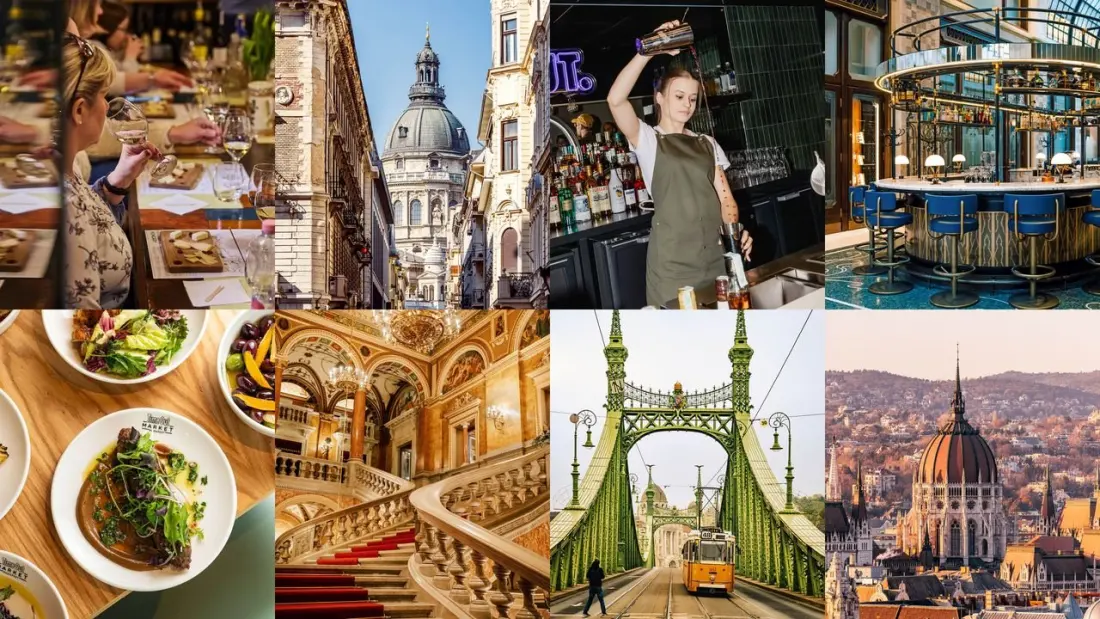
Budapest rewards the long weekend. It's a proper capital but compact enough to cover on foot, tram and the occasional bus through the hill tunnel — with 19th-century grandeur and Art Nouveau on the Pest side, medieval streets up on the Buda hills, and a hotel boom breathing life into buildings that had been shuttered for decades. The smartest move is to base yourself in the 5th District, where most of the good eating, drinking and shopping sits within a short stroll.
Day one belongs to food. Start at the 1897 Central Market Hall under its glazed Zsolnay roof — skip the souvenir paprika and go for mangalica salami, wild boar sausages and a plate of lángos, the fried-dough classic topped with sour cream, garlic and cheese. Then it's a walking crawl through the old centre: an Unicum herbal liqueur with a Bambi orange soda at the retro Ibolya Espresso, real goulash (a soup, Hungarians will insist) at Belvárosi Disznótoros, and Dobos cake at the Astoria Café, barely changed since 1914. Finish the morning with wine and cheese in the vaulted cellar of Tasting Table, or take a Taste Hungary guided tour at 9.30am for around £116.
Afternoons swing between culture and atmosphere. The Dohány Street Synagogue — Europe's largest, closed Saturdays — sits near the old Jewish Quarter, where Szimpla Kert, the original ruin bar, is best seen in daylight before the crowds roll in. Evening one is easy: Time Out Market Budapest, in a converted department store on Blaha Lujza tér, hosts open kitchens from eleven top Hungarian restaurants (including Michelin-starred offshoots) at friendlier prices, plus live music and a serious Hungarian wine bar — order the sweet Tokaji Aszú.
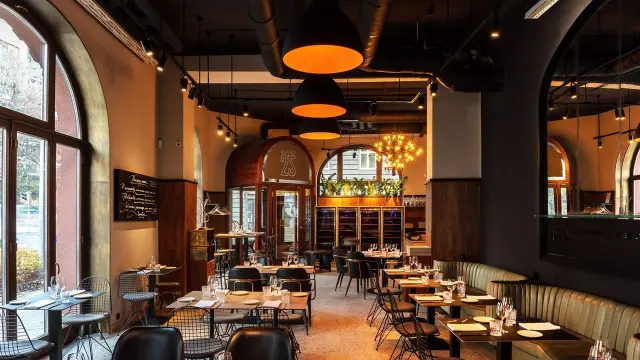
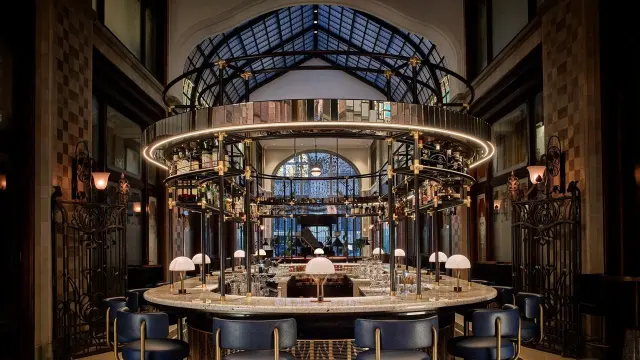
Day two starts under the glass dome of Párisi Udvar, a 1913 arcade of Moorish tiles and stained glass now home to a hotel and Rózsavölgyi's bean-to-bar chocolate. Nearby shops sell handmade ties, UNESCO-listed folk crafts and pieces from Nanushka, the city's leading fashion label. Climb St Stephen's Basilica's terrace for city views (£6-15), then walk past Parliament to the Danube for a drink at MÚZSA in the Four Seasons' Art Nouveau palace. Cross to Buda for rooftop cocktails above Hotel Clark and dinner at Déryné, a brasserie that serves past 10.30pm.
Day three goes green and goes up. Visit the tomb of Gül Baba — the world's northernmost Islamic pilgrimage site, free to enter — then tram out to Óbuda's Kiscelli Museum for 20th-century Hungarian art and old painted shop signs. Lunch on pork knuckle at Zöld Kapu before climbing into the Castle District: Matthias Church's patterned roof, the Fisherman's Bastion terraces looking across to Parliament, and optionally the National Gallery. End at FELIX by the river or tapas in the ivy-draped courtyard of Arquitecto Pitpit.
This itinerary suits first-timers and repeat visitors alike — it's built around walkable daily routes rather than a checklist, and it leans into what Budapest does best: affordable good food, wine, thermal baths (Széchenyi and Margaret Island's Palatinus are the classics) and architecture you don't pay to admire from outside.