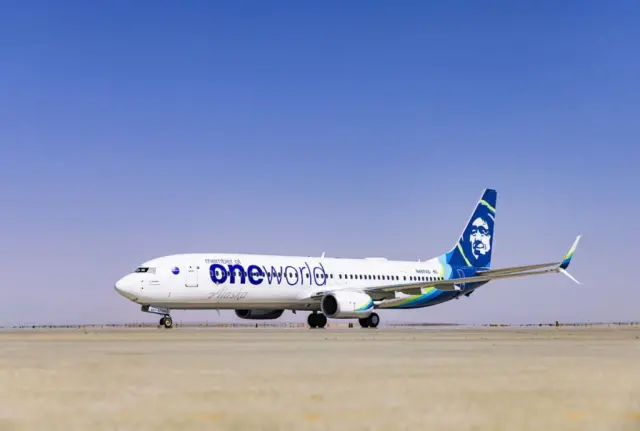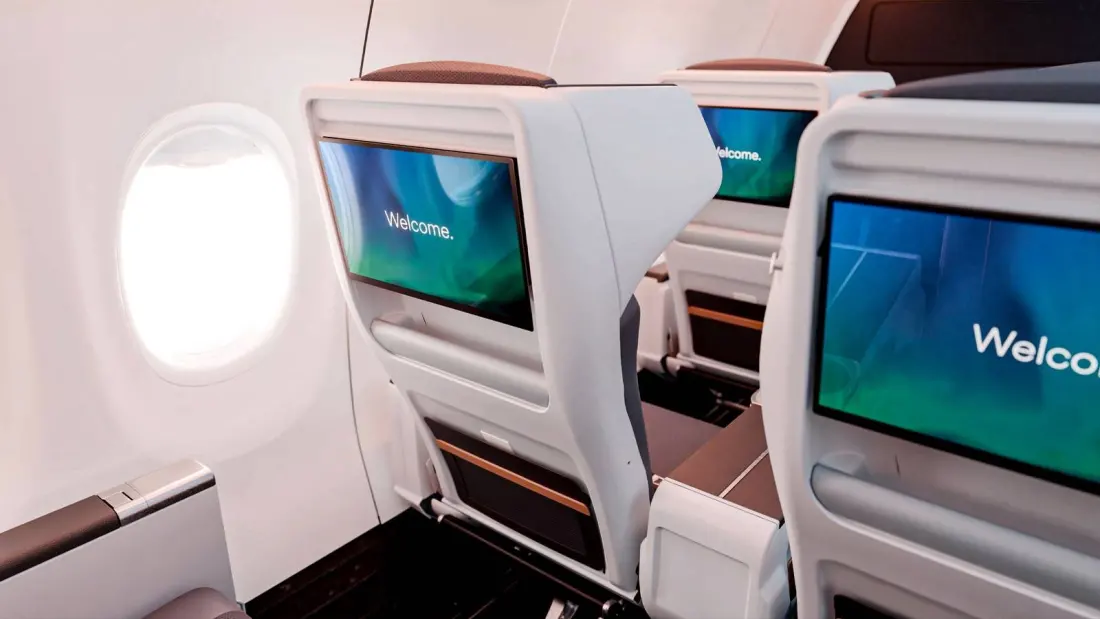
Alaska Airlines is about to fly its first Boeing 737 MAX 10, and the onboard entertainment plan is unusual. Only the two premium cabins will get seatback screens — roughly 15% of about 159 seats on the premium-configured jets. Everyone else streams to their own device over free Starlink WiFi.
The airline announced the layout at its Seattle Investor Day on September 29. At the front of these planes sit new lie-flat Aurora Suites, followed by Premium Reserve, Alaska's first true premium economy. Behind them are Premium Class (extra-legroom economy) and a standard Main Cabin, both screenless. Only the first two cabins get Panasonic Astrova 4K displays, in 19-inch and 16-inch sizes.
There is a catch on timing. The FAA finally certified the MAX 10 on October 20 after years of delays, and Alaska expects 22 deliveries through 2027. But the lie-flat suites are still awaiting seat certification — angled lie-flat seats face rigorous 16G crash sled testing and typically need inflatable airbag seatbelts, a process that takes manufacturers 18 to 24 months. So the first 2027 batch of MAX 10s will fly a standard 188-seat, all-BYOD layout. The 25 premium jets with Aurora Suites are now slated for 2028, flying select transcontinental routes.
Why skip screens at all? Alaska's narrowbodies have never had them, mostly to save weight and cost. The airline is betting that free, gate-to-gate Starlink WiFi — proven on Hawaiian Airlines' A330s on long Pacific routes since the merger — makes seatback hardware unnecessary. Critics note Hawaiian's data is shaky evidence, since the A330s' old screens were dated before passengers abandoned them. Where screens clearly still matter, the data showed, is up front: premium passengers paying top fares don't want to prop up a phone.
That logic only goes so far. Alaska's 787 Dreamliners, built for long-haul international flying, will get seatback screens with Bluetooth in all four cabins. And the airline has left the door open to retrofitting the MAX 10s if passengers grumble about dead batteries and neck strain on six-hour transcon flights, or if corporate travellers defect to Delta and United.
For travellers, the practical upshot: if you're booking an Alaska transcon from 2028, the experience depends heavily on which row you're in. First-class and premium economy passengers get a genuinely upgraded, suite-led product rare on a single-aisle jet. Economy flyers get more seats and cheap fares, but bring a fully charged device and maybe a tablet stand. The MAX 10 is also the domestic feeder for Alaska's aggressive Seattle-based international expansion via its Hawaiian widebodies, so expect this premium-heavy experiment to shape what the airline becomes.
Story via Simple Flying.