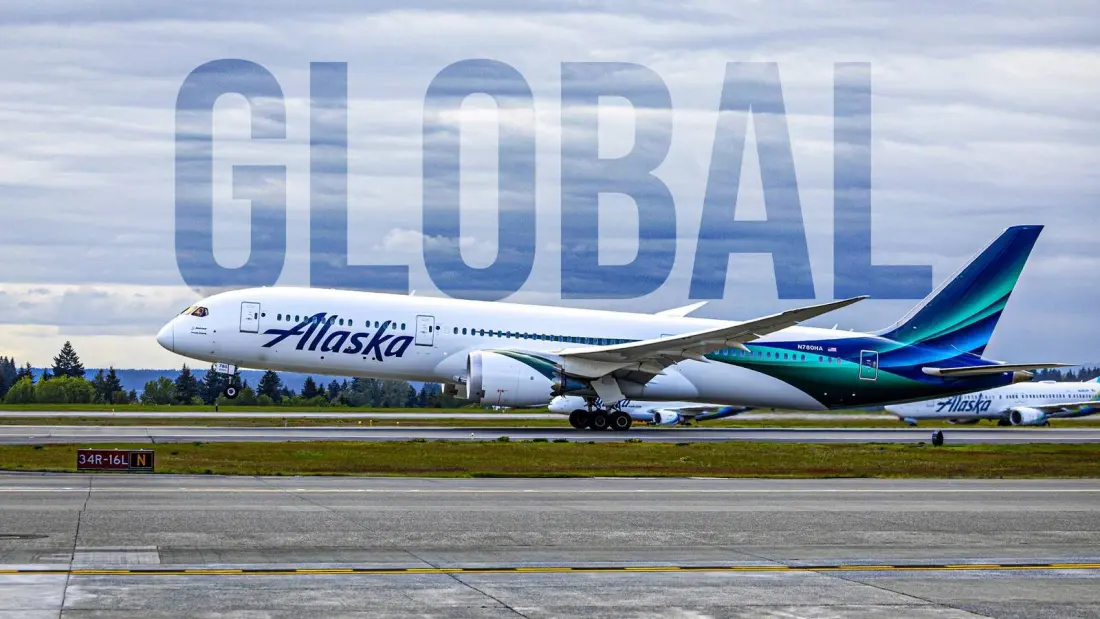
Alaska Airlines already rules Seattle-Tacoma International: the group carried over half of everyone passing through SEA in 2025, and 56.4% of domestic passengers. But when those same travellers fly overseas, most of them defect. Alaska held just 14.7% of SEA's international traffic in 2025 — Delta actually beat it, at 24.8%. Fixing that mismatch is now the centrepiece of the company's strategy.
The logic, as CEO Ben Minicucci put it at a J.P. Morgan conference, is blunt: Pacific Northwest customers give their loyalty to someone else the moment they fly internationally. Alaska doesn't need to win new customers at home — around 70% of SEA passengers start or end their trip in Seattle — it needs to keep the ones it already has when they book Tokyo, London or Rome.
The Hawaiian Airlines acquisition, completed in September 2024, gave Alaska a shortcut. Overnight it gained 24 Airbus A330s, existing Asia and South Pacific routes, and decades of widebody operating know-how it would otherwise have spent years building. The combined group now runs five 787-9s alongside Hawaiian's A330 fleet, with twelve more Dreamliners on order. Early numbers look encouraging: Seattle–Tokyo Narita turned profitable less than a year after launch, and both Tokyo and Seoul posted load factors above 90% in the first quarter.
By summer 2027, Alaska plans seven intercontinental routes from Seattle: Tokyo Narita and London Heathrow daily year-round, Seoul five times weekly, plus summer-seasonal daily Rome, daily Reykjavík (flown on a 737 MAX 8 to save scarce Dreamliners), three-times-weekly Athens — its longest route ever — and five weekly Paris flights, both starting May 2027. The broader target is 15 long-haul destinations from Seattle by 2030, with long-haul growing from 8% to about 15% of group capacity. Possible future candidates include Ho Chi Minh City, Madrid, Sydney and even India.
There's a premium push behind it all. Under the Alaska Accelerate plan, the airline wants premium revenue above 40% of the total by 2030, and is rolling out new Alaska Aurora and Hawaiian Leihōkū cabin experiences, a true premium economy called Premium Reserve, and 737 MAX 10s with 12 lie-flat business seats. The 787-9s will be nearly half premium seats by 2030. Loyalty and cargo round it out: Atmos Rewards is targeted at roughly $4 billion in annual cash flow, and cargo revenue at $750 million a year.
Why should travellers care? If it works, you get something rare in the US market: a carrier with genuine regional dominance that can fly you from Spokane, Portland or Anchorage through Seattle straight to Europe or Asia — without ever needing Delta, British Airways or Korean Air. It's still early, and Alaska is juggling a lot at once, but the first routes are filling up fast.
Original reporting by Simple Flying.