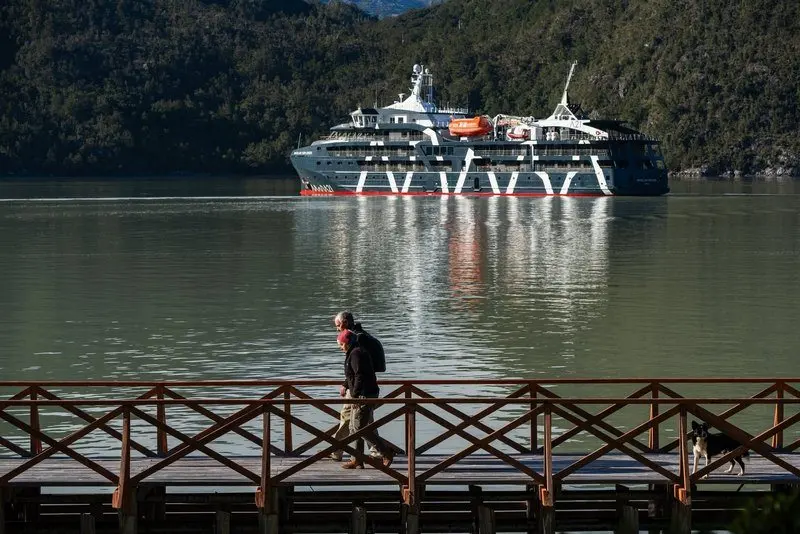
The southern expedition cruise season is officially underway. Antarctica21 started its 2026-27 programme in mid-September, sending its 100-passenger Magellan Explorer out of Puerto Montt on a Patagonia and Chilean fjords itinerary — a warm-up act before the ship heads much further south.
From mid-October, the vessel shifts to cruises taking in the Falkland Islands and South Georgia, two of the most wildlife-rich stops in the Southern Ocean. Then, from November, the real headline act begins: the Magellan Explorer moves to Antarctica for a full season of fly-cruises running through to late March 2027.
The fly-cruise format is what sets Antarctica21 apart from most operators. Instead of spending two days crossing the Drake Passage by ship, guests fly from the Chilean city of Punta Arenas to Frei Station on King George Island in the South Shetlands — a two-hour hop that puts them straight onto the ship. From there, itineraries explore the South Shetland Islands and the western Antarctic Peninsula before returning to King George Island for the flight back to Chile. Plans are weather-dependent, as you'd expect this far south, but the payoff is time spent among ice-filled fjords, icebergs, penguins, seals, seabirds and whales rather than open-ocean swells.
The bigger news for the season is a debut. On December 15, the Magellan Discoverer welcomes its first guests — a 100-guest vessel built at Chile's ASENAV shipyard, making it a genuinely homegrown Antarctic expedition ship. It replaces the chartered Ocean Nova and comes with an unusual feature for a small cruise ship: a dedicated onboard science lab run in partnership with Chilean scientific institutions. Sensors fitted throughout the ship will continuously log water temperature, salinity and air quality data across the entire Antarctic season, so passengers effectively travel aboard a working research platform.
For travellers weighing up an Antarctica trip, this season offers more choice and a shorter, gentler way in. The fly-cruise model suits anyone short on time or nervous about the Drake Passage's reputation, trading a couple of days at sea for a couple of hours in the air. The dual-ship season means more departure options between November and March, and the Patagonia and South Georgia legs give flexibility if you want a sub-Antarctic trip with or without the White Continent.
Worth noting: the December debut of the Magellan Discoverer lands right at the start of peak Antarctic summer, when daylight is near-endless and wildlife activity is at its busiest — arguably the best window to be aboard a brand-new ship. And with science woven into the itinerary, this is a good fit for travellers who want their expedition cruise to feel like more than a sightseeing trip.