Twenty-two hectares on the outskirts of Rome were once slated for a shopping mall and housing. Then builders hit archaeological remains, the project collapsed and the land sat derelict, attracting vandalism. That's when a group of friends in the food business decided it should grow vegetables instead.
In 2011, Giacomo Lepri and seventeen others — farmers, chefs and waiters who had all seen the damage done by long supply chains and intensive agriculture — launched Cooperativa Coraggio. After winning a court challenge over the Borghetto San Carlo Estate in 2015, they turned the abandoned block into a working organic farm, and set a legal precedent. The municipality now openly awards similar abandoned plots to young farmers without deep pockets. That ripple effect has been striking: a 21-year-old received 33 hectares in Rome's Marcigliana Nature Reserve, a young family took on 70 hectares north of the city for regenerative grazing, and the case helped shape a national land-access programme now active in around 900 Italian municipalities.
The farm itself is a lesson in adaptation. With no well on the property, the team chose crops suited to a hot, dry future — most famously the siccagno, an ancient Sicilian heirloom tomato that needs about one glass of water per plant per week. They've added rainwater tanks and are even experimenting with fog nets to harvest moisture from the air. Produce from the fields goes to four Rome restaurants (including two pizzerias run by celebrated chef Gabriele Bonci) and five local shops, while the co-op employs six farmers, trains four interns and runs agriculture programmes for people with intellectual disabilities.
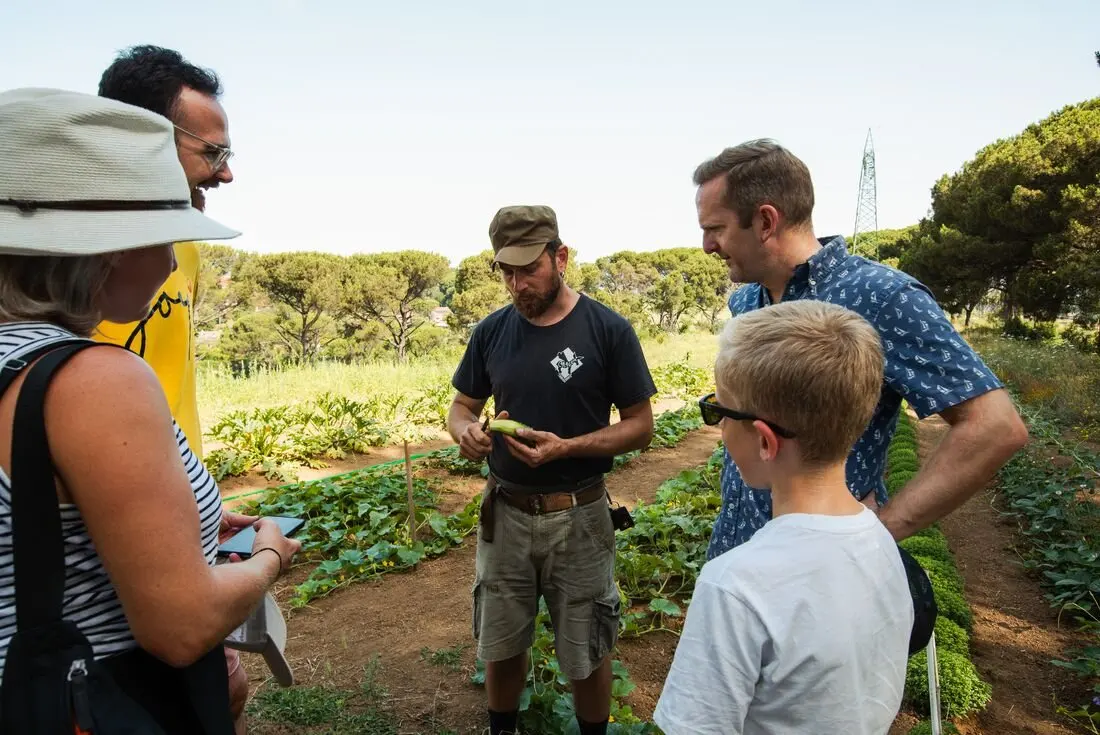
Since 2024, Intrepid has been the only tour operator bringing visitors here, on its Paris to Rome by Rail itinerary. Travellers tour the fields, then sit down at a long wooden table to make panzanella with tomatoes and basil picked minutes earlier, guided by Alessia Mazzu, a sustainability graduate who came for a two-week placement seven years ago and never left. The Intrepid Foundation has funnelled more than AUD 194,000 to the co-op, plus a AUD 50,000 grant for solar-powered showers at a volunteer hostel being converted from an old farmhouse — a step towards their bigger plan of an agroecological hub with education programmes, food processing and a restaurant.
For travellers, this is farm-to-table in the truest sense: the distance between the field and your salad is measured in steps. It's a story that makes a rail trip into Italy more than scenery and monuments — your lunch stop funds jobs, climate-smart farming and land access for a generation who'd otherwise be priced out of agriculture. The co-op's logo says it all: a donkey with wings, a cheeky nod to the Italian version of "when pigs fly" and how far their improbable idea has flown.
Story via Intrepid Travel Blog.