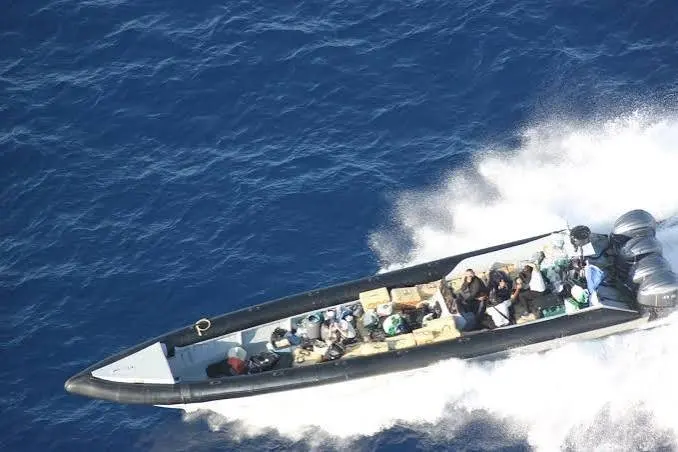
Almost daily now, something is being seized on Portugal's southern coast: a high-speed 'narco launch' abandoned on a beach, or a car packed with jerry cans of fuel. And according to Faro's top anti-drug prosecutor, the people behind it have little reason to worry — because Portugal's own laws are working in their favour.
António Ventinhas, who heads the DIAP investigation and prosecution office in Faro, has gone public with a blunt warning: trafficking networks are now effectively installed in the country, and they know it. Suspects caught transporting large quantities of fuel — widely understood by police to be logistics support for drug boats — are simply let go. Possessing that fuel is not a crime in Portugal, so officers can only confiscate the cans and release the individuals, even when they are undocumented foreign nationals.
The scale is striking. In the Algarve alone, fuel seizures are happening every day and have topped 100,000 litres in recent months. Much of it, prosecutors believe, is bought in Spain — where it is cheaper — then driven across the border to refuel boats at sea or straight on the sand, before running cocaine from South America or hashish from Morocco into Europe. Spain treats possession of this kind of fuel as a criminal offence precisely because of its use in smuggling runs; Portugal does not, and Ventinhas is calling legal reform 'very urgent'.
Resources are the other half of the problem. The Algarve's DIAP has just four prosecutors covering the entire region — two for the east, two for the west — and the Maritime Police have openly flagged chronic understaffing. Ventinhas points to joint operations with Spain as proof of the gap. His comments came days after Interior Minister Luís Neves admitted drug trafficking is Portugal's biggest security threat, though without any announced reinforcement of the coastal frontline.
For holidaymakers, the Algarve itself remains as welcoming as ever — this is an smuggling logistics story, not a street-safety alert, and the activity happens at sea, on remote west-coast beaches and at night. But it does explain the odd sight of police tape on otherwise quiet stretches of coastline near towns like Aljezur, and why a handful of remote beaches occasionally make headlines for abandoned boats. If anything, it's a reminder that the wilder western Algarve is a working coastline, not just a postcard — and that the region's famous beaches between Faro and Sagres are being patrolled more actively than usual. Anyone planning a trip needn't change a thing, but travellers curious about the region beyond the resorts may notice the story playing out quietly around them.