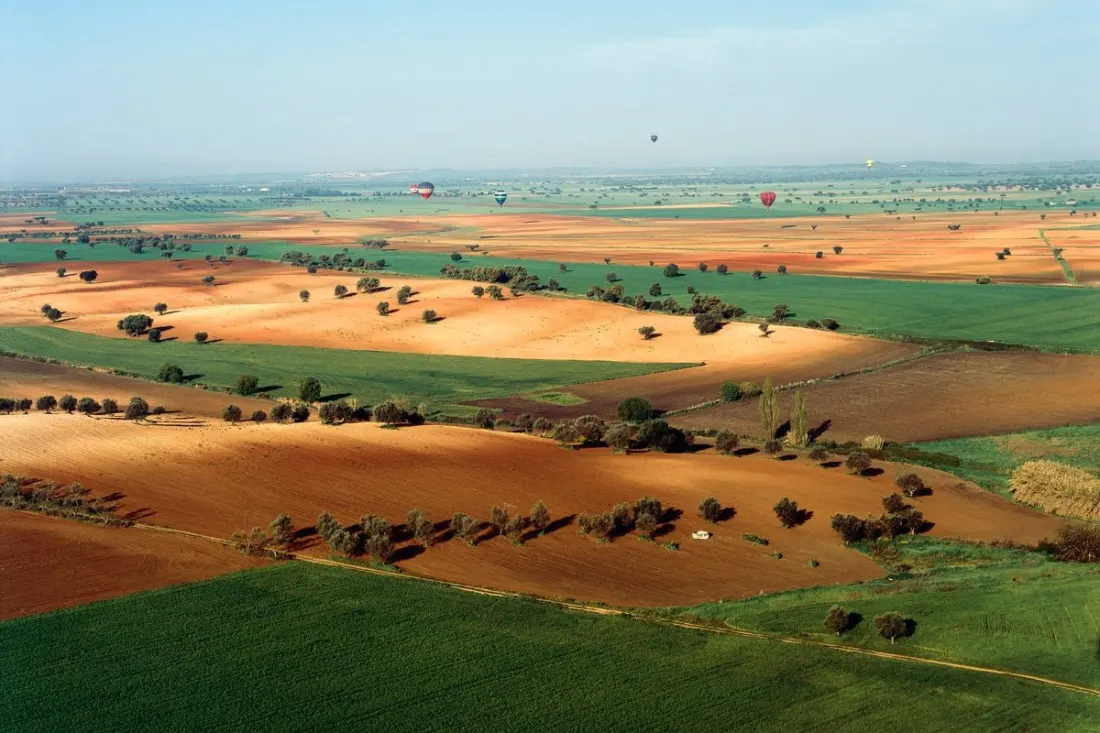
Drive an hour or so southeast of Lisbon and the Portugal of guidebooks gives way to something quieter. The Alentejo covers roughly a third of the country's land but holds barely five per cent of its population — a slow, golden sweep of cork oaks, olive groves and whitewashed hill towns that feels like Tuscany half a century ago, minus the crowds.
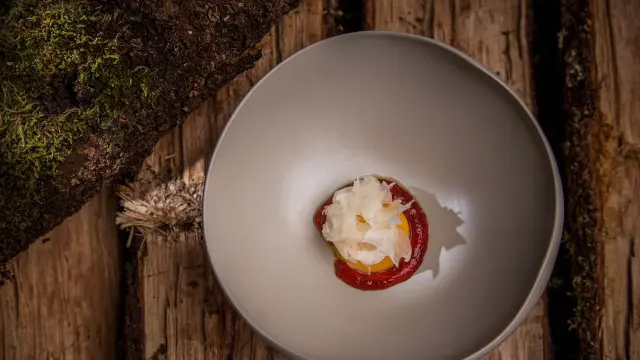
The region rewards detours. In Viana do Alentejo, a former cereal mill has been reborn as the Moagem Industrial Lodge, its concrete, steel and seven-metre chimney left proudly on show. Chef Pedro Dias cooks over open fire at its Oagem Kitchen — try the watermelon gazpacho with tomato water, a signature dish that sums up the Alentejo's knack for making old ingredients feel new.
Wine is the region's other great story. Near Reguengos de Monsaraz, fourth-generation winemaker Duarte Leal da Costa of Ervideira hosts tastings — sometimes blindfolded — across six wines from a family estate rebuilt after the vineyards were lost in the 1974 revolution. Thirty grape varieties grow here, including a bestselling white made from red grapes, and 30,000 bottles age underwater in a reservoir. For something rawer, Gerações da Talha keeps alive the Roman-era tradition of fermenting in giant clay vessels called talhas; Teresa Caeiro is the first woman in Portugal to lead winemaking this way.
Évora, the region's capital, layers a Roman temple, medieval lanes, convents and tiled palaces into one walkable centre, and cork souvenirs — bags, hats, jewellery — are everywhere. Eat at Tua Madre for playful modern cooking or Fialho, which feels untouched since the 1950s, for smoked ham and codfish served with ceremony.
South of Évora, the Alqueva reservoir — Europe's largest artificial lake, its shoreline running roughly 700km — opens the landscape up even further. Pontoon picnics and a man-made beach are pleasant enough, but the real draw is the emptiness. Nearby, Monsaraz gathers whitewashed houses behind medieval walls on a hilltop that glows at sunset, with the polished wine hotel Quinta do Paral and the design-led estate of São Lourenço do Barrocal, ringed by olive trees said to be 2,000 years old, close by.
The trip ends dramatically in the far east, where Marvão perches in the São Mamede hills behind tenth-century walls. Fewer than forty people live up here among the cobbled streets, yet Hotel do Museu serves serious cooking from a chef who trained with a Michelin-starred Frenchman in Japan — bread with salt flakes, basil sorbet, four-day pineapple infusion — with a view over almost nobody else's horizon. Estremoz adds one final surprise: Casa Gadhana, where Brazilian chef Michele Marques turns a small boutique hotel into a destination worth the drive itself.
This is road-trip travel at its most satisfying: short distances, varied stops, family-run wineries and hotels with character rather than branding. For anyone who has done the Algarve and wants the Portugal locals talk about, the Alentejo is the answer — for now, at least.