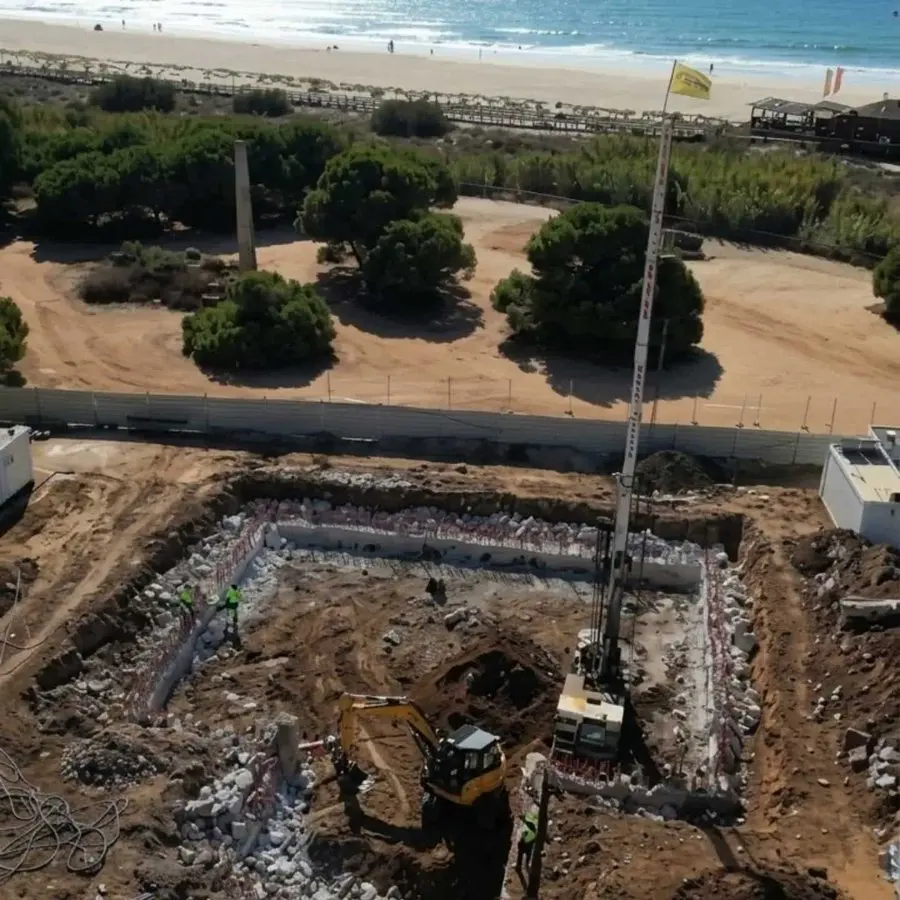
The Algarve's water politics just got messier. Albufeira council has halted construction of the contested desalination plant behind Praia da Falésia, with mayor Rui Cristina alleging the project breaches the Municipal Master Plan. He insists he supports desalination in principle — he simply wants the rules followed, plus a longer offshore outfall so concentrated brine is released further out and deeper. The government disagrees: Environment and Energy Minister Maria da Graça Carvalho says an initial legal reading suggests most work can continue, and she has accused her 'opponent' of political games.
Into this row steps PAS, the Sustainable Water Platform, an alliance of environmental groups including Almargem, A Rocha Portugal, LPN, Quercus and ZERO. It has filed submissions to the ministry arguing the plant should be scrapped entirely — along with two other big schemes, a Guadiana extraction at Pomarão and the Foupana dam.
PAS's core argument is simple: fix the leaks first. Urban networks in the Algarve lose around 27% of their water, while only about 2% of wastewater is reused. The up to €170 million earmarked for desalination, the group says, would go further on repairs and reuse. There's also a bill-shock warning: if desalinated water supplies 20% of the public system, the cost of that expensive source gets spread across all of it, pushing up everyone's tariffs.
Who uses the water matters too. Agriculture accounts for roughly 58% of Algarve consumption, and PAS argues that expanding irrigated, water-hungry crops in a region of declining rainfall is the wrong direction. The Pomarão scheme, it warns, would enable more irrigation while giving farmers cheaper river water than the desalinated supply households would end up paying for.
The environmental objections are detailed. PAS says the plant, its solar installation and its intake and brine-discharge infrastructure were assessed separately rather than together, and that vegetation was cleared during bird-nesting season. At sea, intakes can suck in fish larvae and the constant salty discharge could drift with coastal currents toward the Ria Formosa and the protected Pedra do Valado marine park.
The proposed Foupana dam draws similar criticism: risks to native fish, Iberian lynx habitat and over 70 hectares of holm oak woodland, plus the blunt question of how a new reservoir will reliably fill as rainfall drops.
Instead, PAS wants soil restoration, native reforestation, rainwater harvesting in buildings, treated wastewater piped to golf courses and gardens, metered and inspected abstraction, and strict limits on new swimming pools — with tourism growth tied to demonstrable water availability.
Why should travellers care? The Algarve's beaches, golf courses and green landscapes all depend on water that is getting scarcer and more expensive. If you visit the region in coming years, expect this debate to shape what gets built, what the coast looks like, and possibly what you pay for a hotel room. One wet winter won't settle it — this is a structural shift, and the row over how to respond is only beginning.