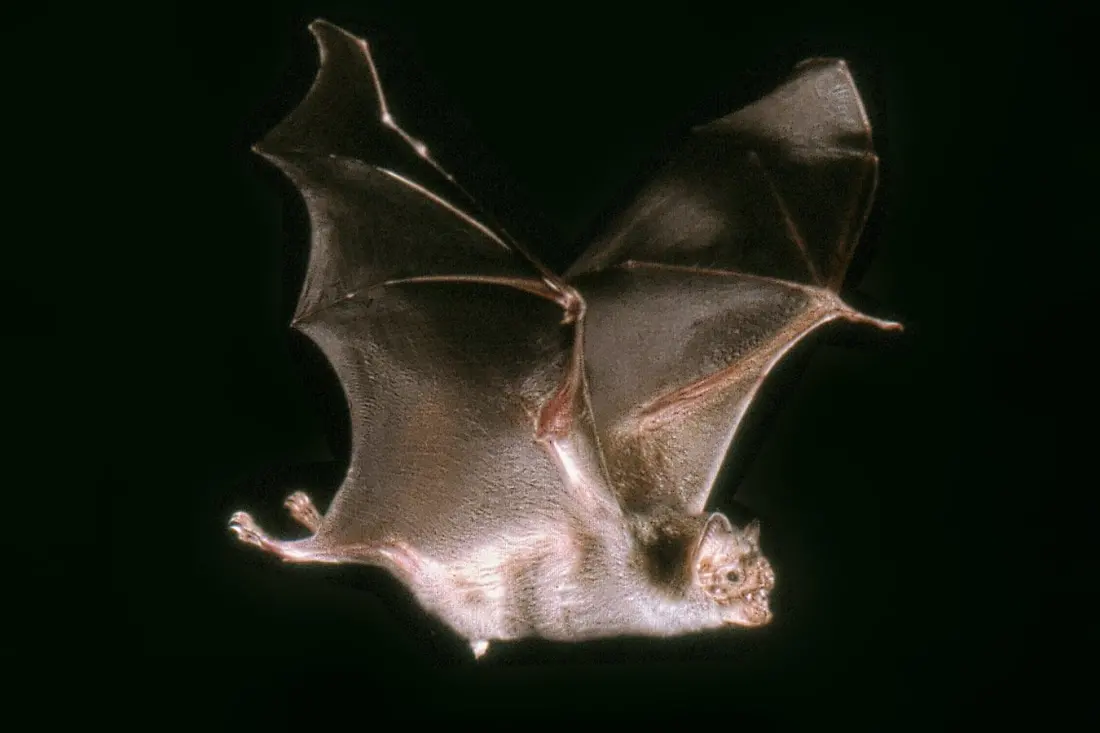
Forget the Halloween version. Colombia's real vampire bats are mouse-sized animals — the common vampire bat weighs about 30–40 grams with a wingspan of 35–40 centimetres — and they mostly want to bite cattle, not you.
Colombia hosts all three Latin American vampire bat species. The common vampire bat (Desmodus rotundus) feeds mainly on mammals, which puts it squarely in the frame for livestock problems. The white-winged and hairy-legged species prefer birds. All three are native to the region, and the common vampire bat ranges from Mexico down to northern Argentina, sheltering in caves, tree hollows and abandoned buildings. Unusually for a bat, it can also walk, run and hop on the ground.
The livestock issue is genuine. A study published in March 2026 in Revista MVZ Cordoba mapped rabies transmission risk to cattle and flagged 88 municipalities as high risk, concentrated in the Caribbean region with additional zones along the Andes. The model also found that 87.1% of Colombia's land area meets conditions where transmission could theoretically occur — though that doesn't mean rabies is present everywhere. Distance from forests, cattle density, temperature and rainfall were the key factors, and the map is now guiding vaccination planning.
For humans, the risk is real but narrow. Vampire bats don't suck blood; they make a small cut with sharp teeth and lap, aided by anticoagulants in their saliva. They occasionally bite people, and an infected bat can transmit rabies, which is almost always fatal once symptoms appear. If you're travelling in rural Colombia — caving, staying on a hacienda, exploring at dusk — don't handle bats with bare hands, and if you're ever bitten, wash the wound with soap and water and get medical help immediately.
There's a fascinating upside too. Bat saliva has inspired medical research: an anticoagulant protein is literally named draculin, and an enzyme called desmoteplase, derived from vampire bat saliva, was studied as a clot-busting treatment for ischemic stroke. Clinical trials were mixed and it never became routine therapy, but it shows how one animal's feeding trick can shape human medicine.
For travellers, the takeaway is simple rather than scary: vampire bats are a farm and public health issue, not a reason to avoid Colombia. Enjoy the country's caves and countryside, keep your distance from wildlife, and know what to do in the unlikely event of a bite.
Story via Colombia One.