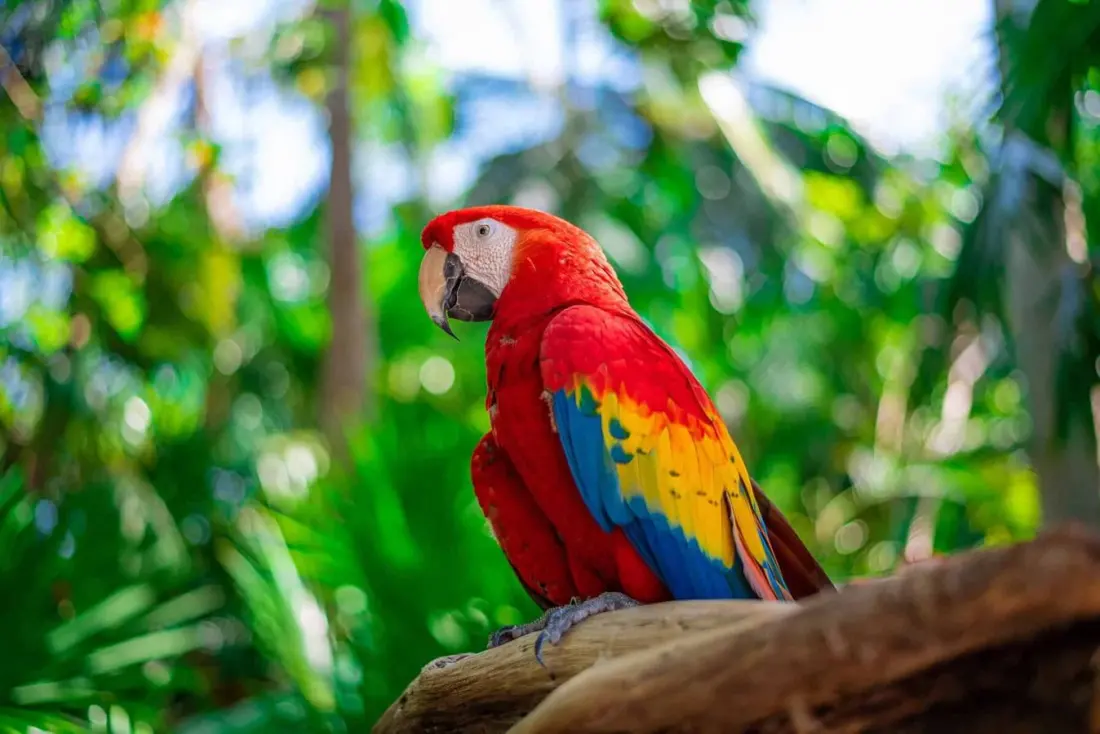
Breeding season has begun for the wild scarlet macaws of Costa Rica's Central Pacific coast, and this year you don't need binoculars or a guide to follow it. Punta Leona Beach Club & Nature Resort, near Tárcoles in Garabito, has installed three new camera-equipped artificial nests for the 2026 season, bringing its total to 11. The cameras stream around the clock at lapasrojaspuntaleona.com, which has an English version, and the birds are entirely wild — the footage exists so researchers can monitor nests without getting near them.
The season has a rhythm. From October to December, pairs court, hunt for cavities and prep their nest sites. Eggs arrive between December and January 2027, take 23 to 28 days to hatch, and chicks stay in the nest for 78 to 90 days before their first flight. Nesting continues through June, so there's a long window to tune in.
There's a solid track record behind the cameras. Across the 2017 to 2025 seasons, the program logged 98 eggs in monitored nests, with 69 hatching and 46 chicks fledging. Each fiberglass nest is about a metre tall, mounted in trees 15 to 20 metres up and lined with wood chips to mimic a natural hollow. Biologist Christopher Vaughan, who coordinates the project, says it started 36 years ago, with early studies of real tree cavities shaping the design.
The backstory is the best part. Some of the people who now build the nests were once laperos — poachers who raided macaw nests to sell chicks. Converting them into nest-builders is, in Vaughan's words, an excellent example of habitat management, though chick poaching still persists elsewhere in the country, notably around the Osa Peninsula.
The effort is clearly working. Roughly 215 macaws were counted in the area in the early 1990s; current monitoring puts the population near 800 — close to a fourfold increase — with about 70 living at Punta Leona itself. The program has also reforested with native species like ceiba, royal palm and beach almond, feeding and housing future generations of birds. Macaws are now turning up in Esparza, Orotina, Parrita and around La Cangreja National Park, and neighbouring Carara National Park remains one of the most dependable places in Costa Rica to see them flying.
Why should a traveller care? If you're dreaming of Costa Rica, the streams are a free preview of one of its most spectacular birds — and a good reason to build a stop at Carara or the Central Pacific into your itinerary. Activity in the nests picks up from December, right as the dry season starts, so a trip timed for then could let you watch eggs and chicks in person after following them online.
Original source: The Tico Times