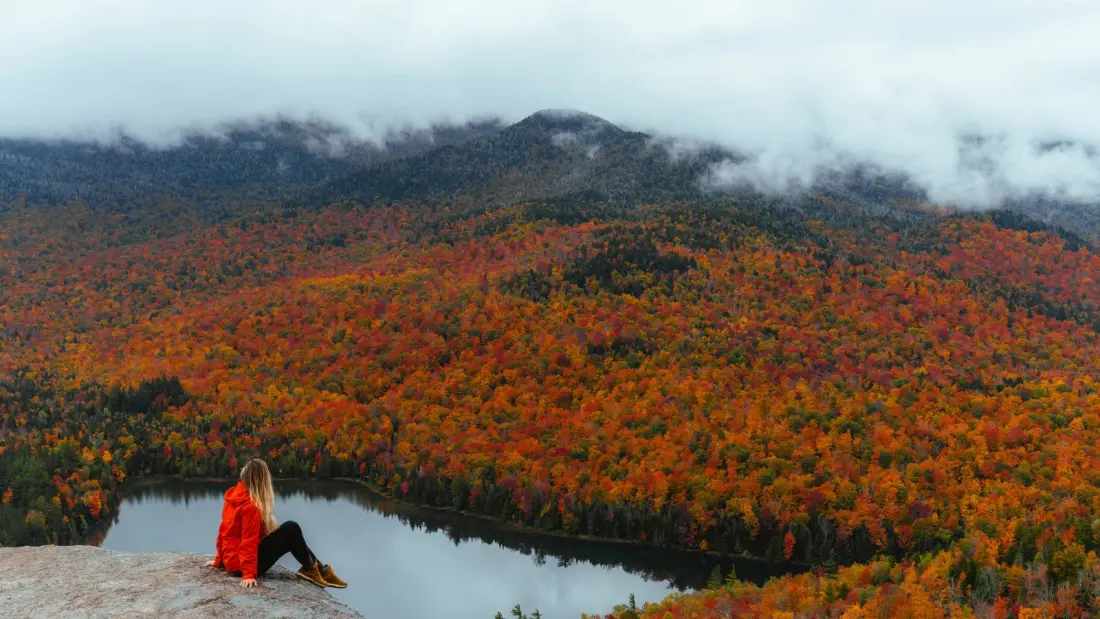
A tough, nearly all-day hike in upstate New York has just been handed some serious bragging rights. The Algonquin Trail, a 10.3-mile out-and-back route in the High Peaks Wilderness near Lake Placid, has been named among the country's best scenic trails in National Geographic's new book "100 Hikes of a Lifetime U.S.A." by explorer Stephanie Pearson — a list that also features California's Lost Coast Trail and the American Discovery Trail.
The trail climbs three of the four peaks in the MacIntyre range: Wright Peak at 4,580 feet, Algonquin Peak at 5,114 feet (the second-highest mountain in New York State), and 4,840-foot Iroquois Peak. Expect 8 to 10 hours on foot, with rewards that justify the burn — sweeping views from the top of Algonquin and a full 360-degree panorama of the High Peaks from Iroquois. The route was first mapped by Bob Marshall, the legendary forester and Wilderness Society founder who became the first person to summit all 46 Adirondack High Peaks. There's an odd historical footnote too: wreckage from a B-47E bomber that crashed in 1962 sits just off the path on the Wright Peak climb.
Timing matters here. July through October offers the driest conditions and the most reliable footing on what is a genuinely demanding route. The Adirondack Park itself is enormous — 6 million acres, larger than Vermont, and bigger than Yosemite, Yellowstone, Grand Canyon and Great Smoky Mountains combined — so even a weekend gives you plenty of trail options beyond this one.
The smart play is to base yourself in Lake Placid. It's a former two-time Winter Olympics host (1932 and 1980) with a cosy, boutique-heavy village centre, craft breweries, good restaurants and an Olympic Museum stocked with medals and team uniforms. Mirror Lake is picture-postcard stuff, and the surrounding waters offer kayaking, canoeing and whitewater rafting. Come winter, the region pivots to skiing — Whiteface Mountain has the greatest vertical drop east of the Rockies.
Getting there is easier than the wilderness setting suggests. Albany, Burlington (Vermont) and Montreal international airports are each roughly two hours' drive away, and Montreal is only about two hours from the trailhead. That makes it a feasible long-weekend trip for hikers in the Northeast and eastern Canada alike.
If you're a committed hiker chasing a new badge, the National Geographic nod makes the Algonquin Trail an easy sell. If your travel companions are less mountain-inclined, the Lake Placid base camp means nobody has to summit anything to have a good trip.