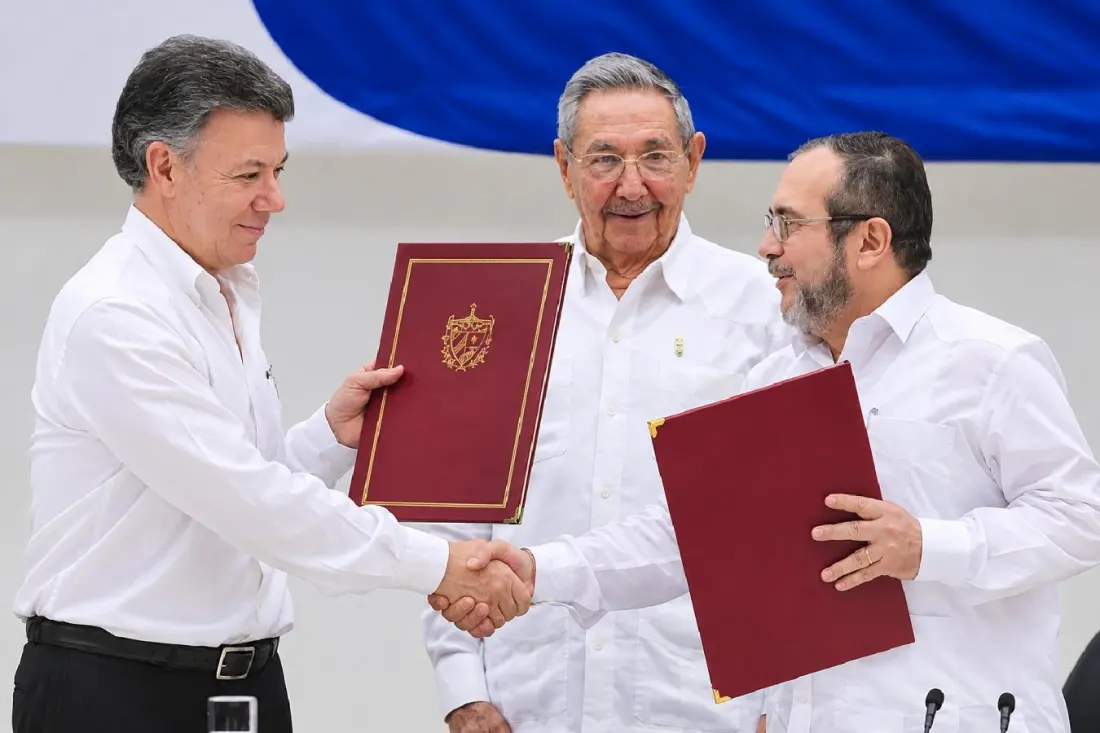
Ten years after Colombia's government and the FARC-EP guerrilla group signed the agreement that ended more than five decades of war, the country's Ombudsman's Office has released a sobering progress report — and it paints a mixed picture that anyone planning a trip to Colombia should understand.
The report, titled Victims at the Center, a Constitutional Commitment: Ten Years of the Peace Agreement, was published on November 11, 2026. Its headline achievements are real: 10,943 former guerrillas remain in the reincorporation process (about 76% of those accredited), nearly 7,000 have finished high school, 99% are enrolled in the health system, and over 6,000 productive projects have been launched. The Special Jurisdiction for Peace, the transitional court handling conflict-era crimes, has moved forward on 11 macro-cases and issued five convictions. Perhaps most striking for visitors, multidimensional poverty in rural areas prioritised under the PDET development programmes dropped from 47.2% in 2018 to 26.1% in 2025 — a change many travellers to regions like Catatumbo or the Pacific coast have witnessed firsthand.
But the warning signs are hard to ignore. The Ombudsman's Office recorded 1,743 murders of human rights defenders between January 2016 and June 2026, plus 521 killings of peace agreement signatories. Mass displacement jumped from 12,841 people affected in 2017 to 107,924 in 2025. As of July 2026, the Early Warning System had two national alerts and 120 territorial alerts covering 396 municipalities and 15 Indigenous territories — that's a large share of the country where armed groups remain active.
Reparations for victims have also lagged badly. Only 63 of 1,367 recognised collective reparation subjects (4.6%) have completed their state-run plans, and just 2.9% of displacement return programmes have finished. Roughly eight in ten victims have never accessed the national psychosocial support programme, and the Kroc Institute found only 13% of the agreement's 130 gender-focused provisions fully implemented as of November 2025.
Why does this matter to travellers? Colombia has become one of South America's most popular destinations over the past decade, and the peace deal is a big reason why — formerly off-limits regions like Caño Cristales, the Sierra Nevada and parts of the Amazon basin opened up to tourism. But the report is a reminder that the conflict's remnants persist in specific rural and border areas, even if major cities and established tourist corridors are generally unaffected. Anyone heading beyond the classic Bogotá-Medellín-Cartagena circuit should check current advisories and the status of the municipalities on their route. The broader takeaway is nuanced: the peace process has delivered genuine transformation, but its fragility in remote areas is exactly where adventurous travellers tend to go.
The Ombudsman's Office closes by urging the state to preserve what has worked and act decisively on the rest — a message that resonates far beyond Colombia's borders.