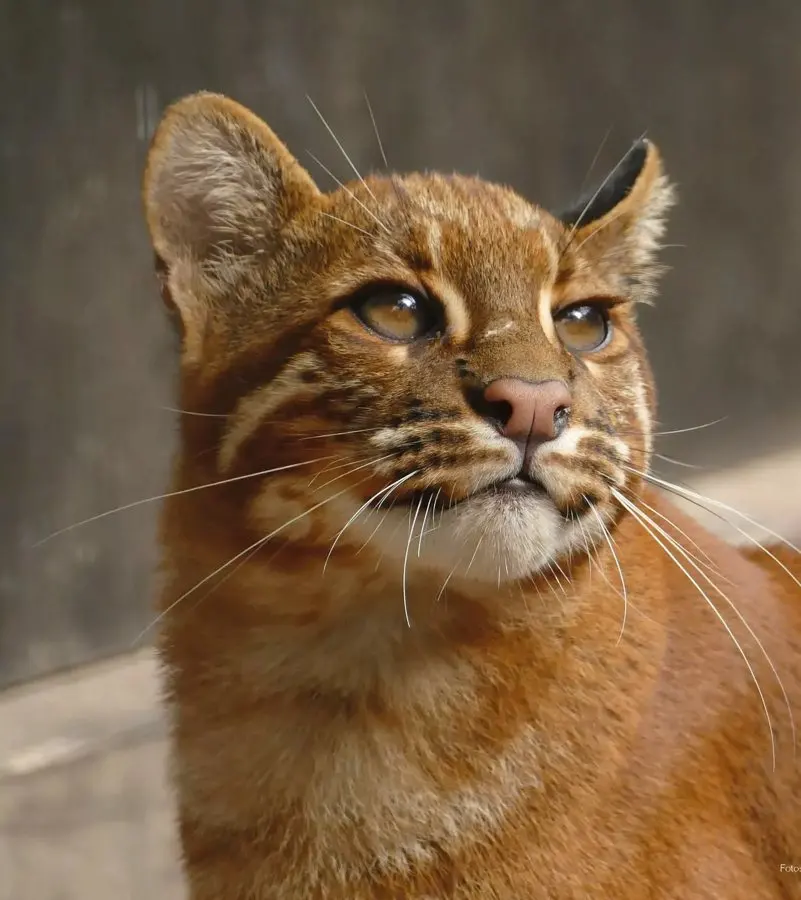
A shy, forest-dwelling wild cat from Southeast Asia may soon be bred commercially for private owners worldwide. PT Alam Nusantara Jayatama, an Indonesian company, has applied to CITES to register a captive-breeding operation for Asian golden cats — and if approved, it would be the first facility anywhere to breed the species for the international pet trade.
The Asian golden cat (Catopuma temminckii) is listed as Vulnerable by the IUCN, with an estimated 7,000 left in the wild. Habitat loss, poaching for skins and bones, and forest fragmentation have all taken a toll. Because wild-caught cats are protected under CITES Appendix I — banning international commercial trade — the distinction between wild and captive-bred animals is everything here. Registered breeding facilities can legally export their animals with the right permits, which is exactly what the company is seeking. Indonesia's Ministry of Forestry documents claim the programme grew from four wild-caught cats acquired in 2013 to 36 animals across three generations by 2025. The CITES Secretariat gave member countries until 10 November to lodge objections.
Big cats specialists are sceptical. Mike Brocklehurst, who ran the Asian golden cat breeding programme at Melbourne Zoo, says the species is notoriously difficult to breed in captivity — males can kill females when introduced. A jump to 36 cats in roughly a decade suggests kittens may be removed from their mothers early and hand-reared so females breed again sooner, a so-called speed-breeding approach with behavioural consequences. Sandra Reichler of Heidelberg Zoo, who leads the EAZA breeding programme for the species, flagged the photos of roughly nine-square-metre enclosures — far below the 150-square-metre minimum her association recommends. She also sees little conservation merit in breeding purely for private owners.
Conservation advocates make a wider point: a legal market doesn't necessarily shrink demand for wild-caught animals, and can even fuel it. Chris Shepherd of the Center for Biological Diversity doubts the operation could produce enough cats to be commercially viable given the species' breeding difficulties — and questions what happens if it tries.
For travellers who care about wildlife, this matters beyond the pet trade. Ethical wildlife tourism depends on wild populations staying wild, and proposals like this blur the line between conservation breeding and commercial supply. Neither the company nor its owner, Danny Gunalen, responded to Mongabay's questions, and the CITES Secretariat had not confirmed whether objections were filed when the investigation was published. The facility was not yet on the CITES register at the time of reporting.
Story via Getaway South Africa, based on Mongabay's investigation.