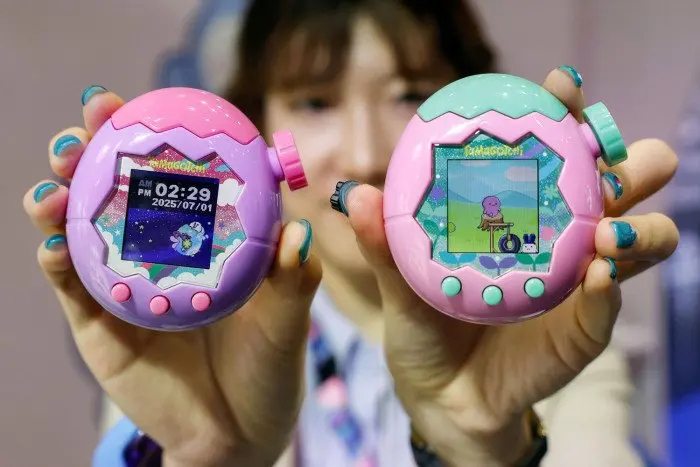
Thirty years after Japanese toymaker Bandai first put a tiny virtual creature into an egg-shaped shell, Tamagotchi has crossed a milestone few toys ever reach: 100 million devices shipped worldwide. The anniversary, marked on 23 November 2025, comes with a quiet twist — for the first time, most of those units are going abroad.
The premise is simple and still oddly compelling. Players hatch an alien creature and must feed, clean up after and generally look after it; the way it's cared for determines which character it grows into. When the toy debuted in 1996 it became an instant craze, especially among Japanese high school girls who clipped the keychain devices to their school bags. Care failures were famously brutal: neglect your pet and it would die, a feature that spawned endless playground folklore.
Over three decades the device has evolved well beyond its blinking original. Later generations added infrared communication so pets could play with each other, and a TV anime adaptation gave the brand a second wind with younger audiences. The newest model, Tamagotchi Paradise, launched in summer 2025, includes a dial that lets players zoom all the way in to view their pet at the cellular level — a surprising amount of toy engineering for something that started as a handful of pixels.
The geography of demand has shifted noticeably. Of the shipments that pushed the total past 100 million in 2025, 49% went to Japan, 33% to the Americas, and 16% to Europe, the Middle East and Africa. The devices now sell in more than 50 countries and regions. Bandai has also leaned into nostalgia: adults who grew up with the toy during the Heisei era (1989–2019) are buying revived retro versions, turning a kids' craze into a multi-generational product. 'We want to create an environment where Tamagotchi is part of people's everyday life,' Bandai official Chisato Aoyagi said.
Why should a traveller care? Because in Japan, Tamagotchi is more than a souvenir — it's a window into a distinctly Japanese approach to design, cuteness and miniaturised worlds. Pop-up shops, Bandai's own stores in Tokyo like those in Ikebukuro's hobby district, and character-goods meccas such as Nakano Broadway or Tokyo Station's character street routinely stock anniversary editions that never reach Western shelves. For anyone visiting Japan in the brand's anniversary year, picking up a limited-edition device makes a far better keepsake than another fridge magnet — and it slots neatly into the city's wider shrine-to-Heisei-nostalgia circuit, alongside retro game shops and Showa-era themed cafes. Even if you never leave the airport, the anniversary editions are a reminder of how much of Japan's pop culture now travels outward — just as its fans increasingly do.