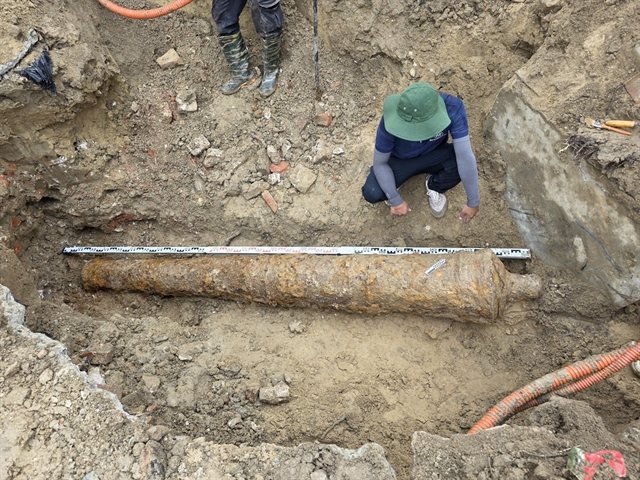
Workers digging at a restoration site in Đà Nẵng have pulled a 2.95-metre cannon out of the ground at Điện Hải Citadel — the tenth cannon archaeologists have recovered there, according to museum director Huỳnh Đình Quốc Thiện.
The gun is believed to be part of the city's 19th-century coastal defence system, which linked the citadel with the An Hải garrison at the Hàn River estuary and the bay. Researchers think it was fired against the French-Spanish invasion force of 1858-60, though scientific tests will confirm the details.
It's a rich site. Since 1979, the Đà Nẵng Museum has preserved 14 cannons found at the citadel and nearby — 13 cast in iron and one in bronze. In 2019, a separate bronze cannon turned up on a city beach, traced back to the Netherlands and about 350 years old. The museum currently displays 11 Nguyễn Dynasty iron cannons (1802-1860) from a force of roughly 30 once deployed to defend the city. The collection has now been put forward for national treasure status.
Điện Hải Citadel itself dates to 1813, the 12th year of King Gia Long's reign. Built near the mouth of the Hàn River, it controlled access to Đà Nẵng port and was armed with bronze and iron cannons under successive kings — Gia Long, Minh Mạng, Thiệu Trị and Tự Đức. Its most famous chapter came under general Nguyễn Tri Phương, who commanded the defence against the French-Spanish coalition from 1858 to 1860. Today the citadel holds National Special Relic status, and its moat between two brick walls still survives. Restoration work is rebuilding it to the original design from more than 200 years ago.
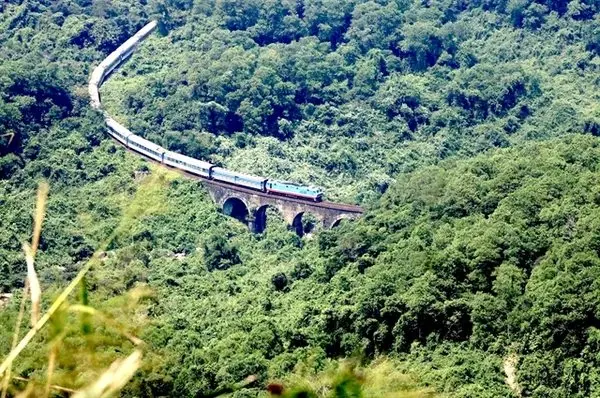
The discoveries don't stop at the citadel. In August, excavations at the Hải Vân Pass north of the city revealed two military posts on the old north-south route — the Chơn Sảng Garrison and Nam Chơn Station — dating back nearly 200 years.
Why does this matter to travellers? Đà Nẵng is mostly marketed for beaches and the Marble Mountains, but the city is quietly building a serious heritage story right in the centre. The citadel sits near the Hàn River in easy reach of the riverside hotels and food streets, and with restoration under way it's a rare chance to watch a 200-year-old fort being pieced back together — cannon finds included. Anyone with an interest in Vietnam's resistance to colonial invasion, or in the Nguyễn Dynasty more broadly, can pair it with the Hải Vân Pass sites and the museums in Huế a couple of hours north.