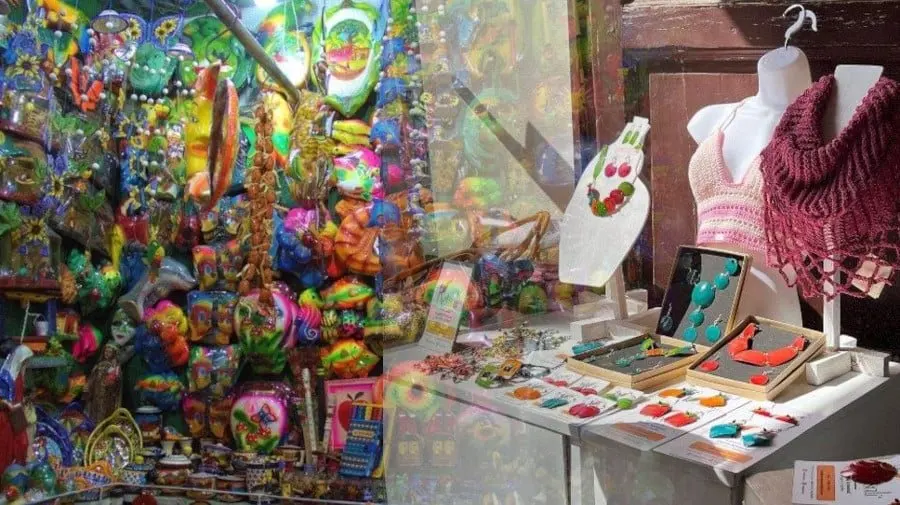
El Salvador packs an impressive amount of handmade tradition into a small country, and much of it is concentrated in a handful of towns you can actually visit. Pottery, weaving, wood painting, basketry and indigo dyeing are still practised with techniques passed down through families, and several communities have built their whole identity around a single craft.
The best-known names form something of a craft circuit. Ilobasco, in the department of Cabañas, is the pottery capital, famous for its clay figurines and especially its miniaturas — tiny, often witty scenes recreating everyday Salvadoran life in remarkable detail. La Palma, up in Chalatenango, is the home of the country's most recognisable folk art: brightly painted wooden pieces covered in birds, flowers and village scenes, a style that grew out of the work of artist Fernando Llort and was adopted by local workshops. Nahuizalco in Sonsonate works with natural fibres, turning tule and wicker into baskets, mats and woven furniture, with roots in the region's indigenous heritage. San Sebastián, in San Vicente, is the textile town, where weavers still run traditional looms to produce striped blankets, tablecloths and hammocks in bold colours.
The crafts themselves are older than the country. Long before the Spanish arrived, Indigenous communities were shaping clay, weaving plant fibres and making baskets for farming, trade and ceremony. Colonisation layered on European tools, styles and religious imagery, and the two traditions blended — which is why so many Salvadoran handicrafts today mix pre-Columbian techniques with colonial-era forms.
Beyond the big four towns, there's more to explore. Hammock making is a genuine national tradition, with artisans weaving cotton into strong, colourful hammocks found on porches everywhere. Indigo — añil — is the historic standout: the plant-based blue dye once drove regional trade, and today small workshops ferment and extract the pigment to dye textiles using centuries-old methods. Suchitoto, San Ignacio and Citalá round out the list of towns worth a detour, each with workshops and markets where you can buy directly from makers.
Many of these communities sit along El Salvador's Artisanal Route, which makes the country unusually easy to explore craft-wise: a compact loop where you can watch a potter at work in the morning and a weaver in the afternoon. Buying on site supports artisan families directly, and in several towns the workshops are family businesses where techniques move down the generations.
For travellers, this is a side of El Salvador that pairs well with the country's volcanoes, surf beaches and colonial towns — and it's one of the most straightforward ways to meet local people and take home something genuinely made by hand rather than imported for the souvenir stall.