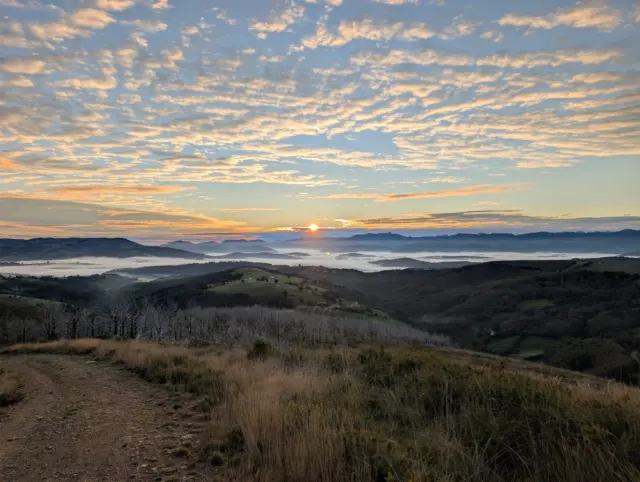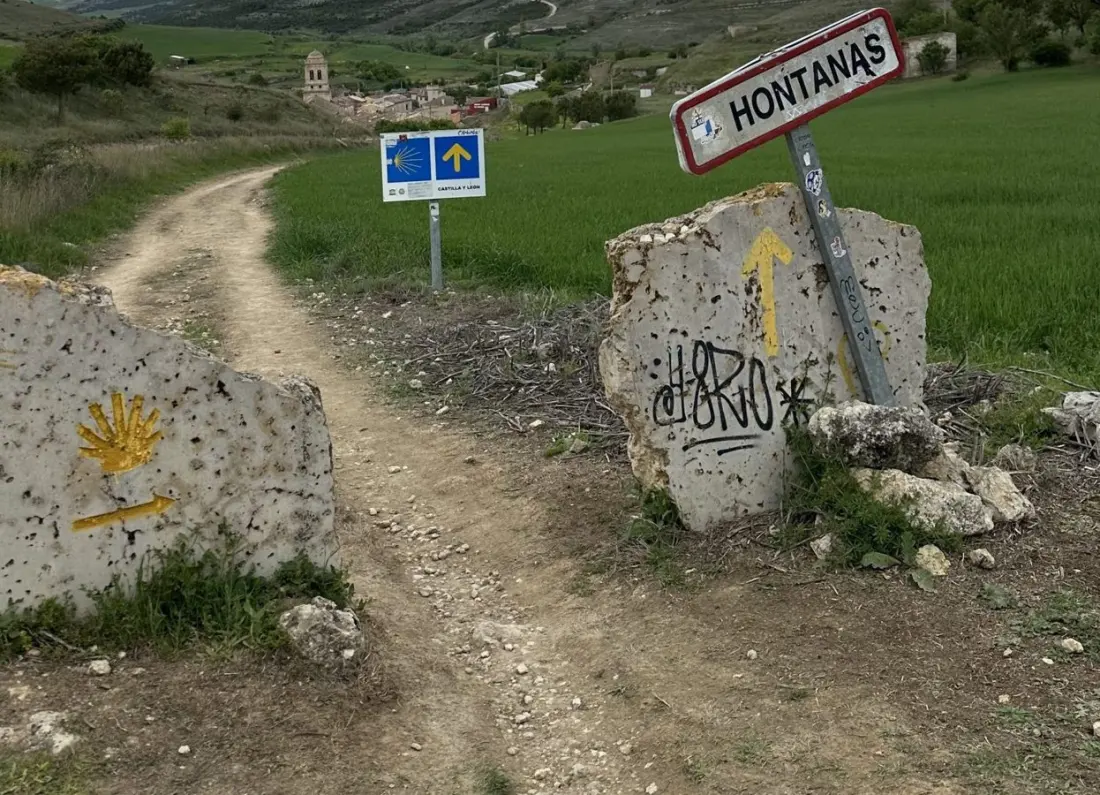
The Meseta Central, the high plateau that cuts across northern Spain on the Camino de Santiago, has a reputation for being dull: 19-plus miles of flat, featureless walking between Burgos and the next cluster of towns. One pair of long-distance hikers found the opposite. Rolling hills, wildflower fields in purple and orange-red, cottonwood seeds drifting like snow, and snow-capped peaks finally revealing themselves on the horizon made their 14th day on the route one of the most memorable yet.
Their day ran from Burgos to Hontanas, a village tucked in a narrow valley roughly 19 miles west. The writer, an Appalachian Trail veteran, is hiking with a companion who has been battling a stubborn chest infection since Pamplona — a reminder that pilgrim hostels, for all their charm, are effective bug-sharing machines. By day 14 the illness still hadn't cleared, and she needed 14 hours of sleep, so the pair took a taxi 13 miles ahead to Hornillos del Camino and walked the rest.
That detour set the tone for a bigger theme: pacing. Peak-season Camino means beds are scarce, and the cheapest municipal albergues operate first-come, first-served, which pushes pilgrims into dawn races and long queues (they passed a line forming 90 minutes before one opened). Booking accommodation ahead flipped the experience — instead of hustling, they strolled, secured top spots at good prices, and ended the day in a small 10-room albergue with a wood stove, chamomile tea and a multi-course pilgrim meal: lamb stew, seafood paella, homemade Spanish cheesecake and half a carafe of local red, for a fraction of what you'd pay anywhere else in Western Europe.
Hornillos del Camino itself is worth the stop — a tidy medieval village where every old building has been restored rather than left to crumble, and albergues with wood-burning fires line the streets. Local legend credits its fountain rooster statue with exposing Napoleon's soldiers, who had hidden the town's stolen chickens in their drums until one rooster crowed from inside. Evenings here come with options: the village cathedral hosts an intimate pilgrim mass drawing around 20 walkers from across the world.
For anyone planning the Camino Frances, this stretch is a useful lesson. Food is constant — cafes and markets appear several times a day, a sharp contrast to resupply culture on American long trails — and comfort is affordable if you plan beds in advance during May-to-September peak season. Pack layers, too: despite being mid-May, the high plateau stayed chilly enough for fires indoors. And don't write off the Meseta as a boring flat section. Given a calm day and an open horizon, it might be where the walk stops feeling like a challenge and starts feeling like an actual pilgrimage.