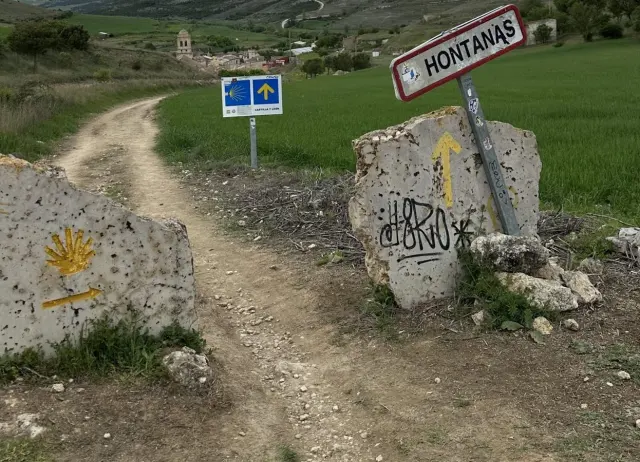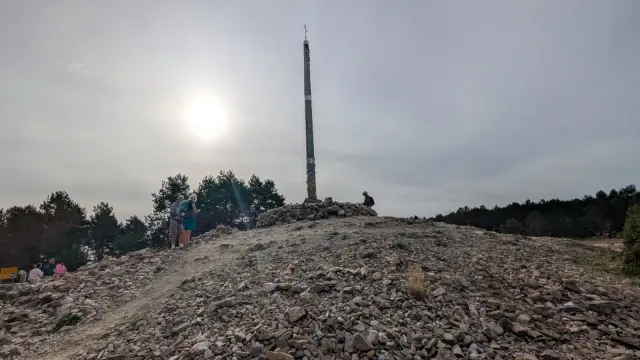
Day 18 of a Camino Francés pilgrimage, and the writer behind The Trek's trail journal is walking in the dark somewhere between the Pyrenean foothills and Burgos, no headlamp, trusting her eyes to adjust. The destination matters as much as the day: Burgos is the gateway to the Meseta, the famously flat, exposed plateau that carries pilgrims all the way to León.
Pilgrims often split the roughly 800 km route from St Jean Pied de Port into three psychological chapters. The first, St Jean to Burgos, is the Body — mountain climbs and the grind of walking every day. The second, Burgos to León, is the Mind: a quiet, monotonous stretch with little to look at, which pushes walkers inward to process whatever brought them to Spain in the first place. The final third, León to Santiago (and for many, on to the Atlantic at Fisterra), is the Spirit — Galicia's mountains and rainforest, ending at the cathedral or the coast. Some pilgrims dread the Meseta's emptiness. Marley, the diarist, is counting down to it.
The day itself delivers the small, strange pleasures the Camino is known for. A British pilgrim she'd bonded with earlier jokes over voice-journal entries about mistaking her pre-dawn silhouette — just shoe reflectors in the fog — for a floating vampire. A 15 km amenity-free stretch follows, through a fog-draped forest where wet leaves shine silver and spiderwebs dot the bushes. Then comes proper trail magic: a truck, a table of food, and a jokester in a monkey shirt and red clown nose handing out coffee with a line about not needing sugar. He sends her off calling her "Flower" — the same nickname her dad uses back in Pennsylvania.
The philosophical thread of the day is borrowed from Paulo Coelho's The Pilgrimage, whose protagonist walks this same route hunting for a symbolic sword. Marley's own takeaway after 18 days: the sword — truth, bravery, discernment — may be something simpler. Agape, the Greek idea of unconditional love. Her method is disarmingly practical: learn every pilgrim's name and home, keep a running list (over 100 so far), and greet everyone by name. The effect, she writes, is that people feel seen, and that care reflects straight back.
The day closes in Atapuerca-area village Ages, then a siesta with an Italian friend and two dads she's adopted as a walking unit, and a final 3 km through sunflower fields that remind her of home. Overnight is at the small, cottage-like Hostal La Plaza Verde — a quiet antidote to the big municipal bunkhouses — with Burgos and its cathedral waiting the next morning.
Why care: this is a good window into what long-distance walking in northern Spain actually feels like beyond the guidebook highlights — early starts, long waterless stretches, improvised kindness from strangers, and pilgrim hostels ranging from 20-bed warehouses to cosy cottages. Anyone considering the Camino Francés should know the Meseta is less a boring flat section than the trip's emotional core, best walked with an open schedule and comfortable shoes.