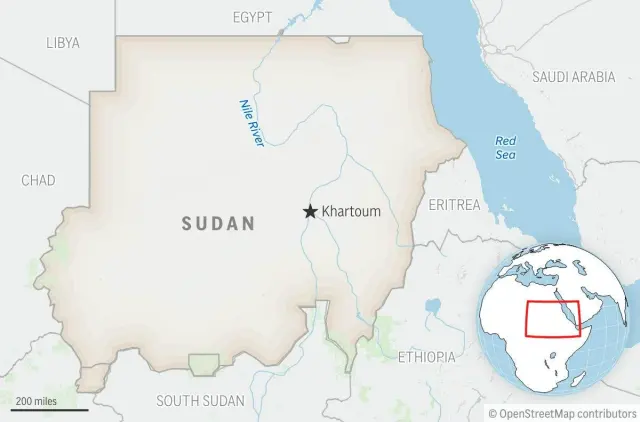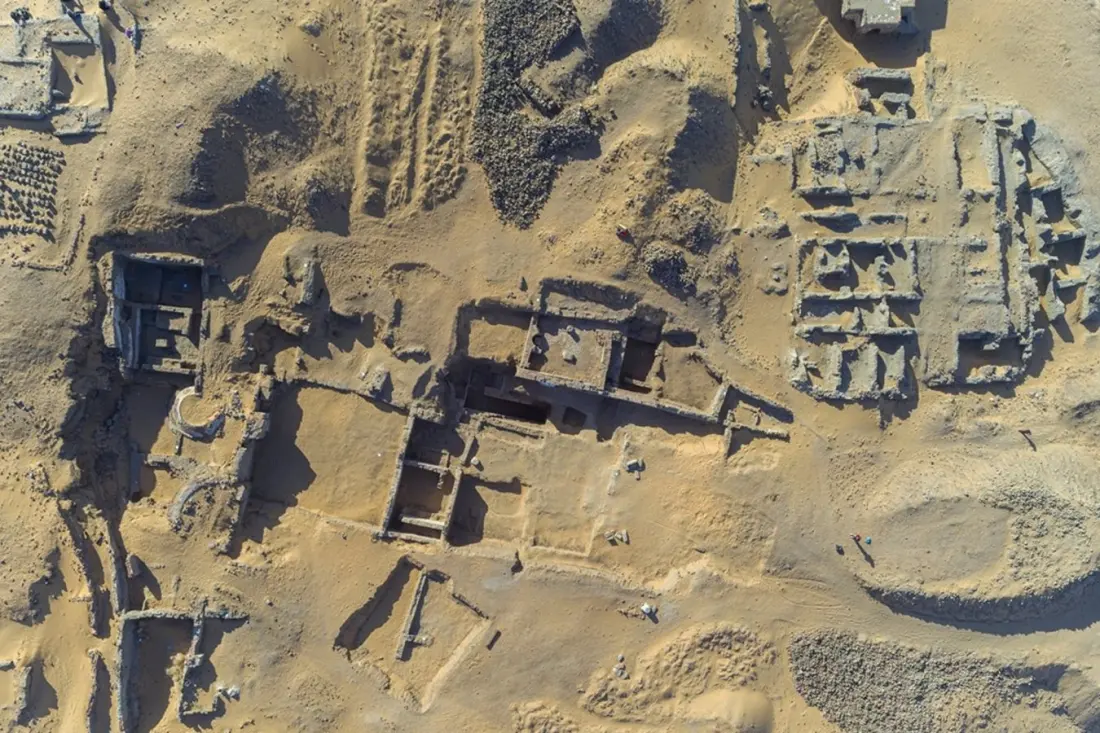
In the desert of northern Sudan, a building that rivalled Europe's great medieval churches is slowly coming into view. At Old Dongola, once the capital of the Christian kingdom of Makuria, a Polish-Sudanese team has finally reached the original floor of the Great Church of Jesus — a cathedral measuring roughly 47 by 57 metres, with walls that may have risen 21 metres high.
The breakthrough came via a monumental staircase, still flanked by walls standing up to 11 metres tall. The team, led by Professor Artur Obłuski of the University of Warsaw's Polish Centre of Mediterranean Archaeology working with Sudan's National Corporation for Antiquities and Museums, first identified the structure in 2021. But the sheer thickness of the walls means most of the building remains buried deep below the surface, and the staircase is so far the only spot where the original floor has been reached. Newly exposed buttresses around the apse hint at the engineering ambition behind the project.
Obłuski compares the church to Hagia Sophia in Istanbul — buildings that set the architectural agenda for their worlds. He suggests the Great Church of Jesus could have played that role in Nubia, and possibly across this whole part of Africa. If confirmed, historians may also need to rethink which of Dongola's churches actually served as the kingdom's cathedral, since this one appears to have held a more central position than previously assumed.
There's a second bonus find. An adjoining structure hides a smaller church on an upper floor, of which only about a metre of wall survives. But the debris has yielded six full shelving units of painted plaster fragments — enough to reconstruct an elaborate decorative scheme — plus Greek inscriptions including biblical canticles and part of the Prayer of Hannah, written in letters barely half a centimetre tall. These are the first fragments of biblical odes found at Old Dongola, adding to the site's record of Psalms references.
Context matters here. Old Dongola, known historically as Tungul, was the seat of Makuria, a Nubian kingdom that adopted Christianity in the sixth century and ruled territory along the Nile until its court abandoned the city in 1365. Its churches and monasteries show a culture plugged into Byzantine and Mediterranean traditions while developing its own distinct art and architecture — a side of African history most travellers never encounter.
For anyone drawn to archaeology or off-the-beaten-path heritage, this is a site to watch. Much of the cathedral is still underground, and the team hopes next season's digs will establish its full footprint. There are challenges: the thick walls force deep excavation, and autumn 2024 brought the site's worst flooding since 1988, damaging protective roofs and forcing conservation work before digging could resume. Sudan's current security situation makes travel there difficult for now, but discoveries like this keep Old Dongola firmly on the map of the world's great ancient sites.
Story reported by Colombia One.