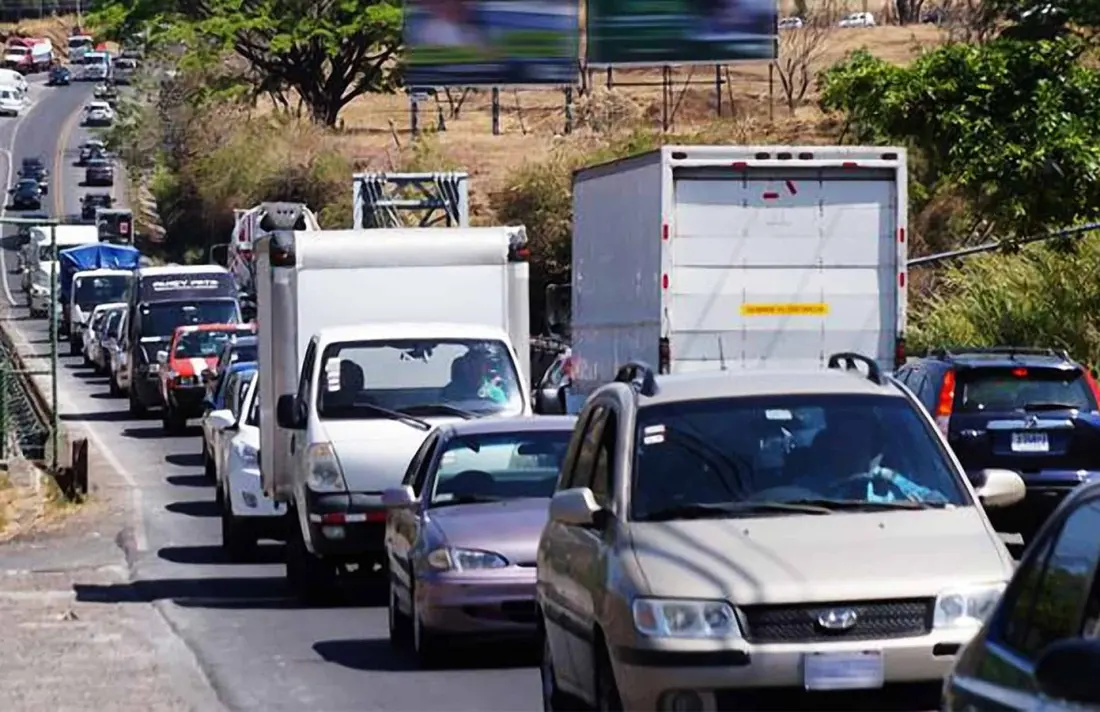
Costa Rica's congestion problem has grown past the point where extra asphalt can save it, according to Public Works and Transport Minister Efraím Zeledón. Decades of underinvestment in the road network have left the country with a deficit that no amount of lane-widening can close — and the government is now betting on trains, buses and digital mobility tools instead.
The reasoning is familiar to transport planners: induced demand. Add capacity, and more drivers show up to fill it. Zeledón noted that no country has eliminated congestion purely by building more roads. What's made things worse recently is economics — a favourable exchange rate has pushed car and motorcycle prices down sharply, putting more vehicles onto roads that were already running over capacity.
The cost isn't abstract. A study by the Federation of Chambers of Commerce of the Central American Isthmus (FECAMCO), covering five cities in the region, found that 60% of workers said a company's location influences whether they accept or keep a job, and 24% had considered changing jobs because of commuting problems. Half of the business owners surveyed said mobility issues made it harder to attract or retain staff, and eight in ten identified extra costs linked to them. Seven in ten respondents reported a moderate or high impact on family or personal time.
The pressure is most acute in the Greater Metropolitan Area, where daily commutes connect San José, Heredia, Alajuela and Cartago — the corridor most visitors pass through on the way from the airport to the capital or the Caribbean coast.
The government's flagship answer is Tibi, an electric passenger train that Zeledón calls the backbone of a future public transport network, targeted to be 80% complete by 2030. It's not a done deal: more than 400 buildings currently sit in the train's right of way. MOPT is also studying a cable car linking southern San José neighbourhoods like Desamparados and Aserrí to the future rail line, with financing being sought for prefeasibility and pre-investment studies.
For travellers, the takeaway is practical. Getting around the Central Valley can eat serious hours, especially at rush hour between the four metro cities. Building in buffer time for airport transfers and intercity day trips is worth doing now — and if Tibi delivers, it could eventually make car-free trips around San José far more realistic than they are today.