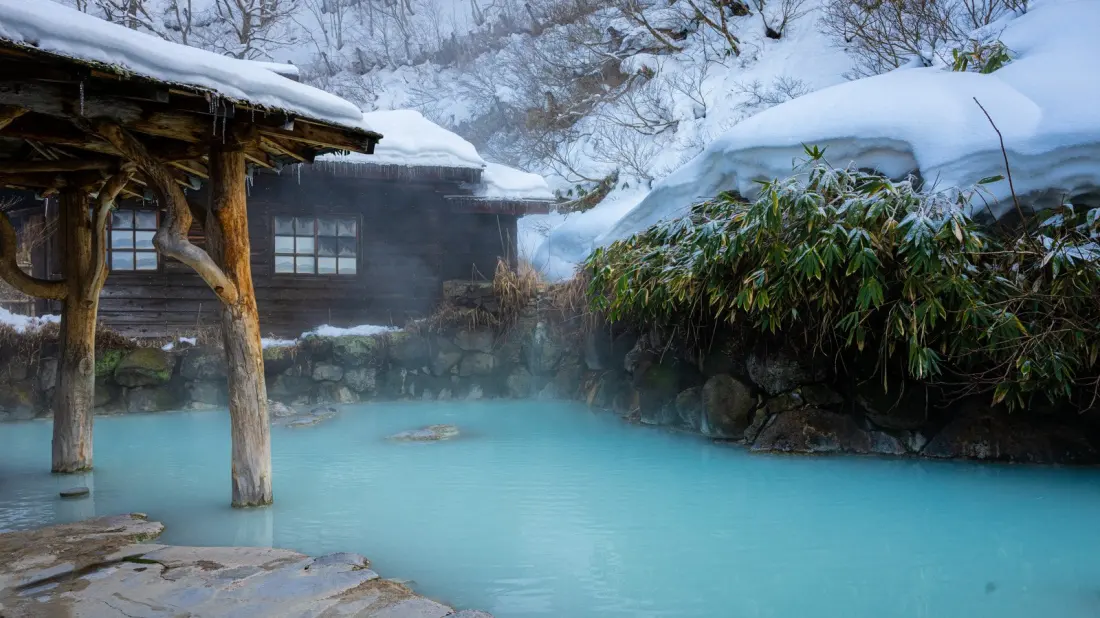
Japan has more than 3,000 registered onsen resorts — natural hot springs, not hot tubs — and trying one is one of the most memorable things you can do in the country. But the etiquette is genuinely different from anything Western travellers are used to, and walking in unprepared is a fast way to feel awkward. Here's what matters before your first soak.
First, know what you're walking into. A true onsen draws geothermal water from the ground at 25°C or hotter and must contain specific dissolved minerals to qualify under Japan's Hot Spring Act of 1948. A regular communal bath without that mineral water is called a sento. Both are steeped in history — onsen use goes back to the Nara Period (710–784) — and both are completely normal parts of Japanese life, so don't feel self-conscious about being a first-timer.
The rules that catch visitors out are simple but firm. You bathe fully nude: swimsuits aren't allowed, and you'll undress completely in the gendered changing room (blue curtains for men, red for women), stowing everything — phone, jewellery, clothes — in a locker, and leaving your large towel there. In the bathing area you may carry a small towel for modesty, but it must never touch the water. Locals often balance theirs on their heads while soaking. Long hair needs tying up for the same reason.
Crucially, you wash before you soak. Every onsen has a row of stools, buckets and showers where you scrub thoroughly and rinse off all soap, makeup and sunscreen. The water is shared and kept pristine for everyone — it's about relaxation and absorbing the minerals, not getting clean. Keep your voice low once you enter, no splashing or swimming, no photos in the bathing area, and no drinks in the bath.
A few practical wrinkles worth planning around. Most onsens don't allow visible tattoos, though attitudes are shifting — some now accept them, others permit small pieces covered by a waterproof patch (apply it in the changing room, not poolside). If you have larger tattoos, a private onsen or a tattoo-friendly venue that advertises in English is the easier route. Nearly all baths are gender-separated; couples wanting to soak together should book a night at a ryokan, a traditional inn that usually has a private tub and can reserve a family bath for you. Facilities range from one-tub day-use baths to sprawling complexes like Tokyo's Spa LaQua, with saunas, restaurants and salons.
One last tip: pack travel-size soap and shampoo, since not every onsen provides toiletries. And when you're done, pat yourself dry with the small towel to avoid dripping in the changing room — many people skip the rinse afterwards to keep the minerals on their skin, though sensitive skin types may prefer to wash off.
Why bother with all this? Because an onsen visit is one of Japan's defining experiences, and knowing the rules means you can actually relax instead of scanning for cues. Learn the basics, pick a ryokan or tattoo-friendly bath if you need one, and enjoy it.
Story via Islands.