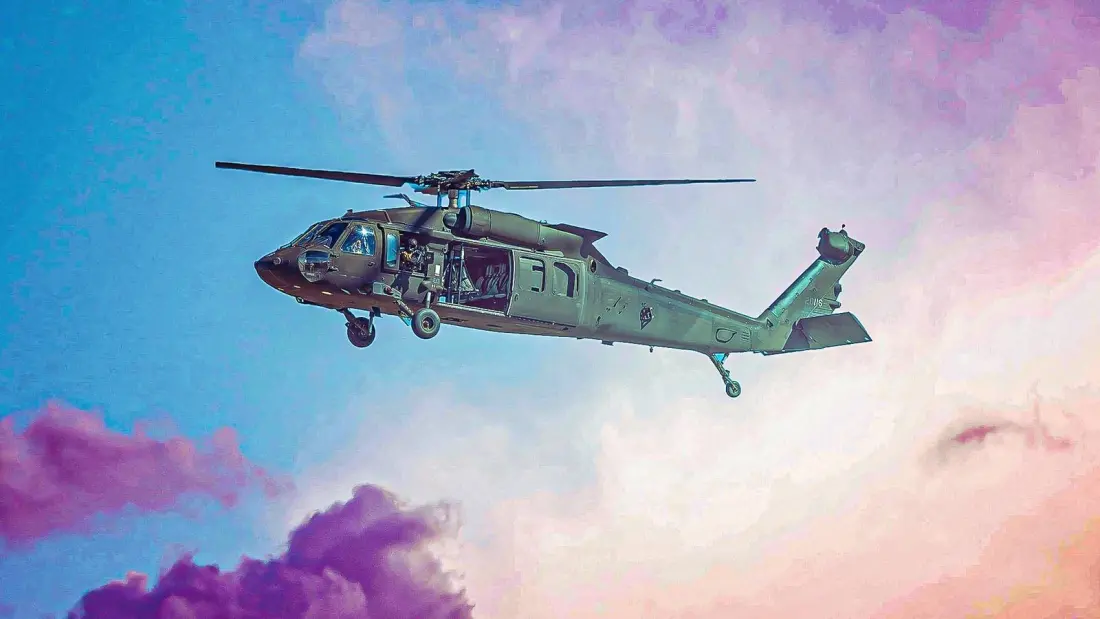
Nearly two years after the deadliest US aviation disaster in a generation, the US Army wants its helicopters back in the crowded airspace around Ronald Reagan Washington National Airport. According to a Politico report, training flights could resume as early as the week of December 6 — a timeline that has already drawn fire from flight attendant unions and remains tangled in federal regulation.
The backdrop is grim. On January 29, 2025, an Army Sikorsky UH-60 Black Hawk collided with a PSA Airlines regional jet flying as American Airlines Flight 5342 over the Potomac River, killing all 67 people on both aircraft. Training in the corridor was suspended again in May 2025 after another Black Hawk flew too close to Reagan National, forcing arriving airliners to abort their landings.
Restarting missions isn't a simple yes from the Pentagon. Under interim FAA rule 2026-01226, which took effect January 23, 2026, routine training and proficiency checks are explicitly barred from the restricted Potomac zone up to 1,500 feet. Only genuinely essential flights — medevac, active law enforcement, national defense, continuity of government, and presidential transport — qualify. The rule also permanently closed Helicopter Route 4 between Hains Point and the Wilson Bridge, eliminated visual separation within five nautical miles of the airport, and boosted controller staffing. The Army had not yet filed a formal request with the FAA as of the report, though military officials have briefed congressional staff. Public comment on the interim rule ran through February 23, 2026.
The safety case is well documented. NTSB investigators cited tight vertical margins over the river, congested radio frequencies, altimeter discrepancies, and disorienting city lights at night — and issued 50 recommendations, eight of them aimed at the Army. An ADS-B alert system could reportedly have warned the airliner crew 59 seconds before impact. The Army has since inspected its fleet, tested altimeters across Black Hawk variants, and reviewed crew separation procedures.
Politics adds another wrinkle. The Rotor Operations Transparency and Oversight Reform Act cleared the Senate unanimously in December 2025 but stalled in the House; a framework agreement emerged in mid-November 2026, with Senators Ted Cruz and Maria Cantwell pushing to finalize how military aircraft share the corridor. AFA president Sara Nelson has publicly condemned the restart plans.
For travellers, the practical takeaway is modest but real: Reagan National is one of the most delay-prone airports in the country, and any return of helicopter training — or a future incident — could mean aborted approaches and schedule disruptions on the Potomac approach path. If you're booking winter flights into DC, build in a buffer for connections, and check your airline's alerts close to departure. The story matters less as a reason to avoid DC than as a reminder that one of America's busiest short-haul airports operates under some of the most complex airspace rules anywhere.