Seven carriers at Austin-Bergstrom International (AUS) — Southwest, Delta, United, American, Alaska, FedEx and UPS — have signed ten-year leases committing them to fund a $5 billion airport expansion. No local taxpayer money is involved; the bill lands on the airlines and, eventually, on passengers through boarding fees expected to climb from about $15 per departing traveller to roughly $20.
Why would airlines bankroll an airport years before the gates even open? Because Austin has outgrown its infrastructure. The airport was designed for 11 million passengers a year but now handles around 15 million, with 22 million expected by the end of this year. Central Texas's tech boom plus magnets like SXSW and Formula 1 have pushed 34 gates to the point of gridlock, and the carriers themselves lobbied for more capacity — asking for 20-plus new gates when talks began in August last year. Austin ultimately approved 32, pushing the budget from an initial $4 billion to over $5 billion (some estimates run as high as $6.5 billion).
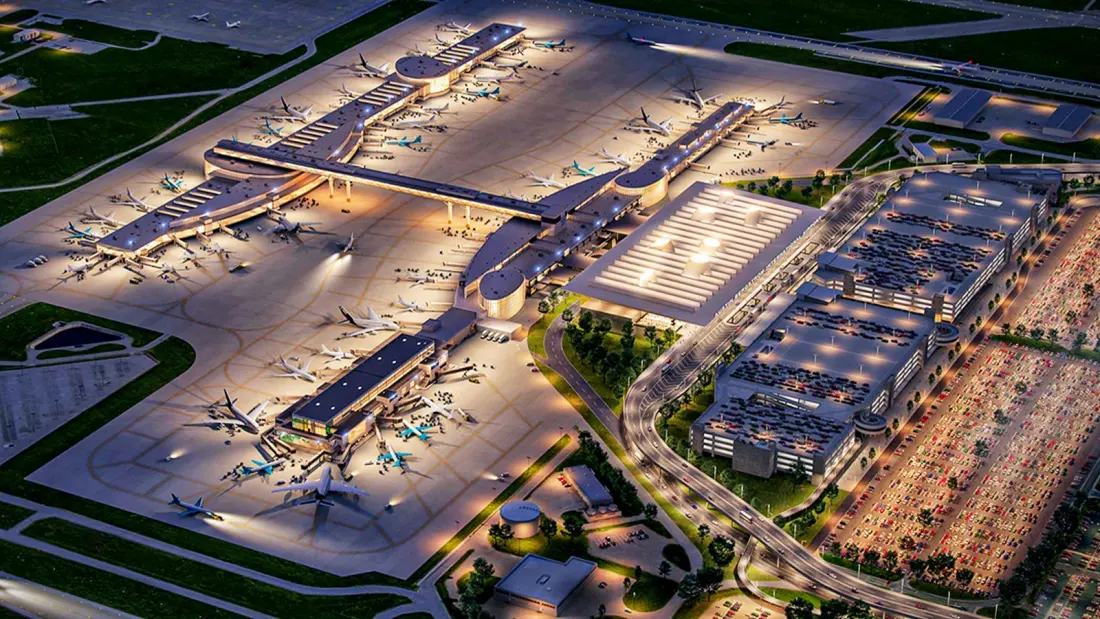
The centrepiece is a new 700,000-square-foot midfield Concourse B with 26 gates, linked to the Barbara Jordan Terminal by a pedestrian tunnel under the tarmac. The existing terminal gains an 84,500-square-foot Westgate expansion with three new gates, upgraded concessions, quiet zones and an open-air observation deck. A new 'Yellow' garage adds 7,000 parking spaces, an expanded customs area speeds international arrivals, and baggage systems will handle up to 30 million flyers a year, sorting 4,000 bags per hour.
The gate allocations reveal a land grab. Southwest anchors Concourse B with 18 gates; Delta takes 15 in the redeveloped Concourse A and is investing $250 million of its own. United gets five, American nine, Alaska one, with the rest common-use. American's nine gates come with use-it-or-lose-it clauses — grow or forfeit the space. Austin has no dominant home carrier, so whoever controls the most gates can add frequencies while limiting rivals. Signatory carriers run through September 2035; foreign transient airlines that skip the deal pay a 15% premium on fees.
Construction happens around a live airport: a small temporary concourse opened groundwork relief this year, the tunnel and Concourse B target an early 2028 horizon, and full build-out stretches into the early 2030s. For travellers, the near-term upside is relief from chronic crowding and better amenities; the downside is that rising boarding fees may nudge fares upward. The number to watch is that per-passenger charge — if it holds near $20, Austin will have doubled in size without public subsidies. Anyone flying through Austin in the next few years should expect construction, but the end result will be an airport finally sized for the city it serves. Source: Simple Flying