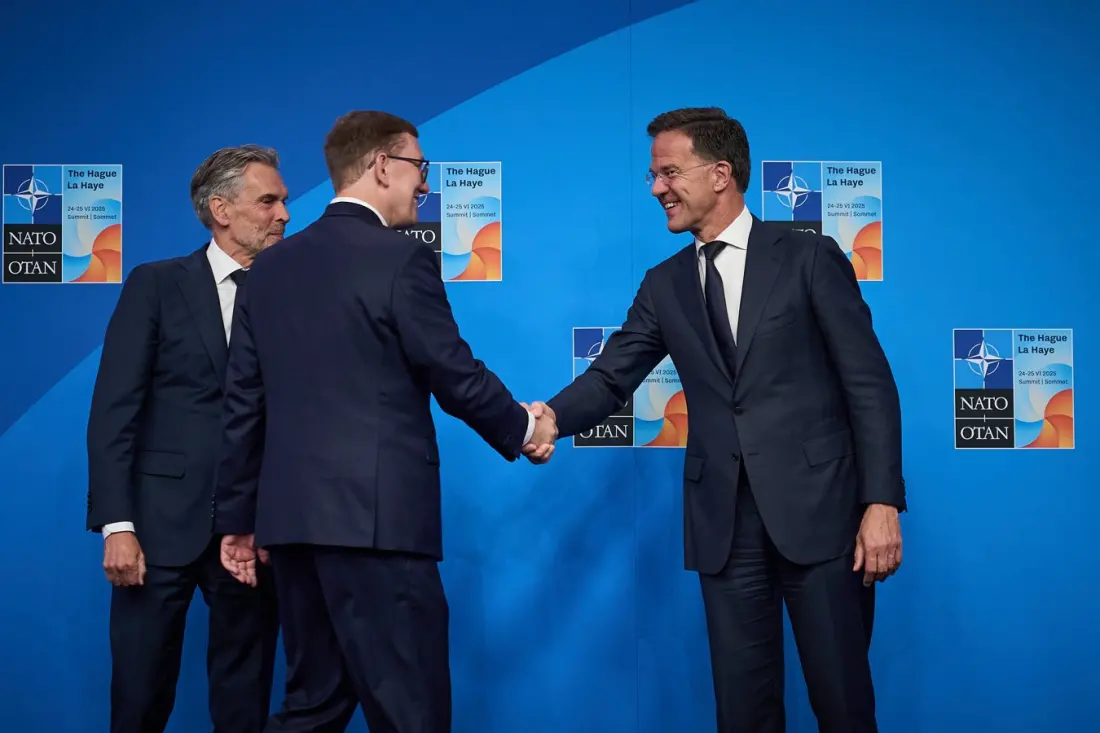
NATO secretary-general Mark Rutte is in Estonia for a round of high-level meetings with the country's leadership, centring on support for Ukraine and the Alliance's long-term posture in the Baltics. The visit includes a sit-down with prime minister Kristen Michal at Stenbock House, the Estonian government's seat in Tallinn, followed by a joint press conference scheduled for 12.25pm local time.
The trip is more than a photo opportunity. Rutte is also set to meet foreign minister Margus Tsahkna and president Alar Karis's successor in the role, Ülle Madise, head to Ämari Air Base — home to NATO's Baltic air policing operation — and deliver a public lecture at Tallinn University of Technology (TalTech). That schedule signals how much weight the Alliance puts on Estonia as both a frontline state and a think-tank hub for defence policy.
Michal used the occasion to underline the scale of NATO's visible presence in the region. Allied aircraft regularly respond to airspace violations, warships patrol under the Baltic Sentry mission, and allied units are stationed on land. Estonia, for its part, is pushing its defence spending above 5 per cent of GDP this year and intends to keep it there — one of the highest ratios of any NATO member, and a figure that dwarfs the Alliance's long-standing 2 per cent target.
For visitors, the backdrop matters more than it might first appear. Estonia sits on NATO's eastern flank, and the security conversation happening in Tallinn shapes everything from ferry routes across the Gulf of Finland to cruise ship itineraries and air traffic in the region. Baltic Sentry, the naval mission aimed at protecting undersea cables and infrastructure, was launched after a string of incidents involving ships dragging anchors across Baltic Sea cables — the same waters that summer travellers cross between Tallinn, Helsinki and Stockholm.
Despite the serious headlines, Estonia remains one of Northern Europe's most rewarding and under-visited destinations. Tallinn's medieval Old Town is a UNESCO World Heritage site and one of the best-preserved in Europe, the country's bogs and forests are easily reached in a day trip, and the digital-first society makes travel logistics refreshingly smooth. Daily life for tourists carries on as normal; the security discussions are about infrastructure and deterrence, not street-level risk.
The Rutte-Michal meeting is also worth watching for what it says about the Alliance's future funding and footprint in the region — questions that will influence how long allied troops and patrols stay in the Baltics, and how the region positions itself as a travel destination in the years ahead.
Whether you're planning a Baltic city break or a ferry-hopping summer route, this is the context humming behind the postcard views — and Estonia's commitment of more than 5 per cent of GDP to defence shows just how seriously the country takes its place on the map.