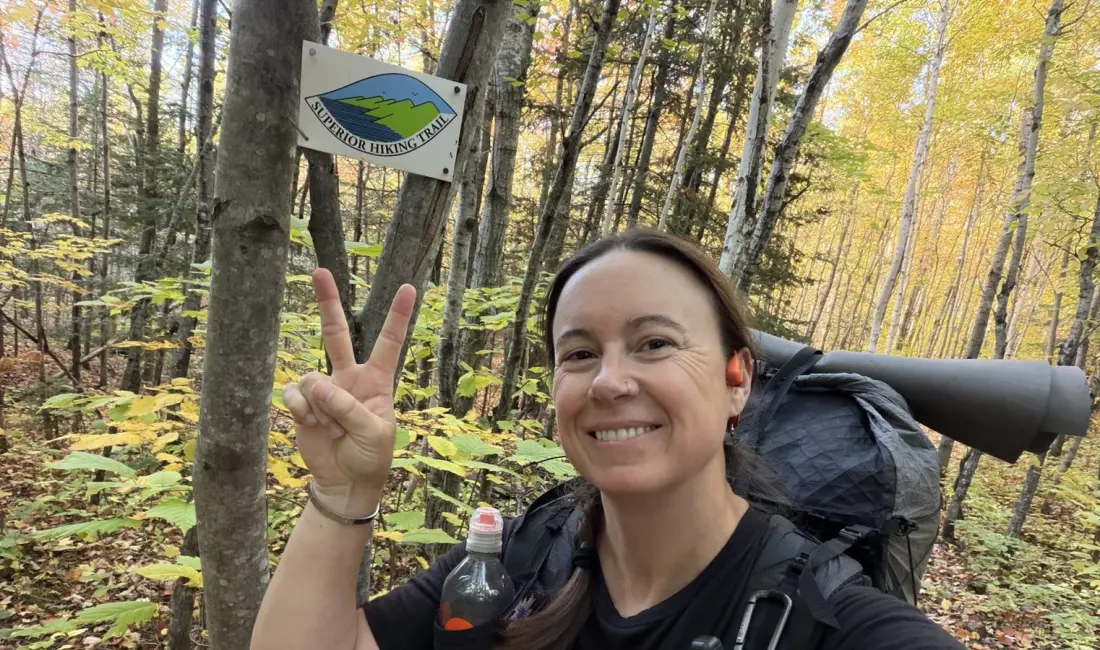
A year after a knee injury cut her hike short, a Nebraska backpacker known as Misty has returned to Minnesota's Superior Hiking Trail to finish the roughly 220 miles she left undone. Her first day back offers a useful window into what this 300-plus-mile path along Lake Superior's shores actually looks like for anyone considering it.
The setup is interesting. Last autumn, IT band syndrome forced her off trail after about 40 miles hiking southbound from the northern terminus. She'd already covered the southernmost 45-mile Duluth section as a day hike with friends, leaving the middle chunk unfinished. Her plan for this trip: solo backpack about 100 miles northbound from north Duluth, then switch to day hikes supported by her husband and their camper, finishing each day at a campground. It's a reminder that thru-hikes don't have to be done in one continuous push — a hybrid approach works fine.
Timing mattered, too. She deliberately started two weeks later in the year than her previous attempt, and it paid off with peak fall colours and, notably, just a single mosquito bite. Last year, leaves were only starting to turn and late-season bugs were still active. For hikers eyeing the SHT, late September into early October looks like the sweet spot for colour.
Her first day back was a travel-plus-hike combo: an eight-hour drive from Nebraska to Duluth, then eight to nine miles on foot, since there are no official campsites before that point. Starting near mile 45 northbound, she passed the Martin Road Trailhead — the trail's unofficial southern terminus where many hikers start or end, skipping Duluth entirely. She defends the city section, though: apart from a few miles of pavement, it's surprisingly wild and not easy, even if camping options through town are limited.
Practical notes from camp: temperatures dropped fast, hitting 47°F in the evening, and she slept with her filter in her quilt in case of a frost. Blisters appeared on shoes that had performed flawlessly on the Centennial Trail earlier in the summer — a good reminder that feet can react differently to the same boots on different terrain. On food storage, she learned from southbound hikers that carrying food in a smell-proof bag and sleeping with it is common practice on this trail, since the forest offers few good hanging trees and campsites lack bear poles. She's careful to note that's not recommended practice generally, just a trail-specific reality.
Why care? The SHT is one of the Midwest's best long-distance options: ridgeline views over Lake Superior, accessible resupply logistics, and a structure that works for both thru-hikers and section hikers. You could easily sample it with a few days of day hikes between trailheads, camper supported like Misty plans to finish, or commit to the full route. Either way, autumn colour season is the time to go — just pack for cold nights.