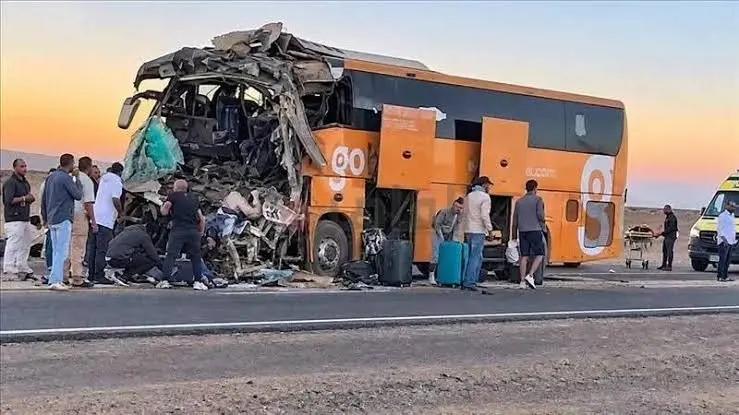
A passenger bus slammed into a sand-laden truck on the Red Sea highway on Friday 30 October, killing three people — including the bus driver — and injuring 25 others. The collision happened past the Jabal al-Zeit area towards Ras Gharib, roughly at the 95th kilometre marker of the road, in Red Sea Governorate. Reports say the bus hit the truck from behind, briefly blocking the route; photos from the scene showed heavy damage to the front of the bus.
Among the injured were five foreign nationals: a French citizen, an Italian and three Russians. Dozens of ambulances ferried casualties to nearby hospitals with injuries described as moderate to critical — fractures and bruises among them. The most serious cases were moved to Hurghada General Hospital, while the governorate's health undersecretary, Ismail al-Arabi, visited patients at Ras Gharib Central Hospital.
Police cleared the wreckage and traffic is flowing again. Prosecutors have opened an investigation into the cause, examining both vehicles and taking statements from witnesses and survivors to establish whether traffic violations or negligence played a part.
For travellers, the relevant context is that this stretch of road is a workhorse route on Egypt's Red Sea coast, linking the major resort hub of Hurghada with towns further south, and buses run it regularly — including transfers carrying international tourists. Accidents on Egyptian intercity roads are a known risk, and this crash is a reminder to weigh transport choices carefully. Reputable tour operators and hotel transfers tend to use newer vehicles with experienced drivers; if you're booking independently, it's worth checking the operator, travelling in daylight, and factoring in that long desert highways can involve heavy trucks moving at speed. The route between Hurghada and Ras Gharib passes through remote stretches where emergency help can take time to arrive, which is partly why so many ambulances had to be dispatched for this one incident.
If you're already planning a Red Sea trip, this shouldn't necessarily change your plans — Hurghada's resorts, diving and day trips operate as normal, and the road itself has reopened. But it's a nudge to keep realistic expectations about road travel in Egypt, wear seatbelts where they exist, and consider domestic flights (Cairo to Hurghada takes about an hour by air) as an alternative to long bus journeys. Anyone travelling on that route in the coming days should be aware that some cases were transferred to Hurghada hospitals, which may still be under extra pressure.