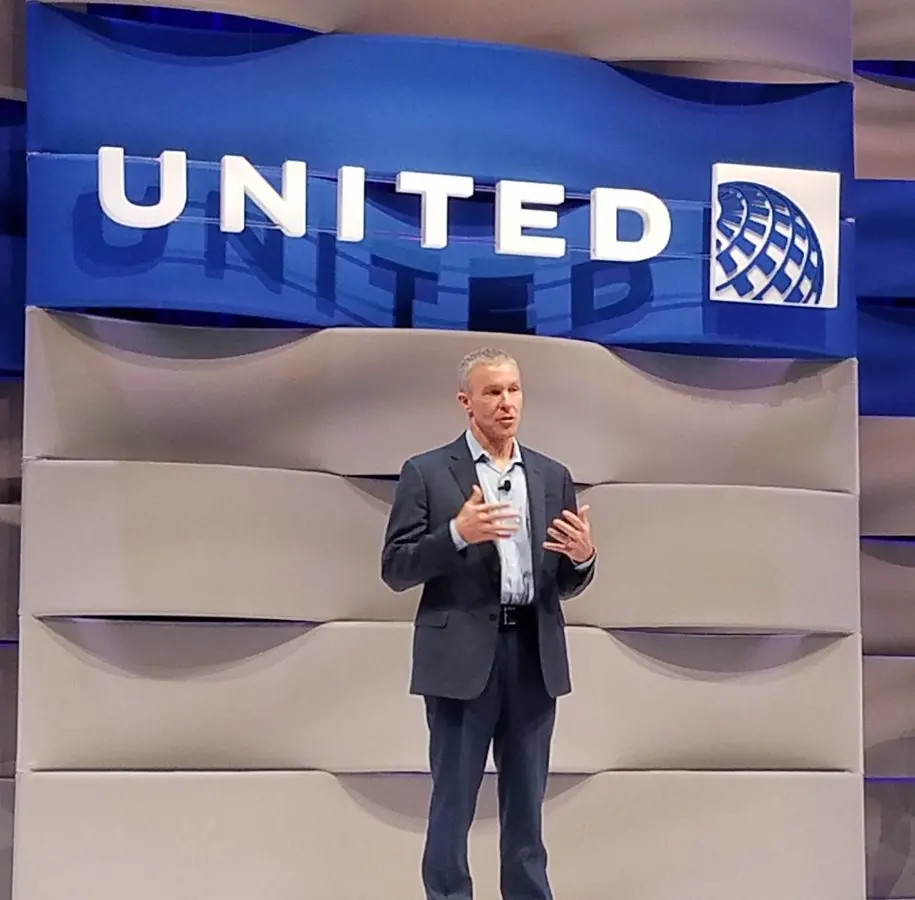
United Airlines CEO Scott Kirby has a blunt rule for his operations staff: nobody says the word 'weather' around him. He picked it up at a previous airline, where he felt weather had become a catch-all excuse for stranding passengers. His point isn't that storms are imaginary — it's that two airlines facing identical thunderstorms can deliver wildly different outcomes depending on how they build schedules and recover when things break down.
That philosophy shows up in United's operational experiments. The airline has been running simulations of Denver's summer thunderstorm season, testing alternative arrival and departure routes instead of simply throttling traffic across the board. Kirby believes that with better technology and cooperation from air traffic control, summer weather delays in Denver could be cut by half or more — he puts the potential reduction at 50% to 75%.
The more passenger-visible change is how United explains delays. Kirby describes a sunny day in Chicago where storms far beyond what travellers could see had closed the routes into the airport. Told 'weather delay', passengers assume they're being lied to — the blue sky is right there. So in July 2024 United started sending some delayed passengers a radar map showing the actual storm line instead of a generic message.
The results were dramatic. Passengers who got the standard weather-delay message produced a net promoter score of around minus 60; those who received the radar map scored around plus 60. Kirby notes that the mapped version scored better than an on-time flight would — a 120-point swing from one image. It's an extension of the airline's earlier push to replace vague 'operational issue' language with real explanations of what went wrong.
There's a wrinkle, though. Better explanations create a paper trail. If the app tells you a maintenance problem delayed your plane, and the airline later refuses meal or hotel assistance by classifying the whole disruption as weather, those two stories start to look inconsistent. American Airlines has made similar improvements to its app notifications, which means passengers can increasingly compare the airline's real-time account of a delay with its response to a compensation request — and the sequence of events matters. If maintenance kept the aircraft on the ground until a weather restriction began, that's not purely an act of God.
Why should travellers care? Because the next time a storm wrecks your itinerary, the quality of information you get — and the record of what actually happened — may be worth real money. A screenshot of a radar map or a maintenance notification could strengthen your case for reimbursement. And if United's Denver simulations pan out, summer connections through storm-prone hubs might get meaningfully more reliable. Kirby's ban on the word 'weather' is theatre, but the underlying idea — that airlines own their recovery, not the sky — is one passengers directly benefit from.
Story via View from the Wing.