Ecuador is switching its largest power users back on. After weeks of 72-hour weekly cuts for factories, mines and big businesses, the government is reconnecting industry to the national grid full-time, betting that a run of recent rain at the country's hydroelectric plants will hold.
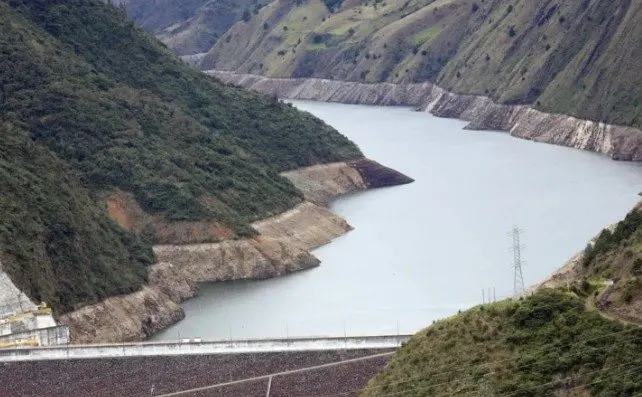
Energy officials sound quietly confident. Freddy Sanchez, an electrical engineering professor, estimates that bringing industry back adds around 600 megawatts of demand — roughly 15% of the national total — and says conditions at the biggest hydro stations have improved enough to absorb it. The key is the Mazar-Paute complex in the south, which engineers at the National Electricity Operator call the backbone of the system. Its Mazar reservoir climbed more than two and a half metres in a week, though it remains about 30 metres below its optimum level. To build the water back, operators have been resting turbines at the Molino and Mazar plants.
Not everything is running smoothly. Coca Codo Sinclair, the country's largest hydro plant, keeps hitting technical snags — silt building up in its intake pools forced a 14-hour shutdown for cleaning on a recent Tuesday.
The cautionary voices are worth listening to. Researcher Juan Miller points out that the whole recovery depends on weather, and November is Ecuador's driest month. Alejandro Jaya of Energy Control S.A. flags two more weak spots: national electricity use has jumped almost 25% in three years (residential demand kept climbing even while businesses sat dark), and diesel for backup thermal generators is already running short because industry and transport are competing for fuel. His worst-case scenario: industry returns to full production, then gets cut off again within weeks.
For travellers, this is the practical takeaway: Ecuador's power situation is improving but fragile. Hotels, restaurants and attractions in cities like Quito, Cuenca and Guayaquil have been living with scheduled outages since late September, and while the end of industrial blackouts should stabilise supply for everyone, a dry November could bring cuts back. Anyone heading to Ecuador soon should pack a power bank, keep devices charged when the lights are on, and build a little flexibility into plans that depend on elevators, card payments or air conditioning. The good news is that the government and grid operators now have real numbers, real reservoir readings and a clearer picture of the strain — and more rain is forecast. Credit: CuencaHighLife