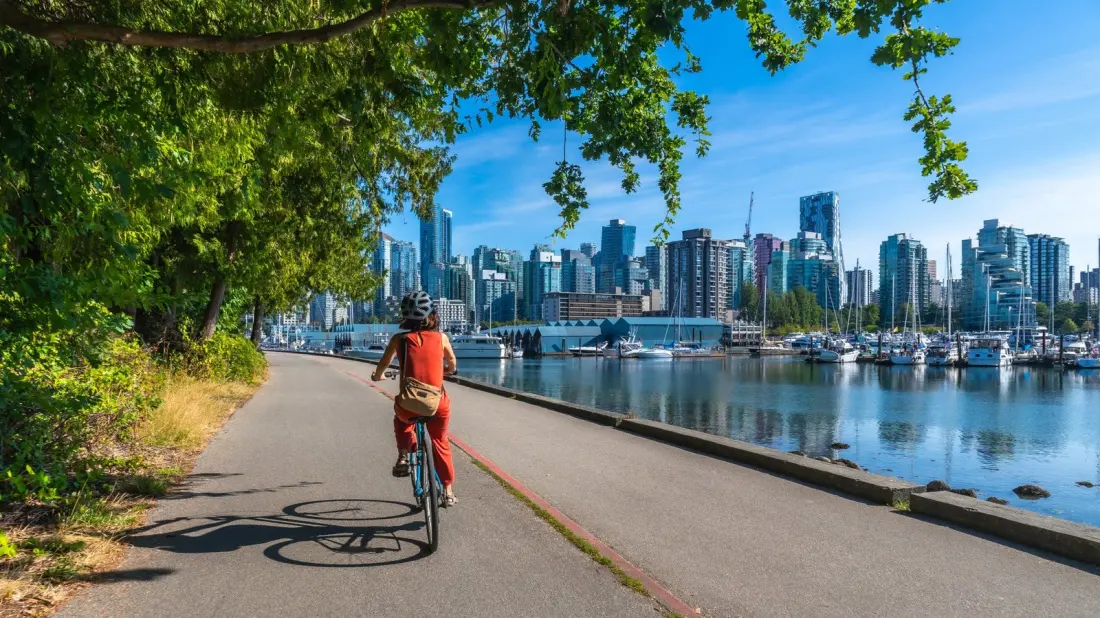
Canada can feel oddly familiar to American visitors — same big-box stores, similar road trips, mountains and lakes that look a lot like home. Then comes the moment you cut the corner off a plastic bag of milk or realize the liquor store is run by the government. That mix of the recognizable and the off-kilter is a big part of what makes a first trip across the border fun.
The first surprise is sheer scale. Canada is the world's second-largest country, yet only around 41 million people live there, and roughly 80% of the land is uninhabited forest, tundra and ice. Provinces dwarf American states — Alberta alone is nearly the size of Texas — so distances between towns in rural areas can stretch for hours, with Canadian Shield rock walls and logging trucks for company rather than gas stations. Plan driving days generously.
Then there's the milk. In Ontario, Quebec and the Maritime provinces, milk commonly comes in bags — about four litres at a time — a leftover of the 1970s switch to metric, when it was easier to retool bag machinery than jug production. Locals keep a pitcher at home, snip the bag's corner and pour. Out west, Canadians find it just as strange as you do.
Alcohol rules also shift as you cross provincial lines. Ontario licenses grocery and convenience stores to sell beer, wine and canned cocktails, but spirits require a trip to the provincially run LCBO. Quebec's wine and spirits come through the SAQ, while beer lives in supermarkets. New Brunswick only sells alcohol through its own ANBL outlets, and Sunday hours vary too — in Nova Scotia, for instance, liquor sales pause outside a short Sunday window. Cannabis is federally legal and often sold in similar government-run shops.
Language can catch visitors off guard beyond Quebec. New Brunswick is Canada's only officially bilingual province — about 30% of its people speak mostly French — and you'll hear and read French in parts of Ontario, Manitoba and Nova Scotia too. Québécois French has its own accent and slang that can stump anyone trained in Parisian classroom French; around 22% of Canadians speak French first.
Culturally, a few things stand out. Tim Hortons, founded by a Toronto Maple Leafs defenceman in Hamilton in 1964, has more than 4,000 locations and a near-sacred status, fuelled by coffee and bite-sized Timbits. Politeness is real — strangers compliment outfits and apologize constantly, which can feel disarming if you're used to big-city anonymity. And the cities themselves are notably tidy: Calgary regularly ranks among the cleanest anywhere, while Toronto keeps its streets and waterfront parks in impressive shape.
For travellers, the takeaway is simple: Canada is close, easy and familiar enough to be comfortable, but with enough quirks — metric road signs, British spellings, King Charles on the $20 bill, French-language signage — to feel genuinely abroad. Check the alcohol rules where you're staying, learn a few French phrases if you're heading east, and keep your road-trip expectations realistic given the distances.