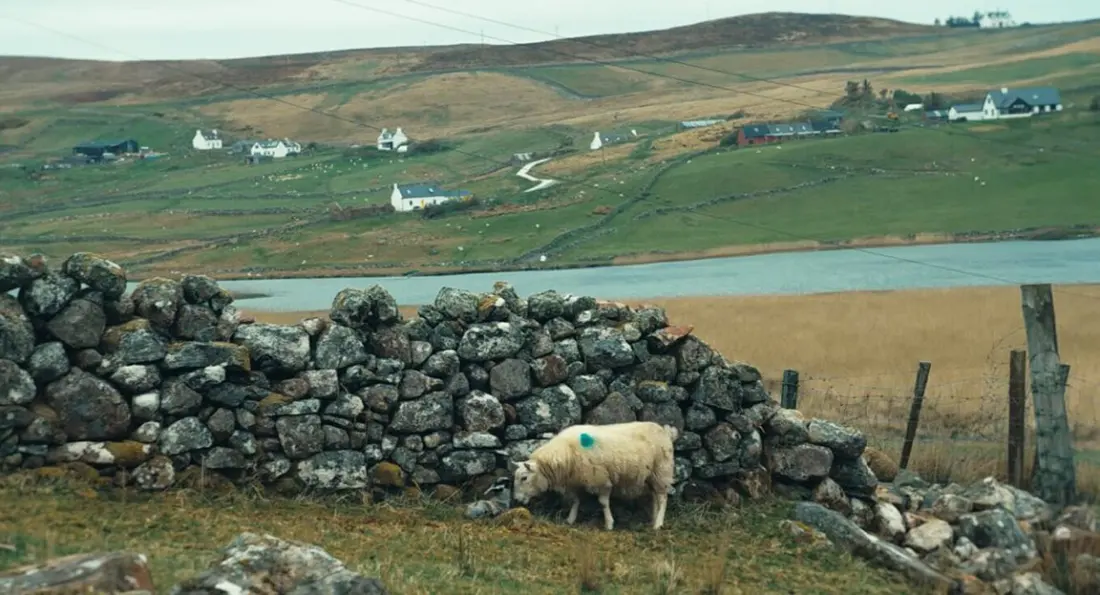
A short documentary called Assynt — subtitled 'Home is where the croft is' — has put the spotlight on one of the Scottish Highlands' most quietly remarkable communities. The film follows life in Assynt, a sparsely populated corner of northwest Sutherland where just over a thousand residents still work traditional crofts, the small subsistence farms that define rural life in parts of the Highlands and Islands.
Crofting has deep, often painful roots. The crofts were the small, poor-quality plots people were moved onto during the Highland Clearances of the 18th and 19th centuries, when communities were displaced to make way for sheep. Crofters scraped a living from their own plot while grazing animals on common land, and almost everyone needed a second trade — fishing, kelp gathering, peat cutting — to get by.
The documentary's central figure, Lewis MacAskill, moved to his croft a decade ago after summering in Assynt as a child, and sees nothing bleak about the life. 'I regard the croft as an extension of who I am as a person,' he says in the film. Viewers meet Anna, a sheepdog trainer herding sheep with centuries-old techniques, and Stuart, a fisherman passing on his love of the area's hills and lochs to his young son. The area also attracts makers — a potter working with local materials, a fiddler, a spinner at her wheel — drawn by the landscape and a material culture that still feels alive.
There's a tension beneath the idyll, though. Communities like Assynt, small and remote, face constant pressure from depopulation as younger people leave for cities. The film closes with MacAskill's hope that newcomers keep choosing to return, set against a montage of croft life and an elderly crofter singing a traditional song of homecoming.
For travellers, the film doubles as an invitation. Assynt is one of the most distinctive landscapes in Britain — a scatter of isolated sandstone and gneiss mountains like Suilven, Quinag and Stac Pollaidh rising from blanket bog and lochan-strewn moor. It's superb walking and fishing country, and a place where you can genuinely see a working cultural tradition rather than a staged one. If you go, treat crofting land with respect: stick to paths, close gates, and remember that the sheep grazing on common ground are someone's livelihood.