Every second Sunday of November, El Salvador pauses (informally, at least) to celebrate its most beloved food. National Pupusa Day, or Día Nacional de las Pupusas, has been an official date since 2005, when the Legislative Assembly passed Decree No. 655 and formally crowned the pupusa the country's national dish. It's not a public holiday that closes offices — it's a cultural one, built around festivals, cooking contests, eating competitions and a lot of very full people.
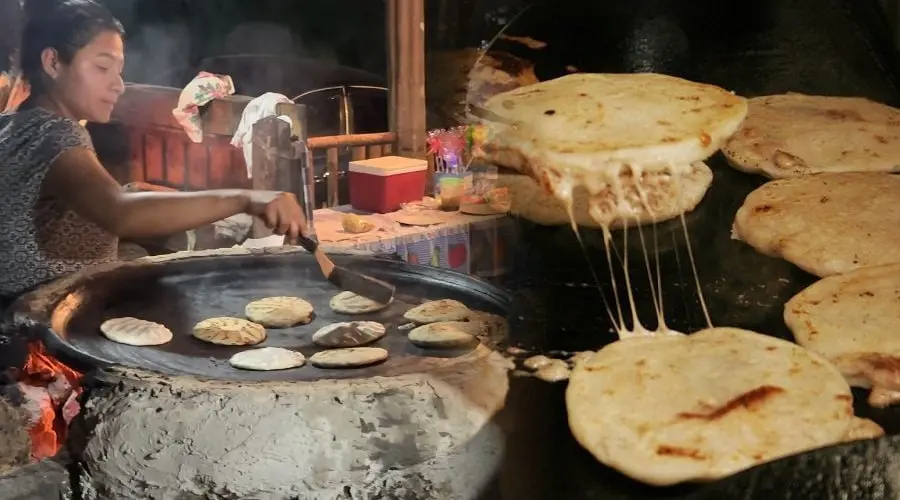
The star of the day is deliberately ordinary. Pupusas are everyday eating in El Salvador: hand-shaped corn masa stuffed with cheese, refried beans, chicharrón or loroco (an edible Central American flower), griddled on a comal — a cooking surface whose name comes from the Nahuatl word comalli. You'll find them at roadside stalls, neighbourhood pupuserías and family kitchens from dawn to well past dinner. The 2005 decree even acknowledged pupusa-making as a microenterprise that supports thousands of households, which is part of why the dish carries real cultural weight rather than just souvenir-postcard status.
The variety is bigger than most visitors expect. Beyond the classic revuelta, cheese and bean-and-cheese versions, some places fill pupusas with seafood, and in the east of the country you can find them made with curil, a local shellfish. Then there's the masa question: while corn dominates, the town of Olocuilta has built its reputation on rice-flour pupusas.
Olocuilta is where the celebration gets supersized. Sitting on the road between San Salvador and the international airport, it reportedly has around 350 pupuserías plus four dedicated "pupusódromos" — and every November it hosts one of the country's biggest festivals. In 2025, roughly 30 women collaborated on a giant rice pupusa about 5.5 metres across, using hundreds of pounds of flour, cheese, beans and chicharrón. It's a fun stunt, but it also spotlights the pupuseras whose hand-shaping skills usually get taken for granted.
Elsewhere, towns including Los Planes de Renderos, Antiguo Cuscatlán, Izalco, Puerto El Triunfo and Conchagua, plus the Ruta de las Flores, all have strong pupusa traditions worth timing a trip around.
For travellers, this is one of the easiest food festivals to join anywhere: no tickets, no dress code, no ceremony. Show up at a pupusería, order a mixed plate, and don't skip the curtido (pickled cabbage slaw) and thin tomato salsa that come alongside. It's also genuinely budget-friendly eating — which is exactly why the dish has travelled with Salvadoran communities to cities across the United States and beyond, becoming a link to home for families abroad. If you can't make it in November, don't worry: the point Salvadorans keep making is that you don't need a holiday to eat a pupusa.