Beachley is a small peninsula with a confusing address. It sits barely three miles from Chepstow, wedged between the River Wye and the River Severn, and by any sensible map reading it should be Welsh. Instead, it belongs to Gloucestershire, England — a quirk that speaks to centuries of border squabbling. Offa's Dyke, the eighth-century earthwork marking the old frontier between Anglo-Saxon Mercia and Wales, skirts its northern edge, and the peninsula once hosted a busy ferry crossing to Aust plus Civil War fortifications. Today it's quiet farmland and shoreline, about 30 miles from both Cardiff and Gloucester and 20 from Bristol — an easy escape if you're based in any of those cities.
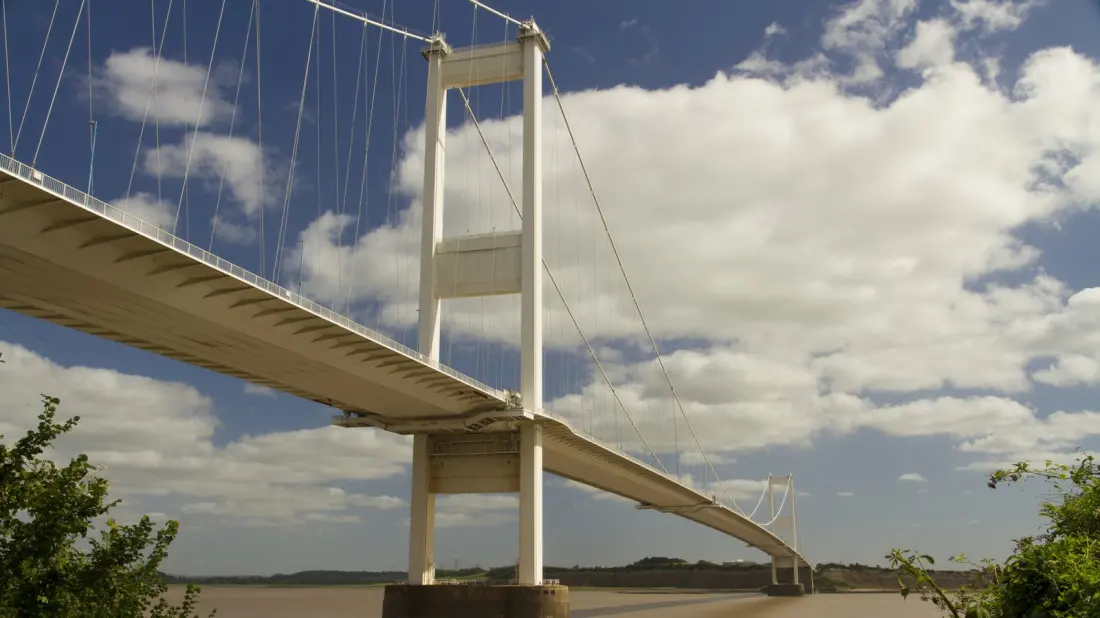
Walking is the main draw, and there's something for every energy level. The Beachley Point trail is the crowd-pleaser: a 6.6-mile loop from Chepstow down to the tip of the peninsula, rated easy on AllTrails (4.3 stars) with big estuary views over both rivers. For something with more drama, the Severn Bridge trail crosses from Chepstow to Aust on foot — five miles over the Wye Bridge, Beachley Viaduct and the Severn Bridge itself, so you literally walk from Wales into England. It's rated 4.8 on AllTrails but flagged as moderately strenuous, with wind and traffic noise part of the deal.
Fit walkers with a full day should consider the Beachley to Devil's Pulpit loop, a 13-mile route heading north past Chepstow through woods and limestone country. The payoff is Devil's Pulpit itself, a rock outcrop above the River Wye with a view straight down to Tintern Abbey — the same ruins that moved Wordsworth to write his famous 1798 poem. The source describes it as tough in places, so save it for when legs are willing.
History dots the whole peninsula. Chepstow Castle and Caldicot Castle are minutes away if you want proper medieval walls. Within Beachley itself, look for the ruins of St. Twrog's Chapel (also called St. Tecla's) on a small tidal island in the Severn — a listed site that served worshippers until roughly the mid-1500s. It's technically reachable at low tide but the estuary currents are dangerous, so enjoy it from the shore. Closer to the village centre, the 1833 church of St. John the Evangelist has a sobering cemetery attached: dozens of German and Italian prisoners of war from World War II are buried there, a reminder of the POW camps around Chepstow during the war.
For travellers, Beachley works best as a half-day or full-day add-on to a Cardiff, Bristol or Gloucester trip, or as a starting point for longer border rambles — the 177-mile Offa's Dyke Path begins near Chepstow and runs all the way to the North Wales coast. It's low-key, free, and delivers a genuinely unusual slice of Anglo-Welsh history without crowds.
Story originally reported by Islands.