Bangkok-based heritage organisation the Siam Society is running a historic and cultural journey to Ethiopia from January 21-31, and the itinerary reads like a checklist of the country's greatest hits. Ethiopia is one of the world's oldest Christian nations and holds a place in human history that few countries can match — from early human ancestors to living medieval kingdoms.
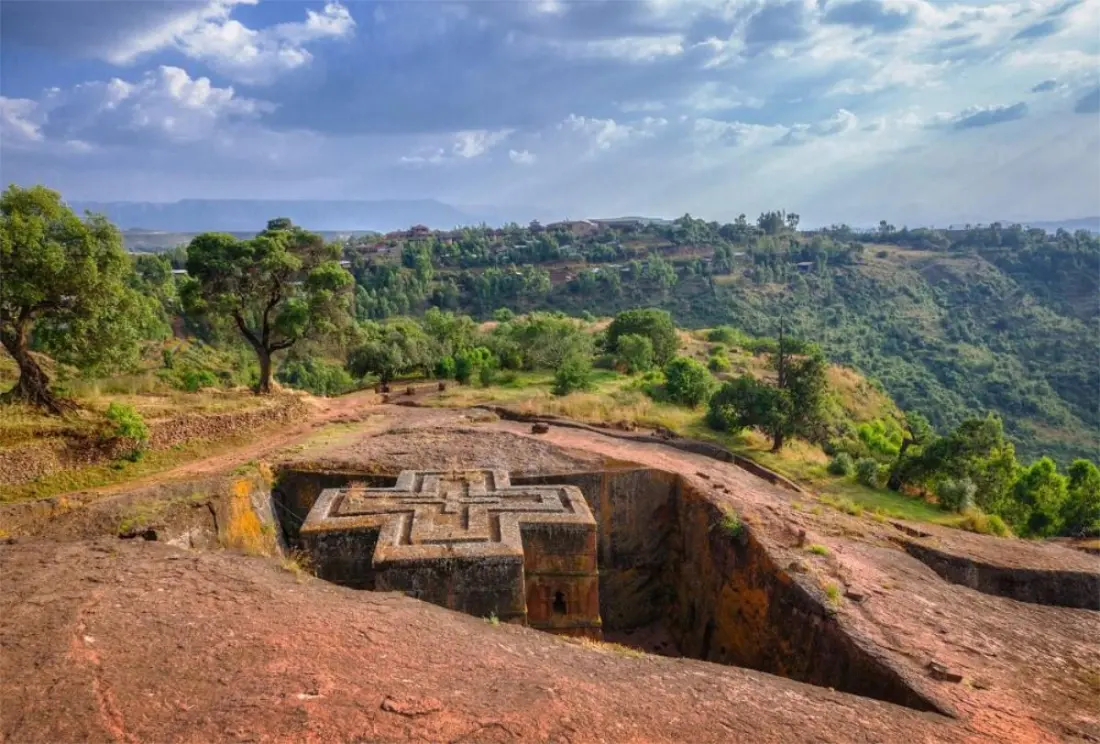
The trip heads north first, to Bahir Dar and Lake Tana, where island monasteries hold centuries-old manuscripts and frescoes. From there it moves to Gondar, whose Royal Enclosure and the painted walls of Debre Berhan Selassie Church rank among Ethiopia's most photographed sights. The undisputed highlight, though, is Lalibela. Its monolithic churches were carved entirely downward into living rock more than eight centuries ago — part place of worship, part artistic masterpiece, part feat of Ethiopian engineering. They remain one of the architectural wonders of the ancient and medieval world, and they are still active pilgrimage sites today.
Leading the group is Navavan Vatikayul, and the itinerary does not stop at the famous northern circuit. South of Lalibela the journey continues to the UNESCO World Heritage Site of Tiya, with its enigmatic stone stelae, and includes an immersive visit to Gurage, a rural village where travellers get a closer look at everyday life well off the standard tourist trail. The expedition wraps up in the capital, Addis Ababa, with time at the National Museum of Ethiopia — home to the fossilised remains of Lucy, one of the most famous early human ancestors ever found.
For anyone based in Southeast Asia with a long-held Ethiopia curiosity, a guided small-group format like this takes care of the hard parts: internal logistics, permits, timing around the January dry season, and expert context for sites that can feel baffling without a good guide. Ethiopia rewards exactly this kind of structured approach — its distances are long, its sites are spread out, and the history is dense enough that having a scholar alongside genuinely changes what you see.
Travellers who prefer independent travel can still borrow the route: the classic northern circuit of Bahir Dar, Gondar and Lalibela is well-trodden, January falls in the cool, dry window, and adding Tiya and a rural Gurage stop gives the trip a dimension most visitors skip. Source: Bangkok Post Life.