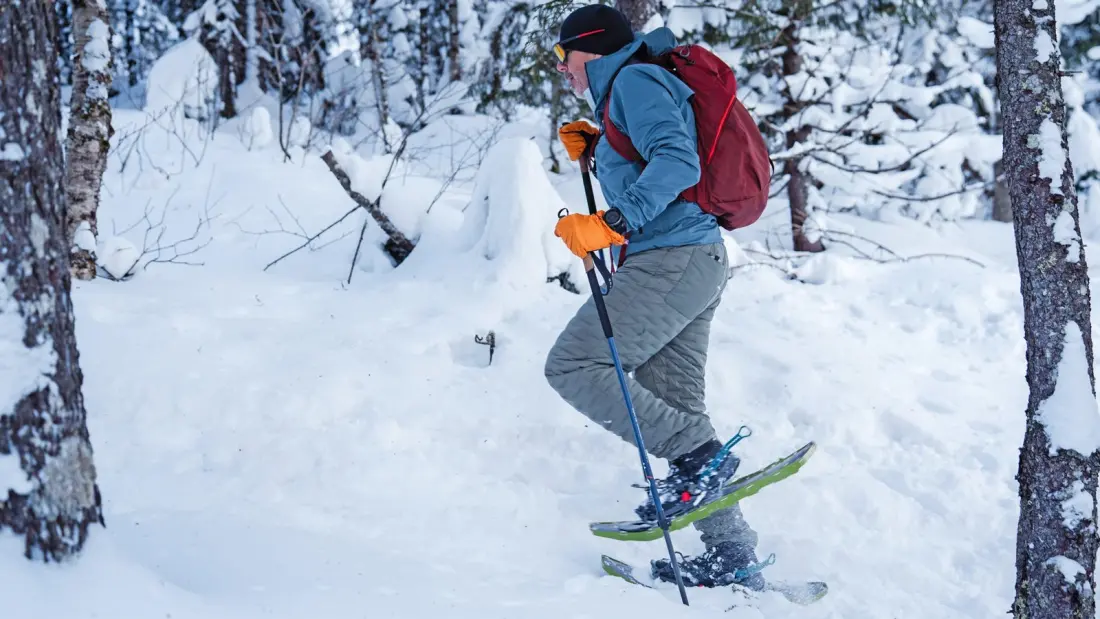
Winter hikers, take note: Backpacker's testers spent a season stomping through blizzards, sub-zero windchill and alpine ice to crown the best snowshoes of 2027, and the results cover every kind of winter adventurer and budget.
The overall winner is the MSR Revo Explore ($290), a decade-long tester favourite that pairs injection-moulded plastic decking with a jagged steel frame and pivoting toe crampon. It's lighter and grippier than most rivals, with a secure, comfortable Paradigm binding. One Oregon tester's skier husband — a self-declared snowshoe hater — was caught happily using them. That says plenty.
If money is the deciding factor, the Retrospec Drifter ($50-70) is the standout deal: a one-piece polypropylene deck and aluminium frame that shrugged off rocks, roots and roof-box abuse, plus glove-friendly ratchet bindings and a useful heel lift. The trade-offs are weight and confidence on anything steeper than about 20 degrees when icy. MSR's Evo Trail ($180) earned the durability nod, described as "aggressively sturdy" — and apparently husky-proof.
For steep, icy terrain, the TSL Highlander Instinct ($370) goes all-in on traction: a toe crampon as long and sharp as some mountaineering models, lateral edge grips and serrated bars across the platform. A tester crossed three days of icy hills in Rocky Mountain National Park without a single slip. The TSL Symbioz Hyperflex Instinct ($390) wins on bindings — a single BOA knob secures the whole shoe in under ten seconds, with flexible decking that reduces ankle twist.
Other standouts: the L.L. Bean Pathfinder BOA package ($280) bundles shoes and sturdy aluminium poles and proved a hit with beginners and experts alike, even at -20°C windchill near Emerald Lake. The MSR Women's Lightning Ascent ($400) suits smaller feet with a narrower frame. And for speed demons, the Northern Lites Elite Race Ultralight ($260) weighs just 2.2 pounds — over a pound lighter than anything else in the test — though traction on steep ice is merely adequate. New for this year, the Atlas Montane ($250) takes the deep-snow title.
Why should a traveller care? Because snowshoeing is one of the cheapest ways to unlock trail networks that are off-limits in winter, with no lift tickets or lessons required. The entry point is low: a $50-70 pair like the Drifter covers casual winter walks, while serious hillwalkers should look at the MSR or TSL options. Match the size to your weight and typical snow — bigger decks float better in powder, narrower ones walk more naturally on packed trails — and check whether a heel lift is included if you'll face slopes. Boots you already own will usually work.