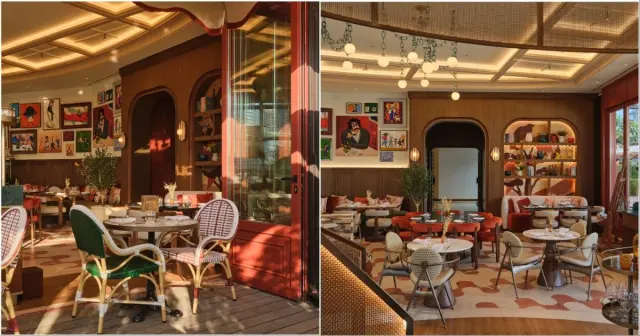
Frank Stitt put Birmingham on the American food map nearly four decades ago, and the city he helped shape is now one of the South's most interesting weekend trips. The chef behind Bottega (38 years and counting) and the French bistro Chez Fonfon in the Five Points South neighborhood trained in France alongside figures like Richard Olney, and his influence runs through nearly every kitchen in town. This year alone, five Birmingham restaurants made the James Beard Award semifinalist list — remarkable for a city of roughly 196,000.
The newer generation is worth planning a trip around on its own. Pizza Grace, set in a downtown cobblestoned arcade, turns out charred fennel-and-mushroom pies from a husband-and-wife team who met at Bottega; they also own Big Spoon Creamery, known for seasonal scoops like salted honey blackberry. Salud Taqueria grinds its own masa for Sonoran-style tacos, while chef Rob McDaniel's Helen cooks almost everything over open fire — angel biscuits, Benton's ham, Carolina gold middlins — with his raw-bar spot Bayonet next door.
Beyond the plate, Birmingham rewards curiosity. It earned its 'Magic City' nickname after its near-overnight founding in 1871, when iron ore in Red Mountain, local limestone, and nearby coal made it a steel boomtown. That industrial past is still visible in its Art Deco and Romanesque buildings, the restored Alabama, Lyric and Carver theatres, and Sloss Furnaces, a National Historic Landmark where two 400-ton blast furnaces operated from 1882 to 1971 and visitors can now take tours and metalworking classes.
The city's place in civil rights history is essential, not optional, to understanding it. Kelly Ingram Park, the 16th Street Baptist Church — where a 1963 bombing killed four girls — and the Birmingham Civil Rights Institute sit within a block of each other downtown and anchor any meaningful visit.
Culture is thriving too: the Birmingham Museum of Art hosted the internationally touring 'French Moderns: Monet to Matisse' show this spring, while smaller spaces like Ground Floor Contemporary and Studio by the Tracks keep the scene grassroots. Saturday mornings, head to the Market at Pepper Place, a farmers market Stitt co-founded in a former Dr Pepper syrup factory that now draws 10,000 visitors a weekend. Cafés like Grounds, queer- and Black-owned and focused on fair-trade vendors, capture the city's forward-looking energy.
Birmingham suits travellers who like their city breaks layered — good eating, industrial ruins, art, and difficult history all within a compact downtown. It's affordable, walkable in the centre, and far enough under the radar that reservations are easy compared to bigger food cities.