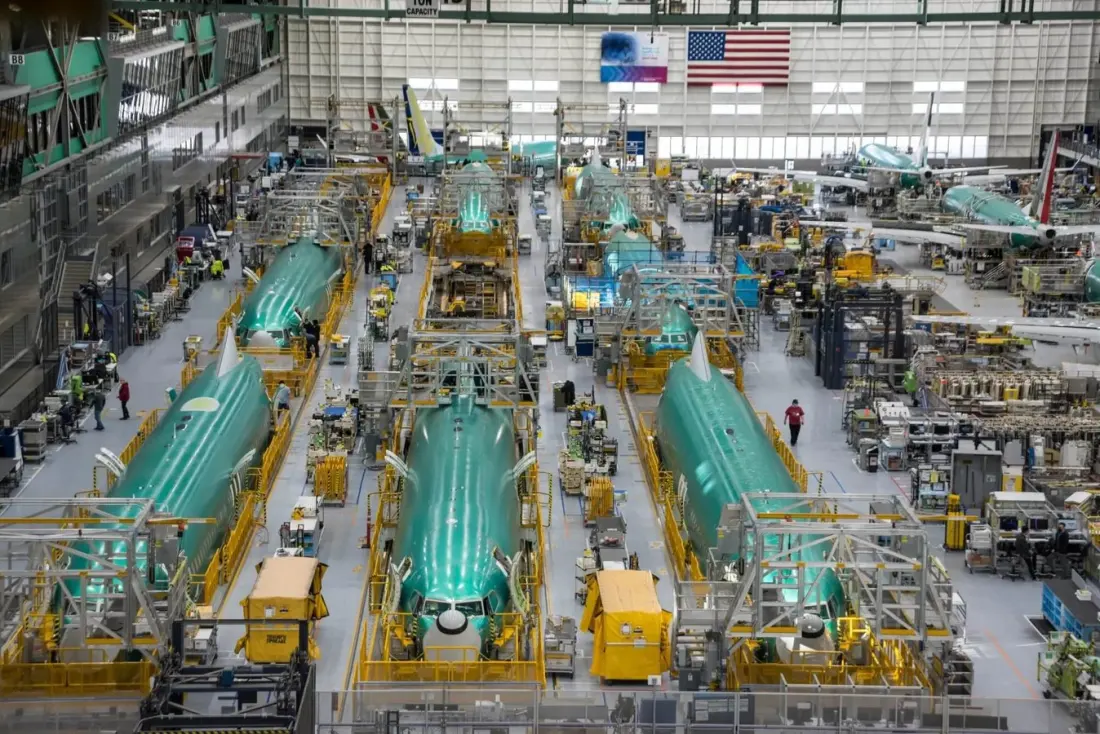
The FAA has finally certified the Boeing 737 MAX 10, announcing an amended type certificate on October 20, 2026 after years of delays. The agency signed off on the safety upgrades required by the Aircraft Certification, Safety, and Accountability Act, including an enhanced angle-of-attack sensor system. Deliveries still have to start and cabins need separate certification, so you won't be boarding one tomorrow — but the biggest 737 MAX variant is now officially cleared for service.
The MAX 10 is the stretch model of the family: up to 230 passengers in maximum-density layout, or a more typical 185–210 in two classes, with a range of up to 3,100 nautical miles. That makes it the highest-capacity but shortest-range MAX, built for busy domestic and shorter international routes where airlines want more seats per flight. Boeing claims orders for 1,555 of the type from more than 30 customers, so this approval ripples well beyond one carrier.
What's genuinely interesting for travellers is what airlines plan to do with all that extra cabin space — and the short version is: more premium seats.
American Airlines is configuring its MAX 10s with 24 First Class seats, a big jump from the 12–16 seats found on most current 737s. More seats up front won't necessarily mean easier complimentary upgrades — airlines are adding them because they think people will pay — but it does mean more chances to buy or redeem into a proper first class seat on a domestic flight.
Alaska Airlines has the most ambitious plan. It will fit at least 25 of its MAX 10s with 12 lie-flat Aurora Suites plus a new Premium Reserve cabin, finally addressing the airline's long-standing lack of a lie-flat transcontinental product. Expect the first delivery in the second quarter of 2027, with the lie-flat experience debuting in 2028 — one to watch if you fly coast to coast.
Delta has 100 MAX 10s on order, with deliveries expected from 2027, and United has a substantial order of its own, though its onboard product remains under wraps.
A word of caution: a bigger plane doesn't automatically mean a comfier one. Seat pitch, width and service levels are still entirely up to each airline. The encouraging sign is that US carriers are using the MAX 10's extra length to expand premium cabins rather than simply cramming in more economy seats — a trend worth cheering if you're willing to pay for a better seat.
For anyone who regularly flies premium on US domestic routes, the next couple of years should bring noticeably more choice — especially on transcontinental routes, where Alaska's lie-flat suites could shake things up. Otherwise, the aircraft type alone isn't a reason to book a specific flight, but the cabins airlines build inside it might well be.