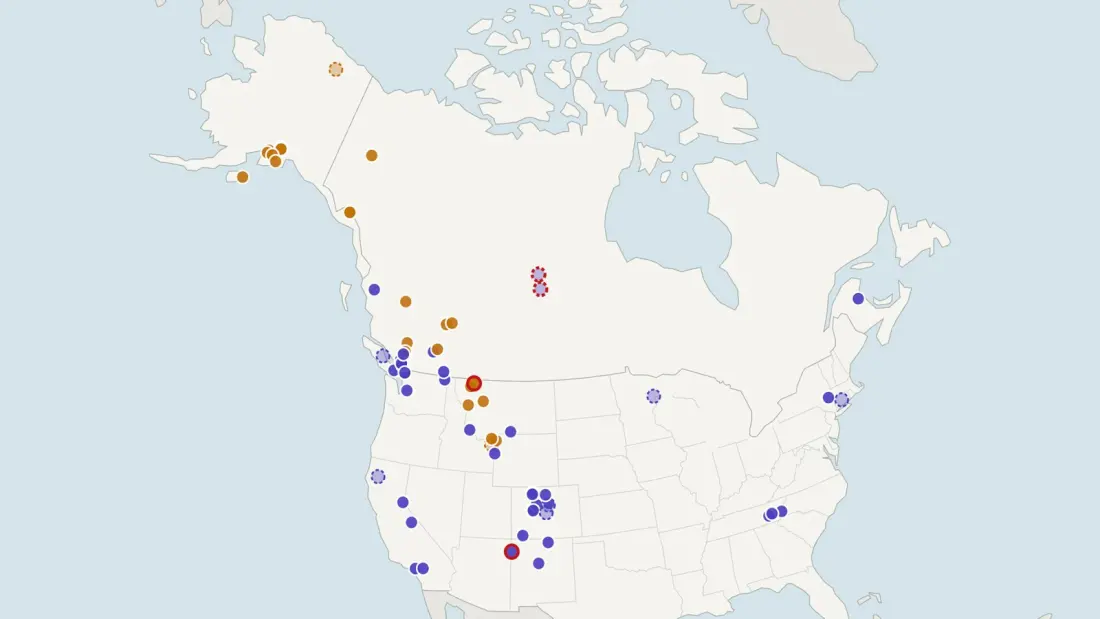
A 71-year-old outdoorsman from Texas is doing what no U.S. government agency does: keeping a running tally of bear attacks across North America. Mike Dickerson started logging incidents in 2026 after wildlife managers he knew warned it would be a rough year — and so far his count stands at at least 73 encounters across 13 U.S. states, four Canadian provinces, and the Yukon Territory. Sixty-four of those were actual attacks, meaning the bear physically injured someone.
The incidents range from frightening to bizarre. In early October near Salmon, Idaho, a black bear sow and her two cubs broke into a family home around 3:30 a.m. The father, Brian Heidemann, wrestled the mother bear into a chokehold to protect his wife and two sleeping daughters, suffering bite wounds and deep gashes to his head, torso, and shoulder. All three bears were later euthanized by state officials.
Why so many incidents? Experts point to a bad food year. Drought and climate change have cut natural food supplies, pushing bears into towns and campgrounds in search of calories — just as record numbers of people are hiking, camping, and living in bear country. Chris Servheen, formerly the national grizzly bear recovery coordinator for the U.S. Fish and Wildlife Service, analysed Dickerson's list and found that over two-thirds of incidents involved black bears rather than grizzlies. Dogs were involved in a quarter of attacks. Nearly a quarter involved mother bears with cubs, and a quarter involved bears already conditioned to human food — every one of them a black bear.
There's a caveat worth knowing: Dickerson compiled the list from media reports and news alerts, not scientific survey work, so it skews toward serious events. Minor run-ins go unreported and never make it in. Still, the trend line is real. A 2019 study counted 183 North American attacks between 2000 and 2015 — about 11 a year — and fatalities have risen in recent decades compared with a century ago.
For anyone heading into the Rockies, the Cascades, or Canada's bear country this year, the practical takeaway is straightforward. Keep food sealed and stored properly — food-conditioned bears feature prominently in the data. Keep dogs leashed or reconsider bringing them at all. Give any sow with cubs a very wide berth, and know the difference between a black bear and a grizzly before you set out. Most trips in bear country end without a sighting, let alone an incident — but 2026 is a good year to refresh the basics before you go.