Breeze Airways added 19 new and returning routes in just three days this July — and most of them have no competition at all. The US carrier, founded by JetBlue pioneer David Neeleman, is doubling down on a strategy that sounds odd on paper: running profitable flights between smaller cities that other airlines consider too quiet to bother with.
The numbers behind the July blitz are striking. Breeze's schedule hit around 266 daily departures, roughly 44% more than a year earlier. Of the 19 routes launched between July 1 and 3, 13 are monopoly routes with no other nonstop option. Several fill gaps left after Spirit Airlines ceased operations in May 2026, while first-ever services like Akron-Canton to Portland, Maine, and Fort Lauderdale to Salisbury-Ocean City opened up connections that simply didn't exist before.
Neeleman's oft-quoted claim that Breeze can make money on routes with just 10 passengers per day each way is often misread. It doesn't mean flights carrying ten people. It means the underlying market averages ten travellers per direction daily — about 140 a week. Concentrate those on three weekly round trips instead of spreading them across daily service, and suddenly each flight looks reasonably full before you even count new demand created by having a nonstop option in the first place.
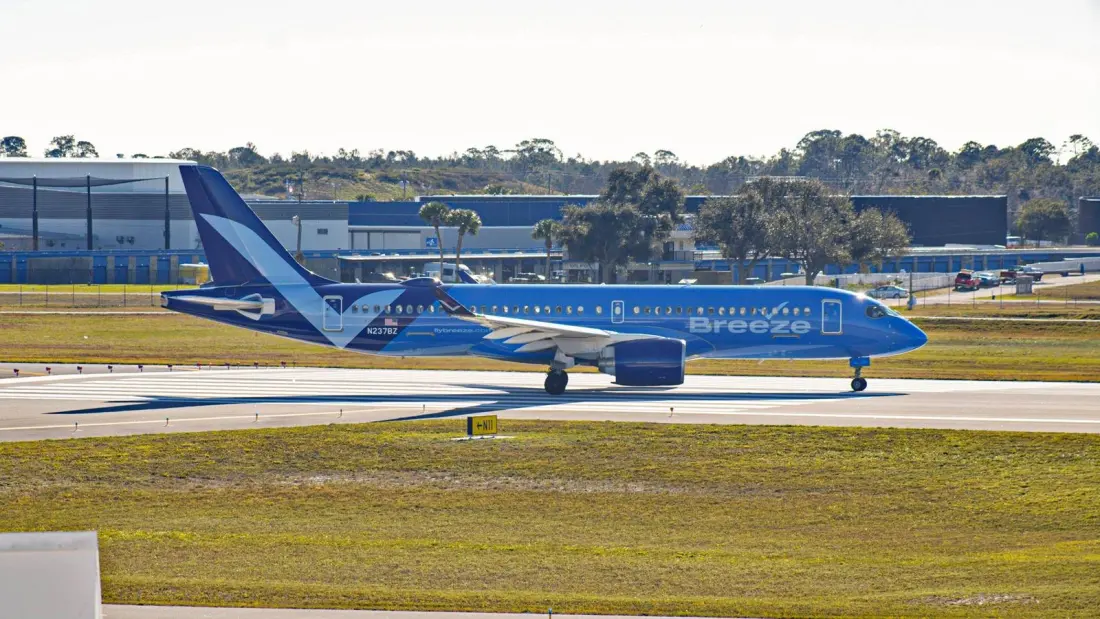
The aircraft making all this possible is the Airbus A220-300, of which Breeze now operates more than 50. With 137 seats, low fuel burn from its Pratt & Whitney geared turbofan engines and roughly 3,450 nautical miles of range, it can fly long thin routes economically. Breeze also boosts revenue beyond the base fare through its Ascent premium cabin, bundled fares and ancillary fees — handy in smaller markets where travellers will pay a bit more for the convenience of skipping a hub connection.
The bigger picture: Neeleman estimates around 3,500 US city pairs could support this model, and Breeze currently serves only about 280 of them. As major airlines retreat from regional airports and retire their 50-seat regional jets, that pool of overlooked markets keeps growing. For the airline, it means lower landing fees, less congestion and no fare wars. For passengers in cities like Akron or Salisbury, it means skipping a multi-hour connection entirely.
If you live near a secondary airport, this story matters directly: Breeze's expansion is quietly adding nonstop options in places legacy carriers have abandoned, often at fares that undercut the old connecting-itinerary alternative. Expect the network to keep spreading — with 92% of its identified opportunity untouched, there's a lot more of this to come.