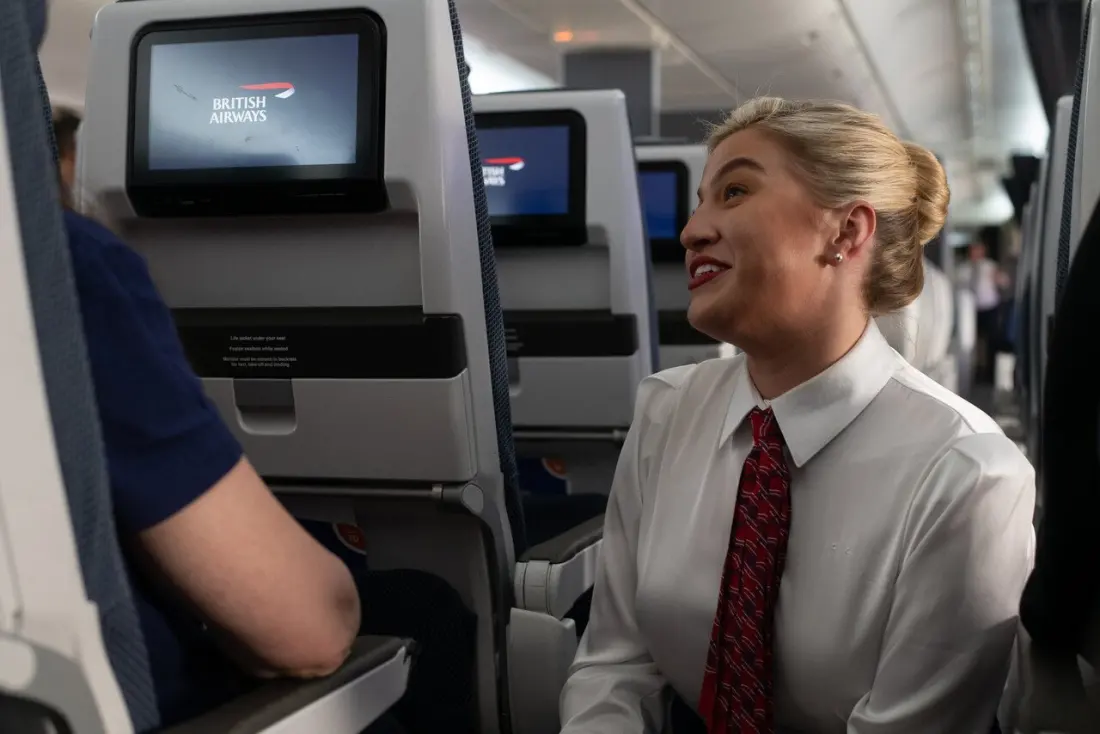
Wearing Meta's smart glasses on a British Airways flight is still allowed. What has changed is how the airline treats passengers who use those glasses as a hidden camera. BA has reportedly tightened its filming rules to cover covert recording with Meta AI glasses, both at the airport and in the air, according to reporting picked up by Paddle Your Own Kanoo.
The update builds on restrictions BA introduced earlier this year banning photography, filming or livestreaming of its employees without their consent. The airline's General Conditions of Carriage give it real teeth here: under Section 7a10, filming or livestreaming crew or other staff without permission counts as grounds for refusing carriage. Section 11a lists unauthorised recording of employees as unacceptable behaviour onboard. That means cabin crew can intervene mid-flight, and once the plane lands, BA can remove a passenger and refuse transport on the remaining sectors of their ticket — including a return flight booked and paid for months earlier. The airline can also report the incident to authorities if it thinks a criminal offence occurred, though breaking an airline's filming policy alone isn't a crime.
The conditions don't name Meta glasses specifically, but the practical point is clear: a less obvious camera doesn't get you around the rule. And passengers hoping the glasses' blinking recording light keeps them in the clear should know it's not exactly subtle anyway.
There's a genuine tension here worth acknowledging. Smart glasses make it easy to record an interaction without anyone noticing, which is exactly why airlines are uneasy. Most of us wouldn't want a seatmate quietly filming us for six hours, and a flight attendant serving lunch shouldn't automatically become someone's social content. On the other hand, a recording can be the only objective evidence in a dispute — if an airline employee treats you badly, discreet documentation may be the only way to prove it. The sensible line is the obvious one: filming crew for content without asking is intrusive; filming to document a genuine complaint after being mistreated is different, though even then it's worth knowing where the airline's limits are.
The bigger lesson for travellers is that recording norms don't travel well. What's routine at home may breach your airline's conditions of carriage or local law — EU countries in particular can be stricter about filming people without consent than passengers expect. If you wear smart glasses on a flight, treat them as glasses, not a camera pointed at staff. And if you're a flight reviewer or just someone who likes documenting trips, asking a crew member before taking a close-up photo takes about two seconds and removes all the risk.
For anyone booked on BA with a connected itinerary, the stakes are higher than an awkward conversation: one disputed recording could strand you mid-trip without your return leg.