Nearly nine decades after Amelia Earhart vanished over the Pacific, a set of long-forgotten photographs is giving researchers — and the curious — a new window onto the place where some believe her story ended.
The Air Force Museum of New Zealand in Christchurch has published 47 high-resolution images of Nikumaroro, a remote atoll in Kiribati. They were shot on 1 December 1938 from a New Zealand amphibious aircraft that was scouting Pacific islands as possible airbase sites. The negatives sat unnoticed for years until Matthew O'Sullivan, a photographic archivist at the museum, dug them up more than a decade ago.
Why does a handful of old aerial photos matter? Because Nikumaroro — then called Gardner Island — is at the centre of one of aviation's biggest unsolved mysteries. Earhart and her navigator Fred Noonan disappeared on 2 July 1937 while trying to fly around the world. Despite countless searches, neither the pair nor their Lockheed Electra has ever been definitively located. One persistent theory holds that they ditched on or near Nikumaroro and lived as castaways on the then-uninhabited island. It has never been proven, but it keeps pulling researchers back.
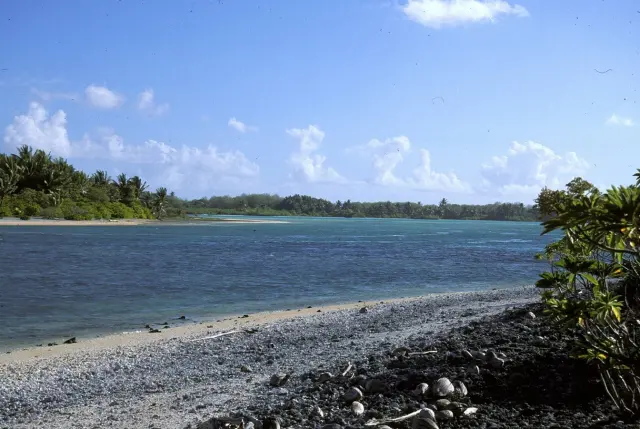
The images are valuable because they show the atoll's coastline, lagoon and vegetation barely a year after the disappearance — a snapshot of the island before decades of change. Researchers can now compare that late-1930s landscape with what satellite images and expeditions see today.
The timing is no accident. Interest in the atoll surged after 2020, when analysts spotted an anomalous shape underwater in the lagoon, nicknamed the Taraia Object. Teams linked to Purdue University and the Archaeological Legacy Institute have investigated whether it could be wreckage from Earhart's Electra — though sceptics argue it may be nothing more exotic than a fallen pandanus tree.
The new photos don't settle anything. What they do is add another layer of evidence to a puzzle that has consumed researchers for generations, and they keep the spotlight on one of the most isolated specks of land in the Pacific.
For travellers, Kiribati's remote Phoenix Islands are about as off-the-grid as it gets — Nikumaroro itself is uninhabited and extremely difficult to reach. But the story is a reminder that some of the world's most compelling travel tales lie far beyond the usual routes, and that history is still being written — or rewritten — on the ocean's loneliest shores.