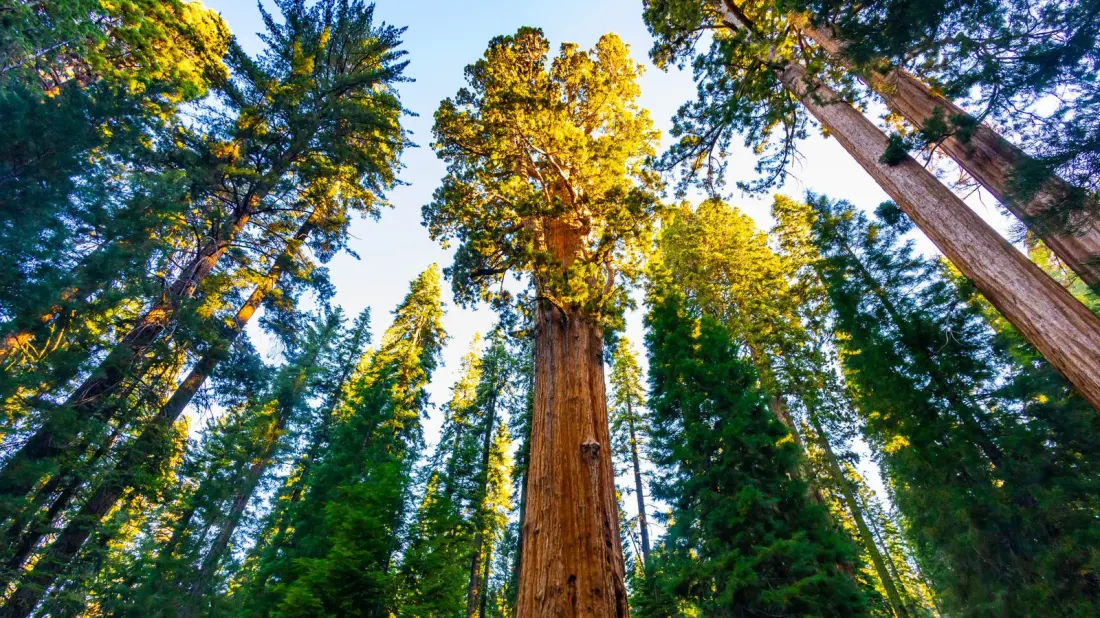
About 90 minutes from Fresno in central California, Sequoia National Park holds a tree so large it could theoretically build 120 houses. The General Sherman Tree, standing near the northern end of the Giant Forest, is the biggest tree on Earth by volume — roughly 52,500 cubic feet of it. It's around 275 feet tall with a circumference exceeding 100 feet, and while other redwoods beat it for height, nothing matches its sheer bulk.
The numbers only tell part of the story. The most recent age estimate puts Sherman at about 2,200 years old, meaning it was already ancient before the Roman Empire rose. The tree has even had a political past: named after Civil War general William Tecumseh Sherman in 1879, it was briefly rechristened the Karl Marx Tree by the Kaweah Colony, a utopian community founded in 1886 — before Sequoia became America's second national park in 1890 and the original name returned. The tree is so prized that during the 2021 KNP Complex fire, crews wrapped its base in aluminum to shield it from the flames.
Getting there is refreshingly easy. The Sherman Tree Trail is just over a mile long and comes with restrooms, informational displays, and a shuttle stop, making it the most straightforward option. If you fancy more walking, the paved 2.7-mile Congress Trail loops through some of the park's finest groves, while the Lodgepole-Sherman Tree Trail links up with one of the park's best campgrounds. Four miles south, the Big Trees Trail ranks among the most accessible hikes in the entire US national park system.
A few logistics worth knowing. Sequoia and Kings Canyon are managed together but are separate parks — make sure you head for Sequoia. There's parking near the trailhead, including accessible spaces for visitors with disability placards (pick those up at a visitor centre), plus a free seasonal shuttle: summer routes 1 and 4 both serve the trailhead, with limited winter service between November and February, weather permitting. Expect serious crowds on summer weekends and holidays, and check current fire restrictions before your trip — campfires and even stoves are banned at certain campgrounds in peak season.