A veteran Canadian canoeist recently caused a stir by strapping an electric trolling motor to a canoe — and the reaction from the paddling community was surprisingly mild. Writing after a three-night trip on Round Schooner Lake in Ontario's North Frontenac Parklands, the self-styled Happy Camper reported that most canoe trippers were fine with a quiet, non-polluting motor doing some of the work, with only a couple of purists crying blasphemy.
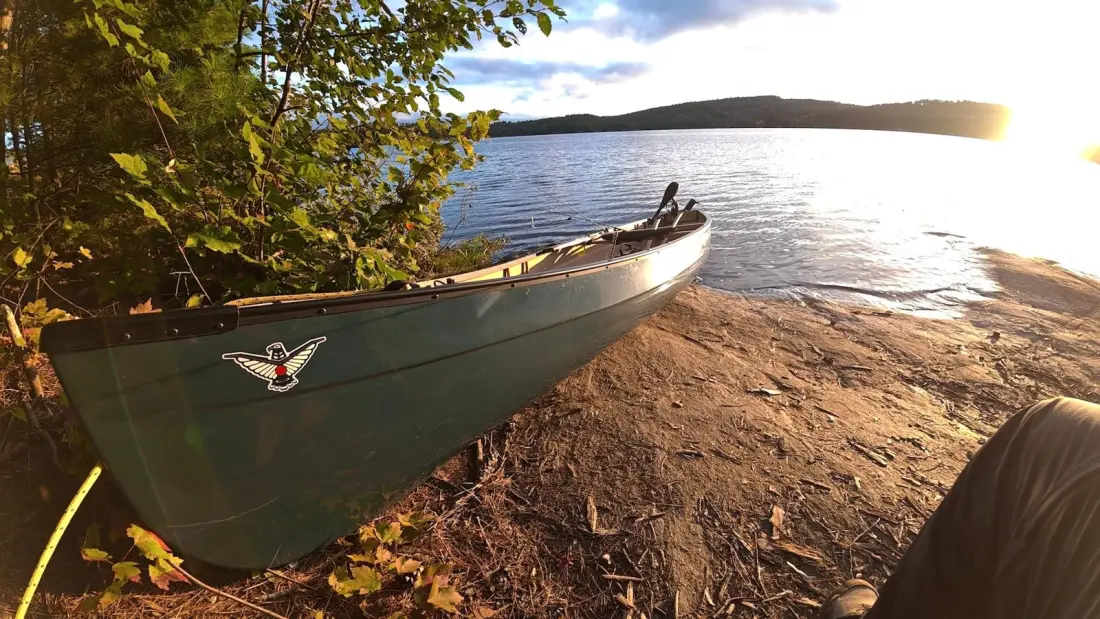
The boat in question was the Lure 15'7", a square-stern, three-keeled canoe from Nova Craft Canoe, a builder based in London, Ontario. Its owner, Chris Rath, hadn't had a chance to test his own new model, so the two friends took it out in early fall — warm days, cool nights, no mosquitoes, and the trees just starting to turn. The fishing, alas, didn't cooperate: two small bass between them, the larger roughly the length of a stubby beer bottle.
The setup was simple and inexpensive: a Minn Kota-style trolling motor from Canadian Tire running off a regular car battery. That power source proved to be the weak link — about an hour and a half of running at full throttle, with more range available at a slow trolling speed. The verdict? An electric motor is best used as a steady-speed assistant for trolling, not a primary means of propulsion. The author's ideal use case: spring trout fishing on the outer lakes of Algonquin, where you paddle in, then troll for lake and brook trout at a constant pace.
As for the canoe itself, it weighed in at 62 pounds in the Armid Lite construction, measured 37 inches wide with a 1,000-pound capacity, and swallowed a surprising amount of camping gear. The three keels made it more manoeuvrable and quicker than expected. The one honest caveat: nobody wants to portage a motor and car battery over any real distance. This is a boat for base-camp style fishing on motor-accessible lakes, not for backcountry routes with endless carries. Paddled the old-fashioned way, though, it's stable, fast and easy to handle.
Why does this matter to travellers? Because it opens up an accessible middle ground between a pure paddle trip and a powerboat outing. Anglers who want quiet water, electric-only lakes, or a bit of help against wind can now do it without fumes or noise — and Canada's parklands are full of routes where that combo works beautifully. If you're curious, the Happy Camper's KCHappyCamper YouTube channel has both the boat review and a series of portage-free canoe routes to pair with it.
Story via Explore Magazine Canada.