Cartagena de Indias packs colonial history, Caribbean beaches and a lively food-and-music scene into one compact city on Colombia's northern coast. But with several distinct neighbourhoods to choose from, where you sleep can make or break the trip. Here's how the main areas compare.
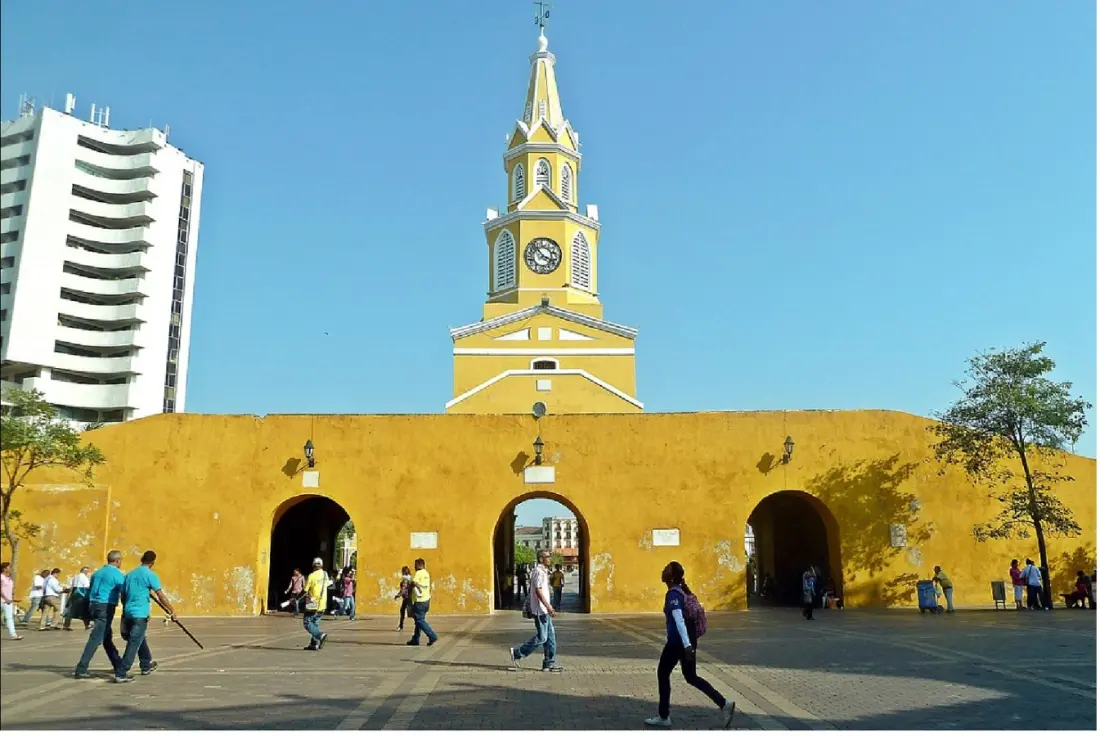
The Walled City is the pick for first-timers who want everything on foot. Inside the old walls sit the Zenú Gold Museum, the Palace of the Inquisition's historical museum, the Naval Museum of the Caribbean, plus Bolívar Square, Santo Domingo Square, the cathedral and the famous Clock Tower. Hotels range up to luxury — think Sofitel Legend Santa Clara or Casa San Agustin — so expect higher prices. For quieter evenings, look at San Diego in the northern corner of the old town, which skips the heaviest nightlife.
Getsemaní, a few minutes' walk from the Clock Tower, is the bohemian counterpart: murals, hanging flags, street performers around Trinidad Square at dusk, and Callejón Angosto's urban art. It's the best value zone, with hostels, boutique hotels and apartments (Selina Cartagena and Casa Canabal among them), and it's walkable to San Felipe de Barajas Castle and La Bodeguita Pier, where boat tours leave. The trade-off is noise — light sleepers should book away from the square, especially for weekend stays.
If sea access matters more than colonial charm, head to the Bocagrande peninsula, plus Castillogrande and El Laguito. These modern beachfront districts have big hotels with pools, malls and urban beaches — handy for families — though you'll need taxis to reach the old town, and the sand gets crowded on holidays.
Beyond hotels, the classic plans: explore the fortress tunnels at San Felipe and the viewpoint at La Popa convent, take a canoe through the La Boquilla mangroves with Afro-Colombian guides, and time your wall walk for sunset — Santo Domingo Bastion is the photogenic spot. For proper white sand, day-trip or overnight on Barú Island's Playa Blanca (staying overnight beats the crowds) or boat out to the Rosario Islands for snorkelling; some Barú experiences even offer bioluminescent plankton nights when conditions allow.
A tidy three-day structure: day one for the old town, museums, San Felipe and Getsemaní's murals; day two for the islands or Playa Blanca; day three for La Popa, the mangroves and a sunset bay cruise, with souvenir shopping at Las Bóvedas.
Practically speaking, Rafael Núñez International Airport is close to everything. In 2026 official taxis run roughly US$6.25 to San Diego or Getsemaní and about US$10.65 to Bocagrande, with a possible night surcharge; ride-hailing apps work too. The TransCaribe bus system costs about US$1.21 a ride, but for the historic core and Getsemaní, your own two feet are the best transport.
The short version: history lovers and short-stay visitors should book inside the walls, social travellers and budget hunters will thrive in Getsemaní, and families or pool-and-beach types should head for Bocagrande or El Laguito.