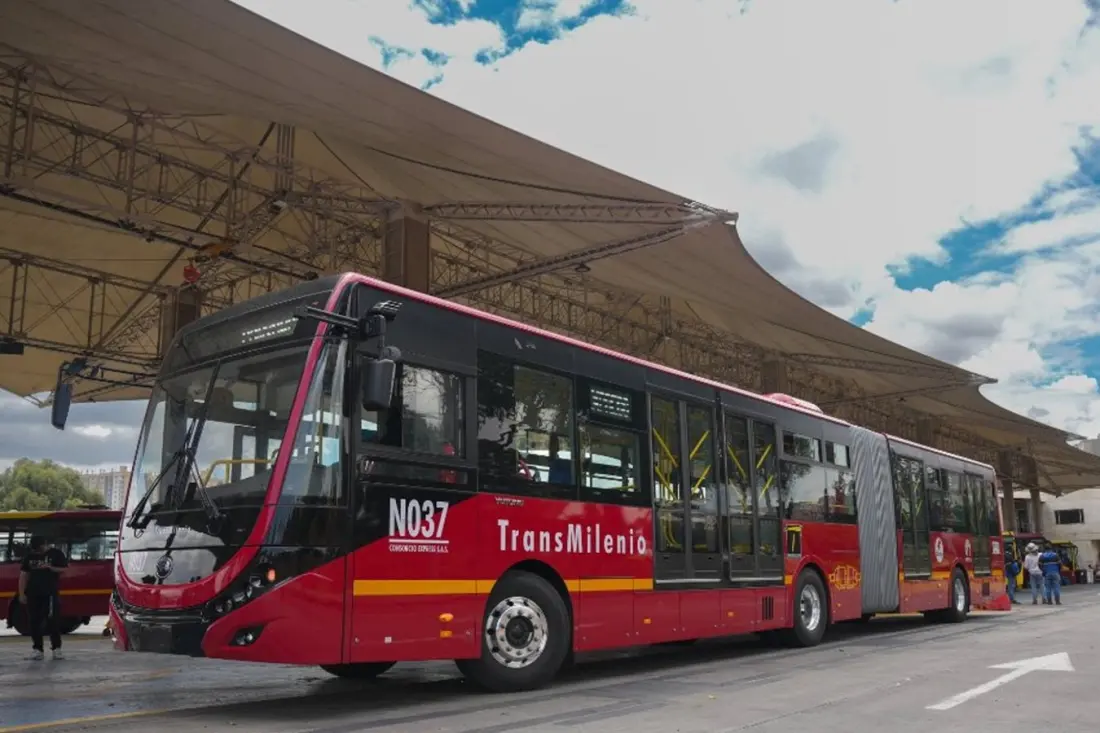
Bogotá's signature red bus rapid transit system just went quieter and cleaner. On November 6, 2026, TransMilenio put ten fully electric articulated buses into service — Chinese-built Yutong vehicles that carry up to 160 passengers and run at least 280 km (174 miles) per charge.
For visitors, the practical perks are immediate. Each bus offers free Wi-Fi, USB charging ports, live passenger information screens and audio announcements. Accessibility is a clear focus: two wheelchair spaces per vehicle, room for a baby stroller, and designated areas for assistance dogs. Safety kit includes interior and exterior cameras plus real-time blind-spot monitoring. After testing on the Calle 26 corridor, the buses now operate from the Patio Sur depot, where charging infrastructure has been built with room to grow — the site is slated to eventually handle 116 electric buses plus 45 smaller vehicles.
These ten are a small slice of a much bigger transition. TransMilenio counted 1,767 fully electric buses across Bogotá's integrated network as of the announcement date. The system runs on two levels: a trunk network of articulated buses on dedicated lanes and stations along major avenues, and a zonal network serving neighbourhood streets, where dual-door buses can work both sides. The city's Phase III replacement programme covers 631 buses, while Phase VI — branded La Nueva Era — will add 269 more electric vehicles to the trunk network (157 articulated and 112 bi-articulated), including a long-awaited extension toward Soacha. That phase carries a 1.5 trillion peso (about US$463 million) co-financing deal, with the national government covering 62.4% and the Bogotá district the rest. The first Phase VI buses are due in February 2027.
Why should a traveller care? If you're heading to Bogotá, TransMilenio is often the fastest way to cross a traffic-choked city, and the new buses make those journeys more comfortable — less diesel fume, less engine roar, and connectivity on board. Drivers who've switched are enthusiastic; one operator, Alejandro Porras, compared moving from conventional depots to an all-electric one as 'night and day.' Expect the electric share to grow quickly: the agency has targeted adding over a thousand more electric vehicles between 2026 and 2029.
A few tips for riding TransMilenio as a visitor: buy a TuLlave smart card to tap through the stations, avoid rush hours (roughly 6-9 am and 4-7 pm) when carriages get seriously packed, and keep valuables secured, as crowded buses and stations attract pickpockets. The Calle 26 corridor, where these buses were tested, connects the city centre with El Dorado airport — handy if you want to try one on the way in.
The rollout isn't without hurdles. An OECD review flagged the high upfront cost of electric buses as a challenge for Colombian cities, and TransMilenio hasn't detailed its driver training programme for the new vehicles. But the direction is clear: South America's most famous BRT system is steadily swapping diesel for batteries, and passengers — locals and tourists alike — will feel the difference.
Story first reported by Colombia One.